
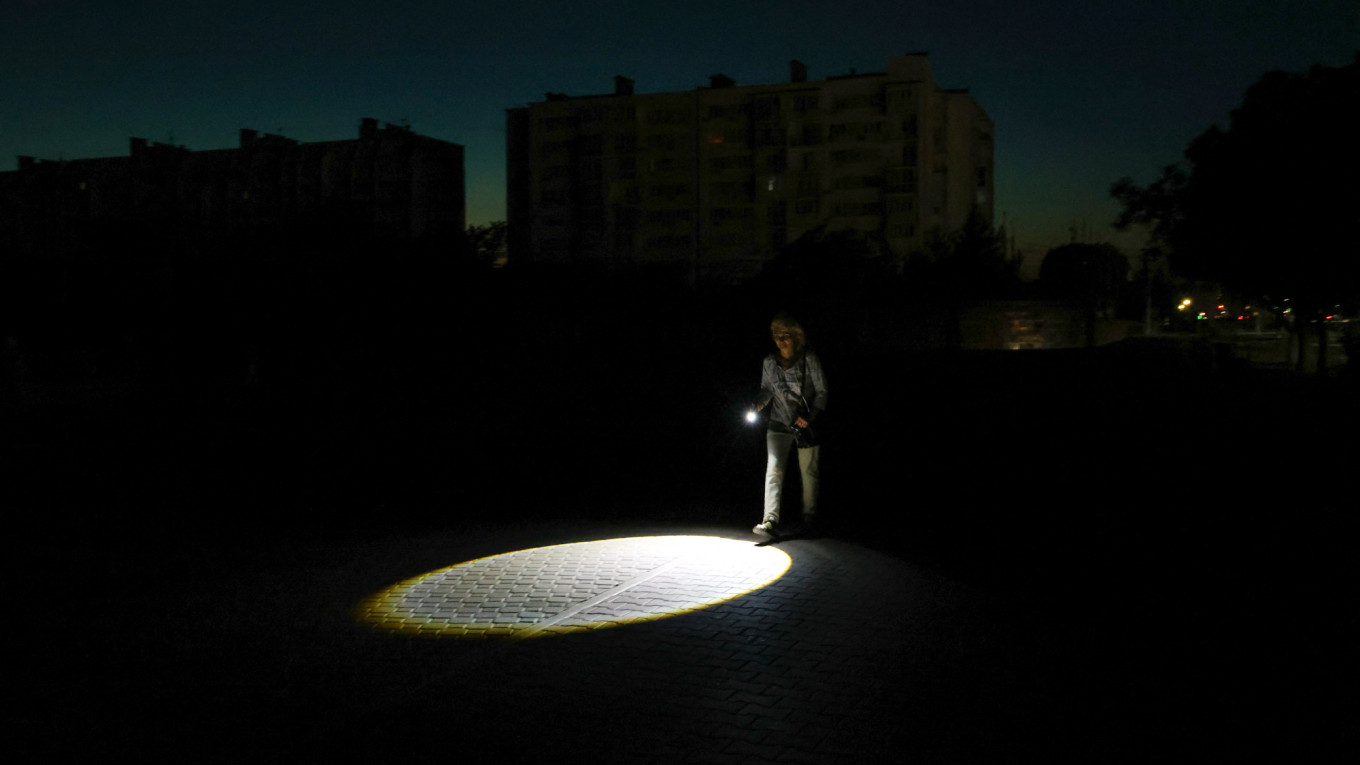
This summer, none of our friends or relatives still in Russia will holiday in Crimea. Many continued doing so after Russia's full-scale invasion, when Europe closed to Russian travellers and President Vladimir Putin's prized peninsula became a popular beach destination despite the occasional drone attack.
Now, intensifying Ukrainian drone strikes, fuel shortages and mounting disruption have made even Crimea an unattractive place to spend a summer holiday.
For Putin, that is more than a tourism problem. Crimea was never just another piece of territory; it was the cornerstone of his political legitimacy.
After the annexation in 2014, "Krym nash" ("Crimea is ours") became Moscow's favourite catchphrase. I heard it everywhere. Taxi drivers, bartenders, neighbours and television presenters repeated it until it morphed into an internet meme and everyday joke. Those two words encapsulated Putin's promise: Russia was back, defying the West and correcting a historical wrong.
The shocking annexation in the wake of Ukraine's Maidan Revolution allowed Putin to cast himself as the leader who had reversed Russia's post-Soviet humiliation.
Twelve years later, Putin's Crimean fairy tale is colliding with reality. The peninsula is no longer the carefree Black Sea Riviera promised by the Kremlin.
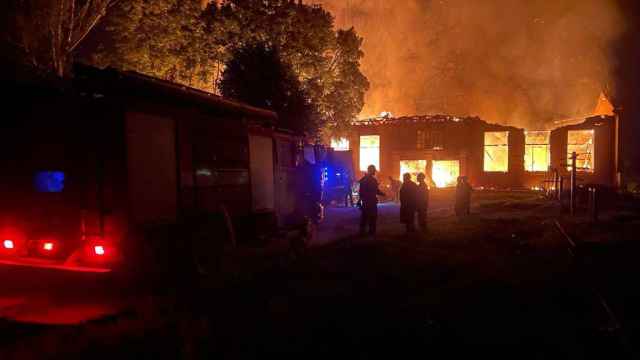
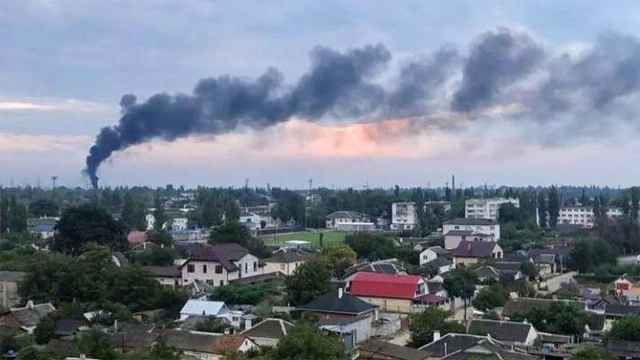
Sustained Ukrainian drone strikes have disrupted fuel supplies, electricity and transport links, driving up prices and exposing Crimea's logistical fragility.
By late June, the queues for gasoline disappeared, but only because there was little left for ordinary motorists, as scarce fuel was diverted to emergency services, utilities and favoured businesses.
Even the financial system is showing signs of strain, with state-controlled lender VTB reportedly slashing ATM withdrawal limits for some customers. Rolling blackouts, communications outages and repeated attacks on the Kerch Bridge and the land corridor connecting Crimea to Russia have unsettled residents and tourists alike.
The economic fallout is spreading. Disruption to the Don-Azov Canal threatens a key artery for Russian grain exports, forcing Moscow once again to absorb the rising cost of sustaining its prized peninsula.
Even the Kremlin's cheerleaders are growing uneasy. Rybar, one of Russia's best-known military bloggers, warned that after inflicting fuel shortages and blackouts, Ukraine's campaign is entering its "final phase" by targeting the Kerch Bridge, a vital lifeline that binds Crimea to Russia.
As holidaymakers stay away and bookings collapse by as much as 70%, the peninsula is becoming an ever more expensive burden for Moscow.
None of this surprised me. While researching Crimea for my master's thesis about Russian sanctions in 2023, I found that the peninsula had already become an economic outlier after the annexation in 2014.
Crimea became an effective sandbox where Western governments tested targeted sanctions. Foreign investment dried up, international companies withdrew and even many Russian blue-chip firms and state-owned entities treated the peninsula as commercially toxic.
I interviewed a dozen senior European business figures who explored opportunities in Crimea after the annexation, only to discover that sanctions had effectively rendered the peninsula an investment dead end.
The only reason Crimea did not collapse was that Moscow was prepared to absorb the cost. Until the full-scale invasion of 2022, the West treated Crimea as an aberration rather than the opening act of a much larger conflict.
That distinction matters today. The West saw Crimea as a battle over territory, but Ukraine saw an opportunity to exert further costs on Russia. If Kyiv can make the peninsula too costly for Moscow to defend and sustain, Putin's greatest political triumph may become his greatest strategic liability
That appears to be Kyiv's strategy. Ukrainian strikes are raising the cost of occupation by disrupting tourism, straining infrastructure and forcing Moscow to devote ever greater resources to keeping Crimea functioning.
Ukraine appears to have recognised something the West initially missed. It doesn't necessarily have to liberate Crimea tomorrow to weaken Putin. If it can steadily increase the military and economic cost of holding the peninsula while destroying its appeal as Russia's showcase resort, Crimea ceases to be an asset and becomes a liability.
Every fuel shortage, cancelled holiday and damaged depot chips away at the image Putin sold Russians in 2014.
This summer, Russians are choosing almost anywhere they can but Crimea and the troubled Black Sea coast for their holidays. Those with the money to travel are heading instead to Turkey, Egypt and Thailand.
That may seem trivial beside the horrors of war. But symbols matter. Putin built much of his political legitimacy on the claim that he had reclaimed Crimea forever
History has a habit of turning symbols against those who create them. “Krym nash” convinced millions that Russia had restored its greatness despite also marking the moment the Kremlin abandoned deniable interference for open territorial conquest.
Crimea has always occupied an outsized place in Russia's imperial imagination. Control of the peninsula meant control of the Black Sea Fleet — and with it, Russia's claim to great-power status.
For Putin, Crimea’s symbolic and strategic value meant that any resulting confrontation with the West was worth it. Expanding Russia’s borders, even if the world didn’t recognize it, was a powerful demonstration that he was fulfilling his promise to reverse Russia’s post-Soviet decline. If the peninsula now becomes a costly liability rather than a triumphant symbol, it is a direct assault on the myth of strength underpinning Putin’s rule.
But the same symbolism that made Crimea so valuable also makes its decline so dangerous for the Kremlin. Ukraine may never need to raise its flag over Sevastopol to make Russians associate the peninsula not with patriotic triumph but with shortages, insecurity and endless expense.
A Message from The Moscow Times:
Dear readers,
We are facing unprecedented challenges. Russia's Prosecutor General's Office has designated The Moscow Times as an "undesirable" organization, criminalizing our work and putting our staff at risk of prosecution. This follows our earlier unjust labeling as a "foreign agent."
These actions are direct attempts to silence independent journalism in Russia. The authorities claim our work "discredits the decisions of the Russian leadership." We see things differently: we strive to provide accurate, unbiased reporting on Russia.
We, the journalists of The Moscow Times, refuse to be silenced. But to continue our work, we need your help.
Your support, no matter how small, makes a world of difference. If you can, please support us monthly starting from just $2. It's quick to set up, and every contribution makes a significant impact.
By supporting The Moscow Times, you're defending open, independent journalism in the face of repression. Thank you for standing with us.

Remind me later.