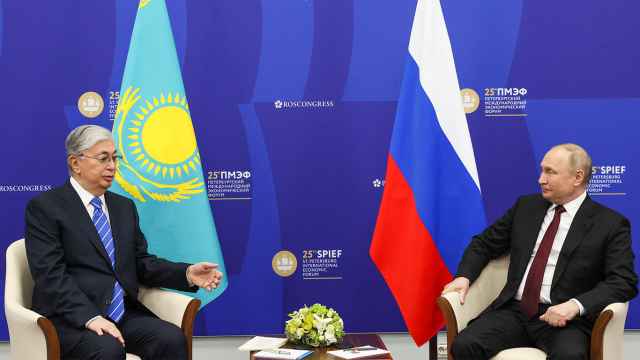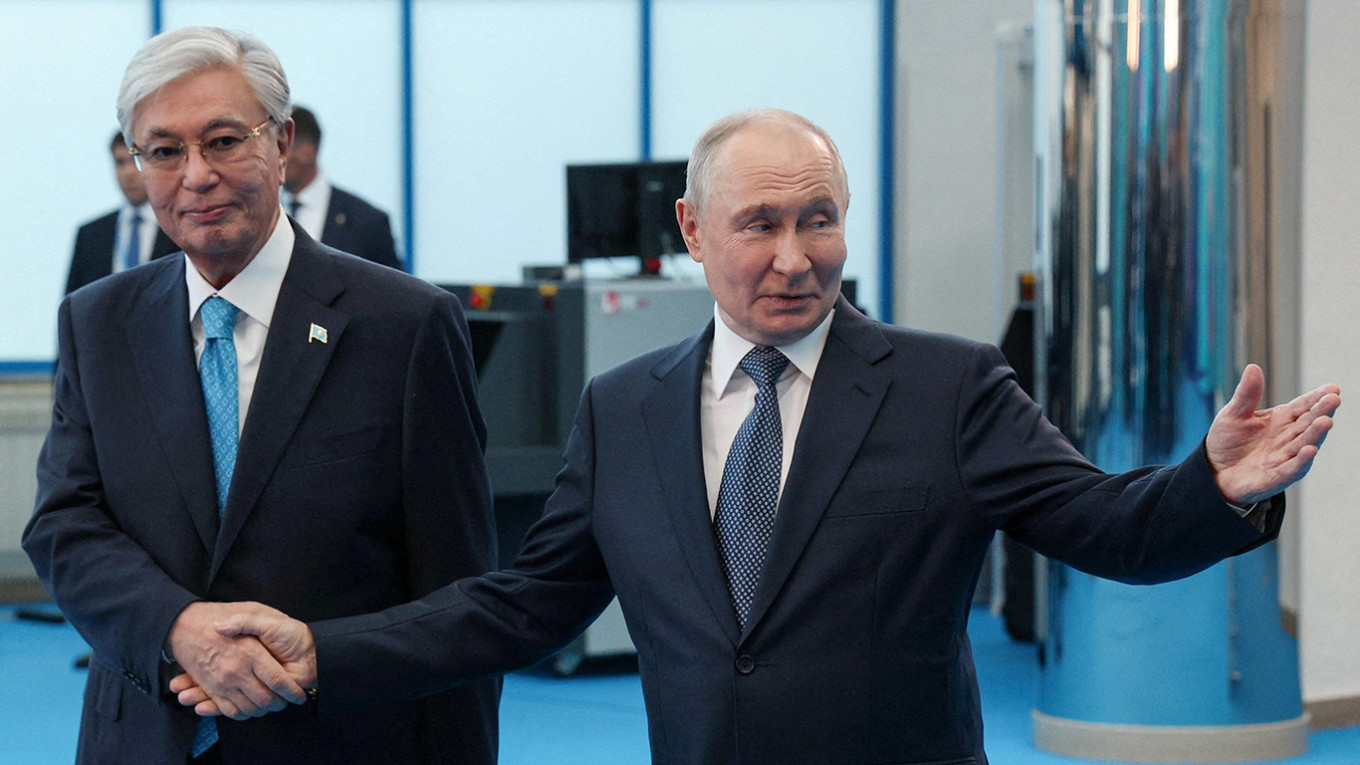
Why would one of Russia's closest allies publicly call on President Vladimir Putin to freeze the war in Ukraine, knowing the message would not be welcome? That is what President Kassym-Jomart Tokayev of Kazakhstan did last week in Omsk and the question of why made headlines around the world.
Before digging a little deeper, there is some important context to mention whenever we talk about relations between Astana and Moscow. First of all, Kazakhstan shares a 7,644-kilometer border with Russia, the longest continuous international border in the world. One point on which both supporters and critics of the Kazakh government tend to agree is that geography simply cannot be ignored when discussing Kazakhstan’s foreign policy toward Russia.
Furthermore, mid-level Russian politicians and public figures openly promote propagandistic narratives about Kazakhstan, criticizing its domestic language policy and making barely disguised territorial claims about the country’s northern regions bordering Russia. Obviously, none of this can be ignored by anyone who remembers how the war in Ukraine began. Another important part of the context is that Kazakhstan remains closely tied to Russia economically.
Considering all these factors, Kazakhstan has little choice but to do what Tokayev, a career diplomat, does best: maintain a balance. A crucial part of his job is preserving Kazakhstan's economic and diplomatic ties with Europe, the United States, China and other major global players shaping international politics. To borrow a phrase from “The Odyssey,” Tokayev's decision seems to have been driven by a case of being caught between Scylla and Charybdis — forced to navigate between two equally difficult options, neither of which offered an easy way out.
Even though global politics has become increasingly turbulent in recent years, states ultimately tend to put their national interests first. In this case, the best way to realize why Tokayev spoke up is to follow the money.
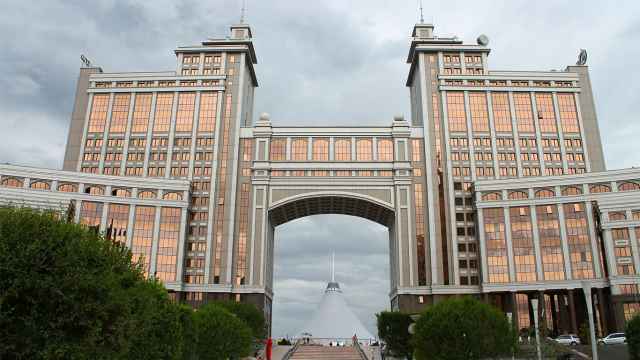
Kazakhstan is among the world's top 10 oil producers, with around 80% of its oil exported through the Caspian Pipeline Consortium (CPC). The CPC is the main route through which Kazakhstan exports most of its oil and is used by international oil giants from Europe and the United States. As Ukrainian drones target Russia's energy infrastructure, Kazakhstan has repeatedly found itself caught in the crossfire. Disruptions affecting CPC facilities effectively limit the country's ability to use its primary export route. Last month alone, the consortium was forced to suspend operations three times, with the latest disruption reported on July 30.
As the country has no alternative export route of the same standard, industry experts warn that repeated interruptions force Kazakhstan to reduce oil production, as the country simply does not have a comparable alternative export route.
With Kazakhstan's main export route repeatedly disrupted, it is worth asking how Tokayev chose to deliver a message he knew Putin did not want to hear. The answer lies in the structure of the speech itself. Looked at as a whole, Tokayev did what he does best: he played a diplomatic game, wrapping criticism in the so-called compliment sandwich — praise, criticism and further praise — a technique meant to make hard truths easier to accept. We do not know whether this was done deliberately or was a coincidence, nor do we know how his addressee perceived it. But let's take a closer look at the speech.
In the first part of his remarks, Tokayev listed the key areas of bilateral cooperation, including the construction of Kazakhstan's first nuclear power plant, which will be built by the Russian side despite domestic criticism of the project and of its subcontractor. Translated from the language of diplomacy into plain language, one could say that President Tokayev offered a careful preamble by giving credit to President Putin before moving to the main point of his message.
Further, he said explicitly that Kazakhstan "is not isolated" from the war in Ukraine. More specifically, he pointed out how energy transportation is one of the most important issues in the world today, suggesting that Astana felt the economic ramifications of the war were too great to ignore.
He also underlined that he had received "signals" from Europe and the United States about the conflict, which could be an indirect reference to the economic losses borne by international partners involved in this system. As well as Russia and Kazakhstan, the United States, Britain, Germany and Italy all have interests in the CPC because their oil compies are shareholders.
Notably, Tokayev described the conflict as a “war” rather than using the neologism "special military operation" Moscow preferred until recently. Specifically pointing out that the war is not a civil war, but between two independent states. This is an important repudiation of Putin’s denial of Ukraine’s sovereignty and culture as distinct from Russia. Tokayev immediately underlined: “We in Kazakhstan have always treated the Ukrainian people, their culture and language with respect and we believe that the nature of this conflict is not entirely clear to many, including us.”
Then, as if to soften the criticism, he proposed a potential solution to freeze the conflict along the front line. Moving to the conclusion, Tokayev noted that he had refused offers to act as a mediator and praised Putin once again, saying that he and the "great Russian people" could handle it themselves.
There are a few common questions about what comes next. Did Putin know in advance that he would hear these remarks from his counterpart? What consequences could they have for Kazakhstan and for President Tokayev?
The obvious answer is that we simply do not know. It is possible that the Kazakh president warned Putin that he would raise this issue.
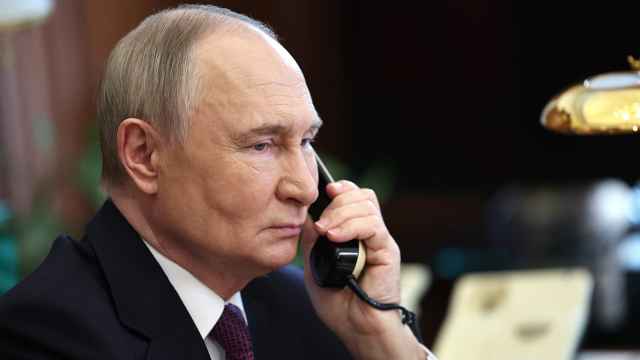
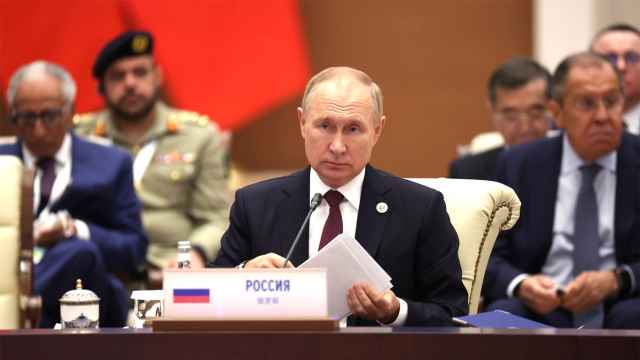
All we know is that Putin did not appear pleased. The next day, during a meeting with Russian Navy servicemen, Putin spoke at length about the importance of victory and did not mention freezing the conflict. Kremlin spokesman Dmitry Peskov said Tokayev’s suggestion would be impossible given Kyiv's position. Does this mean that Tokayev did not coordinate his remarks with Putin? Most likely, he did not. Does this mean that Tokayev failed to anticipate the Russian president's possible dissatisfaction? Probably not.
This is not the first time Tokayev has made a statement that diverged from the Kremlin's rhetoric. In 2022, while speaking in Russia, he described the so-called Donetsk People's Republic and Luhansk People's Republic as quasi-state entities rather than independent nations and said Kazakhstan stood by the principles of territorial integrity as set out in the UN Charter, even when that supersedes the right to self-determination.
Then, as now, his remarks were widely praised by independent, predominantly exiled Russian media as unusually bold. At the same time, it is important to remember that Tokayev is, first and foremost, a politician and a diplomat. Before becoming president, he served as Director-General of the United Nations Office at Geneva. His remarks can rarely be described as impulsive.
So why challenge the Kremlin out loud, and why now? The answer may lie less in ideology than in realpolitik: Kazakhstan's economic exposure to this war has become impossible to manage quietly. Tokayev has shown he’s willing to call out his ally diplomatically, even to his face, when Kazakhstan’s territorial and economic integrity are at risk.
A Message from The Moscow Times:
Dear readers,
We are facing unprecedented challenges. Russia's Prosecutor General's Office has designated The Moscow Times as an "undesirable" organization, criminalizing our work and putting our staff at risk of prosecution. This follows our earlier unjust labeling as a "foreign agent."
These actions are direct attempts to silence independent journalism in Russia. The authorities claim our work "discredits the decisions of the Russian leadership." We see things differently: we strive to provide accurate, unbiased reporting on Russia.
We, the journalists of The Moscow Times, refuse to be silenced. But to continue our work, we need your help.
Your support, no matter how small, makes a world of difference. If you can, please support us monthly starting from just $2. It's quick to set up, and every contribution makes a significant impact.
By supporting The Moscow Times, you're defending open, independent journalism in the face of repression. Thank you for standing with us.

Remind me later.