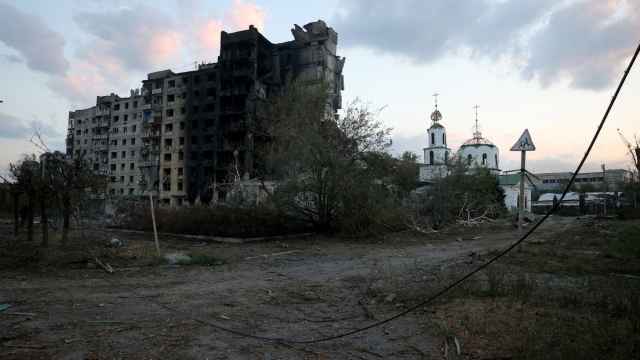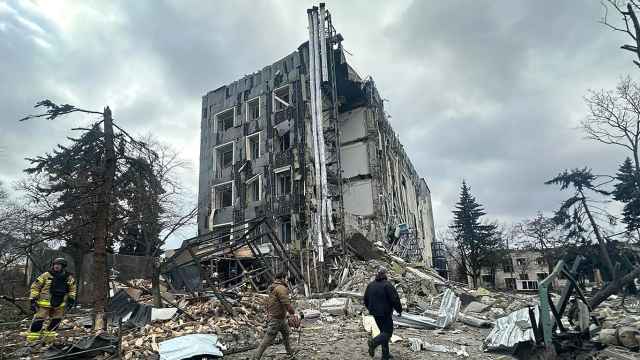
The Kremlin said Friday that Ukraine’s continued drone and missile attacks inside Russia justify widening a so-called “buffer zone” in eastern Ukraine rather than pursuing peace through diplomatic negotiations.
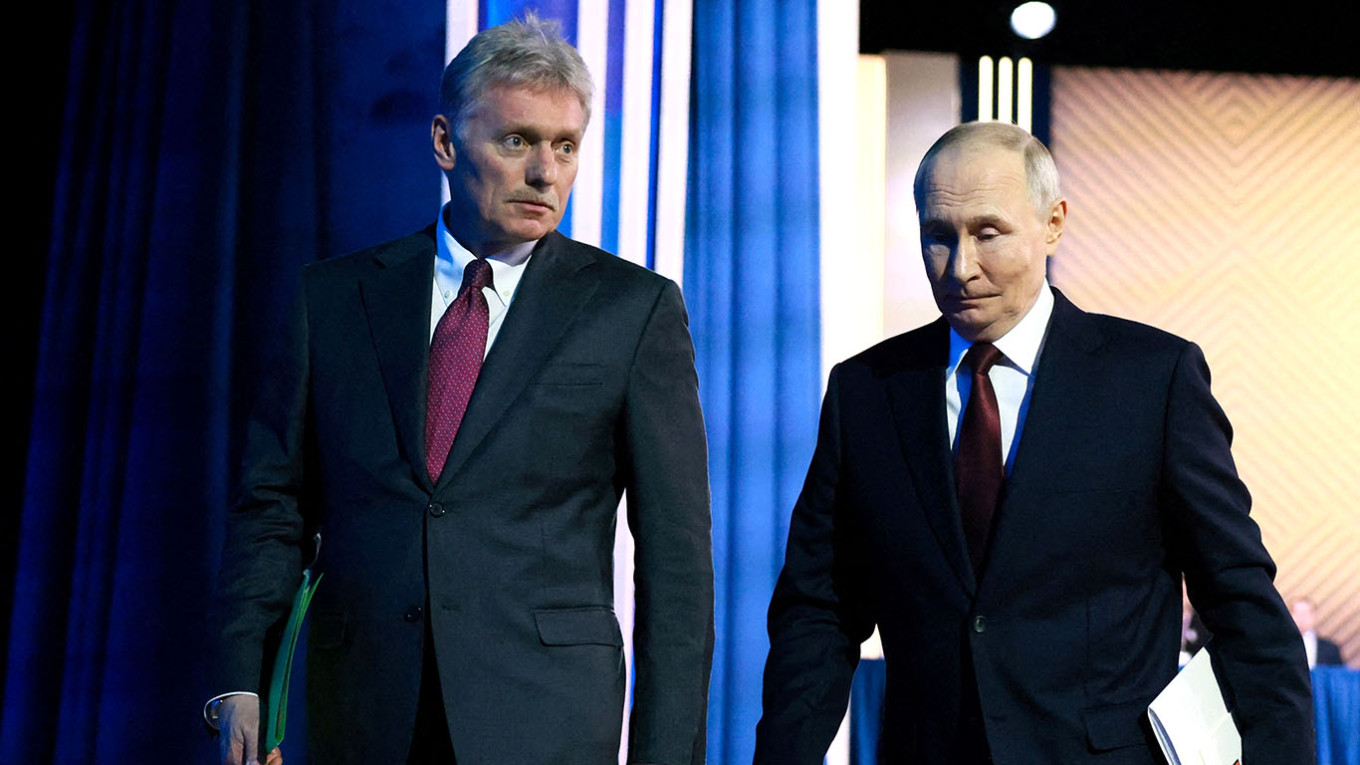
“The more Kyiv tries to escalate, the more we’re going to keep expanding this broader security zone, this buffer zone,” Kremlin spokesman Dmitry Peskov told reporters during a daily briefing.
The statement followed comments from Peskov on Thursday rebuffing U.S. President Donald Trump’s assertions that Ukrainian attacks on Russian oil refineries and infrastructure could help bring about an end to the war. Peskov dismissed those claims as "certain misconceptions" and reiterated Moscow’s commitment to a larger buffer zone.
Peskov’s comments in recent days echo a warning issued by President Vladimir Putin last week during a televised visit with Russian troops, during which he said that the “buffer zone” would expand in direct response to attacks inside Russia.
“The more attempts the enemy makes of this kind, the larger a security zone we’ll have to establish on the adjacent territory,” Putin said last Friday.
“All the more so because this, like the other territories we’re talking about today, is also historically Russian land,” he added.
Peskov said Friday that Putin’s position “has not changed” and that Russia will continue what it calls its “special military operation” since Ukraine is “not inclined toward peace right now.”
Reuters, citing three sources close to the Kremlin, reported Thursday that Putin has rejected his advisers’ calls for a ceasefire and intends to continue fighting, with one source noting a “high probability” of escalation in the coming months.
Putin first ordered the creation of the “buffer zone” in the spring of 2025 after Ukraine mounted a months-long incursion into southwestern Russia’s Kursk region. The zone’s boundaries have since expanded into more Ukrainian regions and have not been clearly defined.
A Message from The Moscow Times:
Dear readers,
We are facing unprecedented challenges. Russia's Prosecutor General's Office has designated The Moscow Times as an "undesirable" organization, criminalizing our work and putting our staff at risk of prosecution. This follows our earlier unjust labeling as a "foreign agent."
These actions are direct attempts to silence independent journalism in Russia. The authorities claim our work "discredits the decisions of the Russian leadership." We see things differently: we strive to provide accurate, unbiased reporting on Russia.
We, the journalists of The Moscow Times, refuse to be silenced. But to continue our work, we need your help.
Your support, no matter how small, makes a world of difference. If you can, please support us monthly starting from just $2. It's quick to set up, and every contribution makes a significant impact.
By supporting The Moscow Times, you're defending open, independent journalism in the face of repression. Thank you for standing with us.

Remind me later.