This article was originally published by Real Clear Defense.
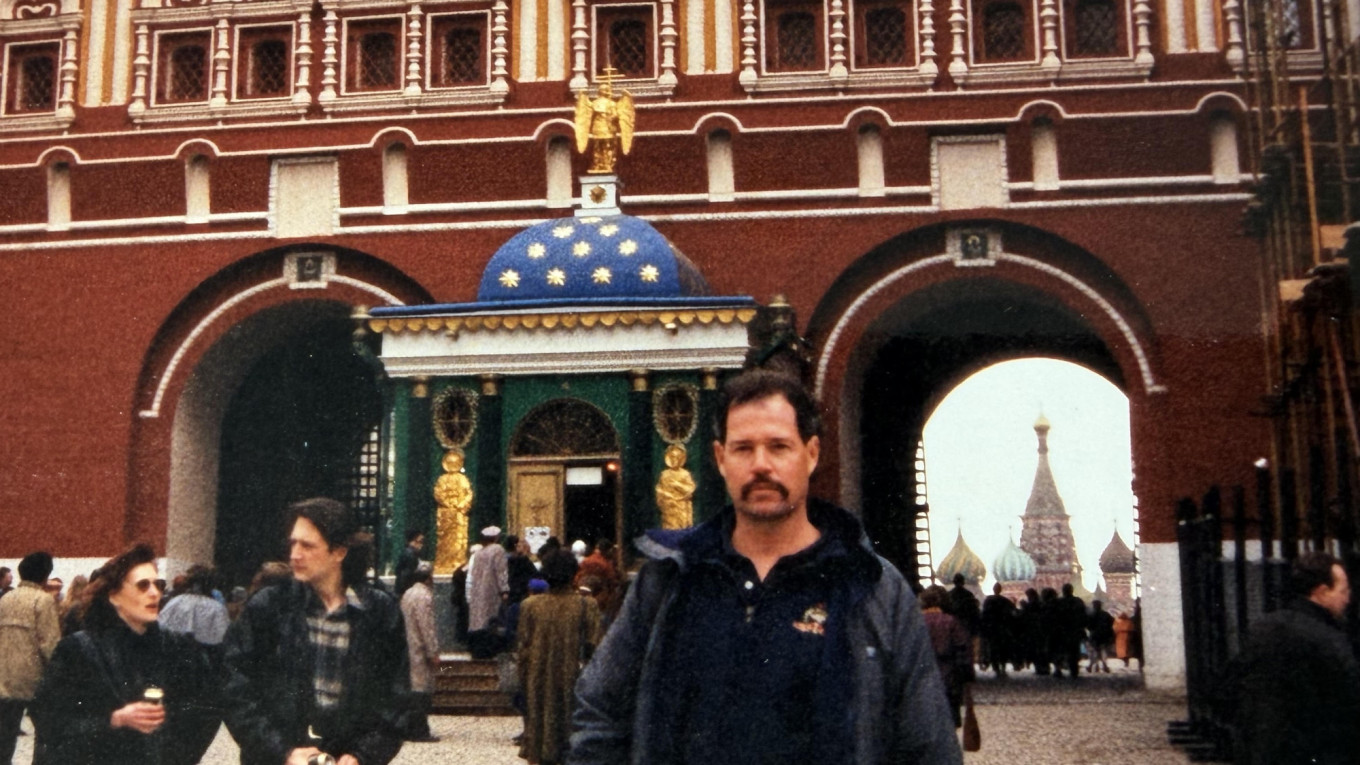
In the late 1990s, I would take the Moscow metro to Lubyanka Square and walk into the headquarters of Russia’s Federal Security Service — sometimes several times a week.
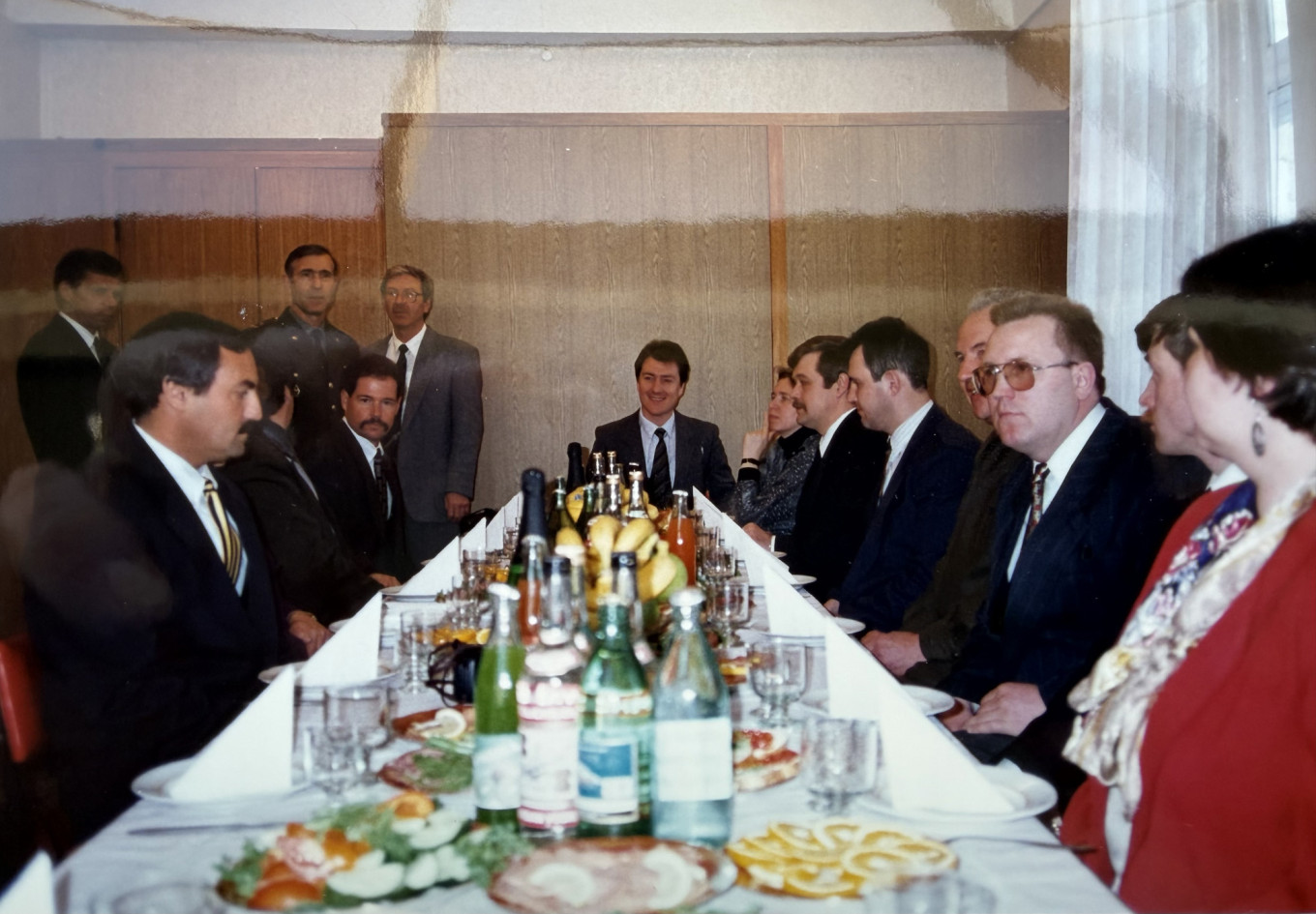
Inside, I met directly with Russian counterparts to work active cases: kidnappings, financial crimes and corruption investigations that reached into Russian institutions themselves. There were no elaborate protocols or rigid channels. We worked through problems in real time, often on the basis of professional trust rather than formal agreement.
For a brief period following the collapse of the Soviet Union — roughly from the mid-1990s into the early 2000s — this kind of sustained, practical cooperation between United States and Russian security services was not only possible but actively pursued within defined limits.
Today, it seems almost implausible.
As an FBI legal attaché in Moscow — and later working across the former Soviet space with the Organization for Security and Co-operation in Europe — I saw firsthand how this cooperation functioned in practice. It was real. It was productive. And its collapse left behind more than a diplomatic void — it contributed to a fragmented operational landscape that continues to shape security risks across the region today.
At the operational level, engagement with Russian counterparts often unfolded in ways that defied expectation. Even within institutions traditionally viewed as adversarial, there was a pragmatic willingness to engage directly on shared criminal threats when interests aligned. That engagement sometimes extended across multiple levels of authority, including senior leadership.
The first time I met Vladimir Putin in 1998, he had just been appointed director of Russia’s Federal Security Service. At the time, I was working to build cooperation between U.S. and Russian law enforcement at a moment when such engagement was not only possible but actively encouraged within practical limits on both sides. In practice, cooperation was direct and often informal. Russian counterparts would call to propose a meeting; there were no elaborate taskings or rigid channels. We worked cases jointly on the basis of professional trust rather than formal agreement.
In one instance, a sensitive dispute involving the arrest of a former Russian intelligence officer in the United States was resolved within days through direct engagement, without escalation.
What made this possible was not political alignment, but a shared understanding among practitioners that certain problems — organized crime, financial theft, cross-border criminal activity — required cooperation regardless of broader tensions.
But that cooperation rested on a fragile foundation. It was never institutionalized. It depended on personal relationships, informal understandings and a narrow window of political tolerance.
I had seen both the promise and the limits of this model even before arriving in Moscow. As an FBI special agent, I investigated the theft of diamonds, gold and artwork from the Russian state at a time when there was virtually no formal liaison between U.S. and Russian law enforcement. The FBI had no legal attaché presence in Moscow or elsewhere in the former Soviet Union and cooperation was sporadic, case-dependent and often improvised. That experience underscored how difficult sustained cooperation could be in the absence of institutional structure and how dependent it was on circumstance rather than design.
As political relations between Russia and the West deteriorated in the early 2000s, these informal mechanisms proved difficult to sustain. Trust was not transferable. Cooperation narrowed, then diminished and eventually gave way to suspicion and constraint.
What followed was not a managed transition, but a collapse of operational engagement — removing one of the few mechanisms capable of managing shared risks as broader tensions escalated.
The consequences extended beyond the bilateral relationship. Across the fifteen states that emerged from the Soviet Union — where I later worked with law enforcement and border authorities — no coherent operational framework replaced what had been lost. Institutions weakened unevenly, borders remained porous and transnational criminal networks adapted faster than governments.
During my time advising on border security across the OSCE region, this gap was a persistent feature. In parts of Central Asia, border disputes around enclaves periodically escalated into violence. Border and law enforcement authorities on both sides often lacked sustained mechanisms to engage one another directly. In practice, coordination had to be improvised during moments of tension, precisely when it was most likely to fail.
The result was not the emergence of a stable system, but a fragmented security environment — one in which cooperation became sporadic and risks increasingly difficult to manage.
This distinction matters today.
If instability across the former Soviet space is driven not only by geopolitical rivalry but also by the absence of practical, day-to-day cooperation, then diplomacy and deterrence — while necessary — are not sufficient. They do not address the operational gaps where many cross-border threats originate.
Even now, limited and often unacknowledged cooperation continues in response to acute risks. These interactions are narrow, informal and fragile, but they demonstrate that the underlying need for cooperation has not disappeared.
The challenge is not whether cooperation is possible. It is whether it can be structured to endure under current conditions.
One way to approach this problem is through a narrowly scoped, practitioner-driven mechanism designed to sustain limited operational engagement across the former Soviet space.
Such an effort would not resemble a traditional multilateral institution. Instead, it would function as a small, technically focused forum composed primarily of practitioners — law enforcement officials, border security experts and investigators — with direct experience managing cross-border threats across the region.
Participation from Western countries would be limited and carefully structured, focused on technical support and facilitation rather than leadership.
The objective would not be to resolve geopolitical tensions, but to preserve a minimal level of functional cooperation in areas where mutual interests persist.
The design is critical. Unlike formal institutions, which depend on political consensus and are often the first casualties of diplomatic breakdown, a practitioner-focused mechanism could operate with a degree of separation from state-to-state relations. It would prioritize continuity of technical engagement over visibility, allowing cooperation to persist at a functional level even when official channels contract.
Unlike the model of the 1990s, which relied almost entirely on personal relationships, this approach would introduce just enough structure to survive political disruption without requiring political alignment.
Skepticism is warranted. The current environment is defined by deep mistrust and any initiative involving Russian participation will face resistance. But the alternative is not stability — it is continued fragmentation. Transnational threats in the region have not receded; they have adapted.
The collapse of the U.S.S.R. was not a single completed event. It marked the beginning of a longer process defined not only by political change, but by the erosion of operational systems that once helped manage shared risks.
Rebuilding even limited forms of practical cooperation will not resolve current conflicts, including the war in Ukraine. But without it, the conditions that sustain instability across the region will persist quietly, steadily and with consequences that extend far beyond any single crisis.
A Message from The Moscow Times:
Dear readers,
We are facing unprecedented challenges. Russia's Prosecutor General's Office has designated The Moscow Times as an "undesirable" organization, criminalizing our work and putting our staff at risk of prosecution. This follows our earlier unjust labeling as a "foreign agent."
These actions are direct attempts to silence independent journalism in Russia. The authorities claim our work "discredits the decisions of the Russian leadership." We see things differently: we strive to provide accurate, unbiased reporting on Russia.
We, the journalists of The Moscow Times, refuse to be silenced. But to continue our work, we need your help.
Your support, no matter how small, makes a world of difference. If you can, please support us monthly starting from just $2. It's quick to set up, and every contribution makes a significant impact.
By supporting The Moscow Times, you're defending open, independent journalism in the face of repression. Thank you for standing with us.

Remind me later.