Russian economic growth could slow far more sharply than the Kremlin expects this year as Ukrainian drone attacks on oil infrastructure disrupt exports and force production cuts, the Kremlin-linked Center for Macroeconomic Analysis and Short-Term Forecasting (CMAKP) has said.
In its latest forecast, CMAKP said hopes that surging global oil prices would give Russia’s economy a meaningful boost were unlikely to materialize because repeated attacks on ports and refineries were undermining the country’s ability to export crude and fuel.
The warning underscores how Ukraine’s long-range drone campaign is increasingly threatening one of Moscow’s key economic lifelines at a time when Russia is already grappling with high interest rates, slowing investment and Western sanctions.
CMAKP nearly halved its 2026 growth forecast, projecting GDP growth of 0.5%-0.7%, down from an earlier estimate of 0.9%-1.3%. It also lowered its 2027 forecast to 1%-1.2% from 1.2%-1.5%.
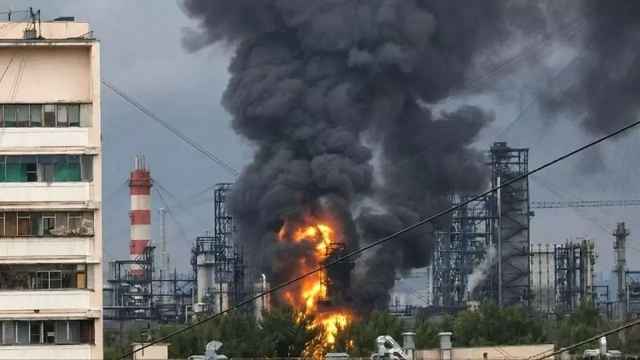
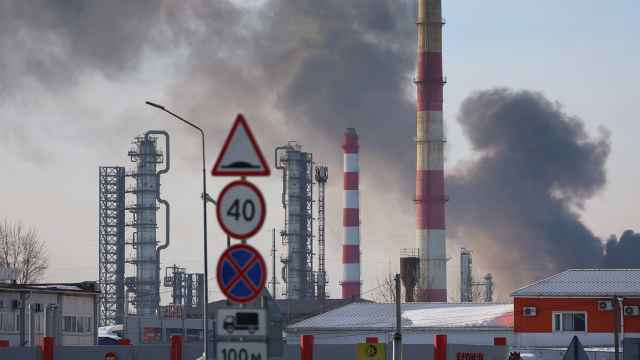
Ukrainian strikes on Russian oil export infrastructure have intensified in recent months, damaging major facilities on both the Baltic and Black Seas.
In March, drones hit the key Baltic ports of Ust-Luga and Primorsk, while in April they damaged the Sheskharis oil terminal in Novorossiysk, Russia’s main Black Sea export hub, CMAKP said.
As a result, Russia’s export capacity fell by around 1 million barrels per day, or nearly 20%, according to the report.
Russian refinery throughput in April dropped to its lowest level since late 2009 because of the attacks. The Tuapse refinery, one of Russia’s 10 largest, has been offline since April 16, while strikes on other facilities have continued.
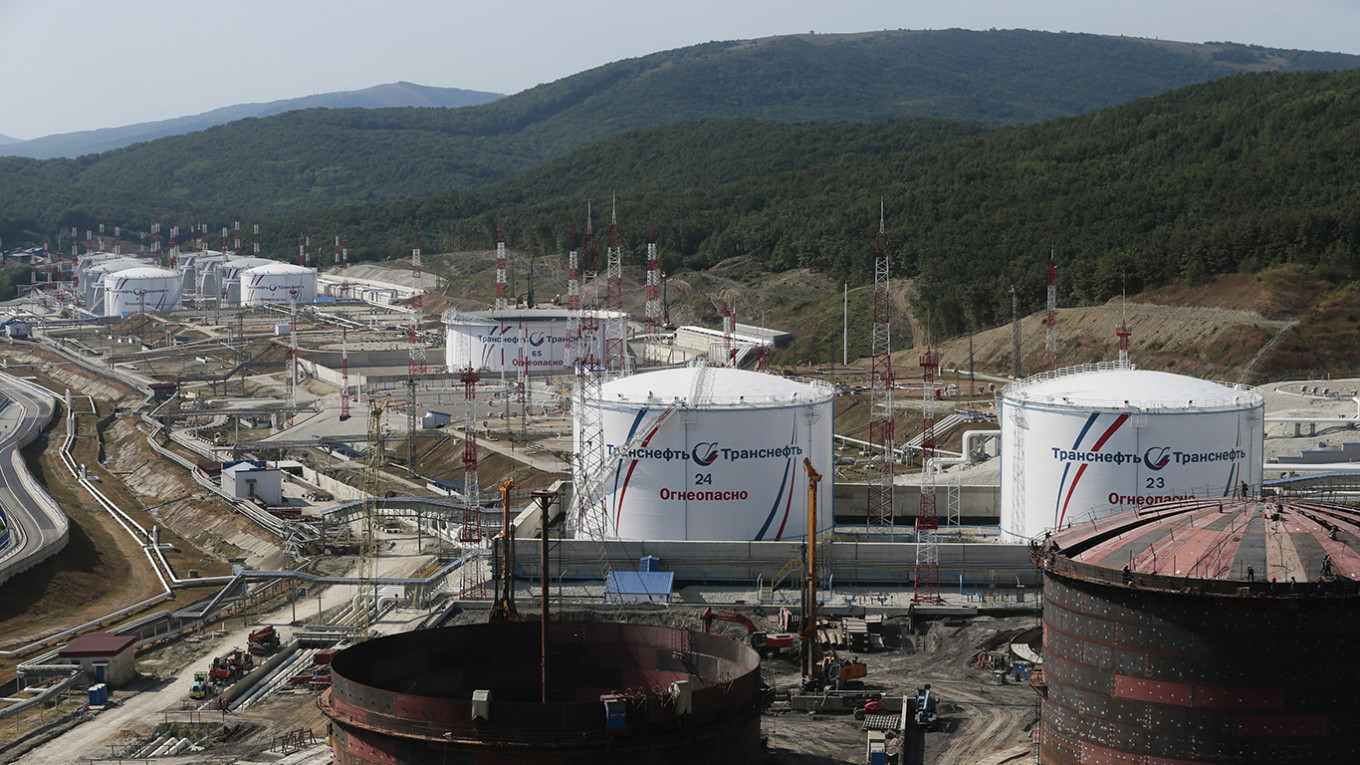
Excess crude had initially been redirected into storage facilities and pipelines operated by state pipeline monopoly Transneft, but those systems are now nearing capacity because export shipments have slowed, forcing producers to curb output, the report said.
CMAKP also warned of additional risks to Russian energy exports. Ukraine could again halt oil transit to Hungary and Slovakia through the Druzhba pipeline, it said, while new Western sanctions continue to tighten restrictions on Russian trade.
The European Union’s 20th sanctions package, adopted in late April, laid the groundwork for possible future restrictions on maritime shipments of Russian oil, the center said.
CMAKP also slightly lowered its forecast for pipeline gas exports and gas production between 2026 and 2029 because of potential transportation disruptions.
Even without drone attacks, “a gradual but steady” decline in Russian oil production remains the most likely scenario for the industry over the next decade, according to separate analysis by energy expert Sergey Vakulenko of the Carnegie Russia Eurasia Center.
CMAKP said weaker oil and gas exports would reinforce broader trends already taking hold in the Russian economy, including slowing inflation, falling investment and consumption-driven growth fueled by rising wages.
The center cut its investment forecast for this year to a contraction of 2%-2.4%, compared with a previous estimate of minus 1.6%-2%.
At the same time, it raised forecasts for real wages and disposable incomes to growth of 2.8%-3%, up from 1.5%-1.9%, and increased its outlook for retail trade growth to 1.5%-2%.
Inflation is now expected at 5.3%-5.6%, slightly below CMAKP’s previous forecast of 5.75%-6.05%.
The ruble is also expected to weaken as energy export revenues decline. CMAKP revised its year-end exchange rate forecast to 73-77 rubles per dollar from 70-73 previously.
Russia’s economy has already contracted slightly this year, with GDP declining 0.3% in the first quarter.
Sberbank Deputy Chairman Taras Skvortsov said in late April that the bank, which services a large share of the Russian economy, still saw no clear signs of improvement.
“Our real-time indicators, whether consumption, company turnover or demand for investment lending, point to a rather difficult situation,” Skvortsov said.
Economist Dmitry Polevoy said the authorities’ belief in a “soft landing” for the economy was likely misplaced. He expects GDP growth of just 0.3% this year.
Read this article in Russian at The Moscow Times' Russian service.
A Message from The Moscow Times:
Dear readers,
We are facing unprecedented challenges. Russia's Prosecutor General's Office has designated The Moscow Times as an "undesirable" organization, criminalizing our work and putting our staff at risk of prosecution. This follows our earlier unjust labeling as a "foreign agent."
These actions are direct attempts to silence independent journalism in Russia. The authorities claim our work "discredits the decisions of the Russian leadership." We see things differently: we strive to provide accurate, unbiased reporting on Russia.
We, the journalists of The Moscow Times, refuse to be silenced. But to continue our work, we need your help.
Your support, no matter how small, makes a world of difference. If you can, please support us monthly starting from just $2. It's quick to set up, and every contribution makes a significant impact.
By supporting The Moscow Times, you're defending open, independent journalism in the face of repression. Thank you for standing with us.

Remind me later.