From now on, no Russian businessman is safe from the beggar’s plate or prison. That is the conclusion one can draw from the news that came in last week.
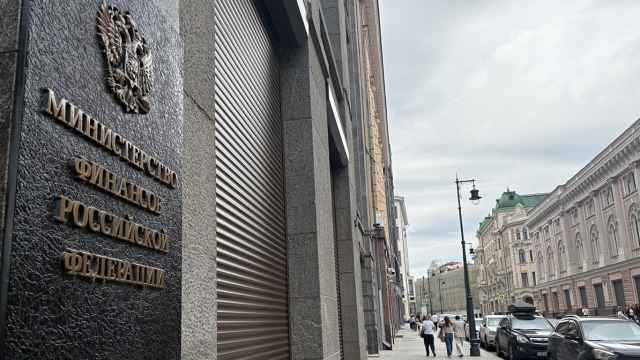
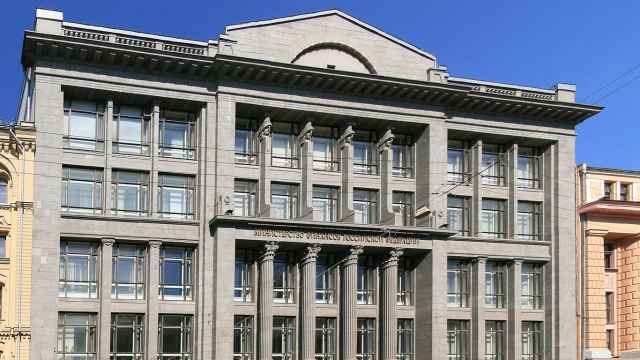
In light of the record budget deficit — almost 6 trillion rubles ($84.7 billion) — caused by rising spending, the Federal Tax Service is frantically looking for money.
The tax increases introduced at the start of this year have failed to cover the budget deficit: non-resource revenues rose by 10% in the first four months, VAT collections after the rate hike rose by 20%, but oil and gas revenues were almost 40% lower than last year.
And then the Federal Tax Service got involved. Judging by reports from the ground, tax officials have begun quite literally shaking businesses down for their last ruble.
Small businesses have been hit especially hard, particularly those affected by the abolition of the simplified tax regime and the patent system, increasing their tax payments by six- to eightfold.
Unsurprisingly, many long-suffering entrepreneurs found a solution: closing their individual and limited liability entities before they reach the 20 million ruble ($283,000) simplified tax threshold and then opening new ones so as not to be hit with VAT.
Then the tax officials come for them, interpreting any opening and closing of legal entities — and even simply having several legal entities — as tax evasion.
It should be stressed that tax optimization is not in itself a crime. Reducing costs is a sacred duty of any business. But since the Yukos case, tax officials and the security services have come to see such measures as robbery. Why has optimization become a crime? The answer to that question lies not in the law, but in the appetite of the inspectors.
Judging by all appearances, that appetite is rapacious. They combine the revenue of all existing enterprises, or all those that existed over the course of the year, and if it exceeds 20 million rubles, they gleefully assess additional taxes based on the general regime with VAT. Then comes a fine of 20-40% of the unpaid amount, plus penalties for every day of delay.
Fighting back is very difficult. Officials check whether the legal entities have clients or employees in common, whether their addresses match, whether there are transactions between accounts and any other evidence they can use.
If there is even the slightest overlap, they declare that there was a fictitious re-registration. They can dig into documents from five or six years ago, ignoring statutes of limitation by arguing that the clock only starts ticking from the moment when a crime is discovered.
Here’s a real-life example. An acquaintance of mine who makes furniture is closing down his production. He always had about 20 legal entities. Not for the sake of tax optimization (which is completely legal) but simply because it was more convenient for him to deal with clients from different sectors that way.
Convenience turned out to be punishable. Tax officials came, accused him of “fragmentation for the purpose of tax evasion” and offered him a deal: pay $100,000 and they would not open a case against him. If he refused, the cost of fighting his case would be much higher. The cheerful fellows from the tax service were open about the fact that if he refused, he’d end up asking in front of law enforcement.
The man calculated the costs and the stress — and decided to close down, because what kind of business can survive a $100,000 shakedown? In the past three months alone, more than 200,000 small businesses have made the same decision.
Big business cannot be said to be safer. The 28 largest companies in Russia all lost money last year. It isn’t hard to see why. Cut off from European markets, these companies are dependent on demand from China, which in turn shamelessly demands huge discounts in return for access.
Those lucky few who have avoided the downturn will still have to fork out. There is growing talk in government of a new round of windfall tax collection on top of President Vladimir Putin’s call for businesses to share their revenue with the state — voluntarily, of course. As we know from the story of the furniture maker, those who fail to understand will be visited not by tax officials, but by someone else.
The State Duma has finally adopted amendments setting a normal statute of limitations for privatization — three years from the moment violations are discovered and no more than 10 years after the event itself. But this protection will only help businesses whose owners have not already fallen out of favor with the authorities or attracted the attention of the security services. The rest can always be accused of extremism and corruption.
As is the case with many Russian laws, this legislation can be interpreted flexibly. Take the case of former Federation Council member Vadim Moshkovich, who built a fortune of over $1 billion from the Rusagro agricultural business. Russian deputies and senators are allowed to own assets but are forbidden from engaging in entrepreneurial activity. His agricultural holding was seized by the state, with this combination interpreted as corruption.
Moshkovich is also being tried under the usual articles used to target entrepreneurs: fraud and the legalization of proceeds obtained by criminal means. In such cases, the very fact of entrepreneurial activity and the registration of a legal entity are treated as fraud, while profit — or even total turnover — is treated as the laundering of money obtained as a result of that fraud.
If you think Moshkovich is some kind of exception who fell foul of elites with closer ties to Putin, here are some more examples.
On the same grounds, former Chelyabinsk region Governor Mikhail Yurevich lost his Makfa holding. Konstantin Strukov, former deputy speaker of the same region and a United Russia member, was stripped of Yuzhuralzoloto despite having essentially received that asset for loyal service to the party. That is before we even get to lesser-known figures who are also being accused of combining public service and business as a form of corrupt activity.
Such charges could be made against one in five major Russian businessmen. At the top of the list is Senator Suleiman Kerimov, who also ranks fifth on the Russian Forbes list. It is no accident that, according to rumors, he was the first to volunteer to donate 100 billion rubles ($1.4 billion) at Putin’s politely worded demand.
Will the security and tax services leave Kerimov alone after such a generous contribution? I doubt it. At best, it will hold them off for a short time until they return with further demand, either to plow into the federal budget or their own pockets.
A Message from The Moscow Times:
Dear readers,
We are facing unprecedented challenges. Russia's Prosecutor General's Office has designated The Moscow Times as an "undesirable" organization, criminalizing our work and putting our staff at risk of prosecution. This follows our earlier unjust labeling as a "foreign agent."
These actions are direct attempts to silence independent journalism in Russia. The authorities claim our work "discredits the decisions of the Russian leadership." We see things differently: we strive to provide accurate, unbiased reporting on Russia.
We, the journalists of The Moscow Times, refuse to be silenced. But to continue our work, we need your help.
Your support, no matter how small, makes a world of difference. If you can, please support us monthly starting from just $2. It's quick to set up, and every contribution makes a significant impact.
By supporting The Moscow Times, you're defending open, independent journalism in the face of repression. Thank you for standing with us.

Remind me later.