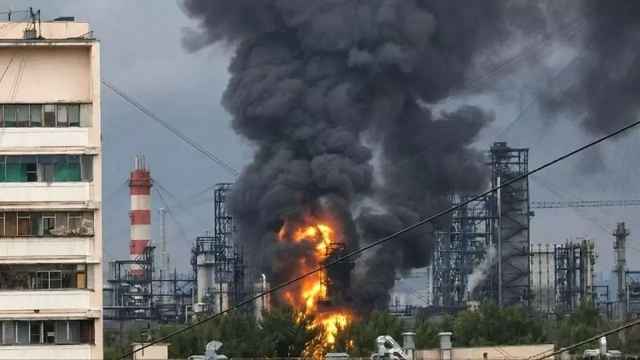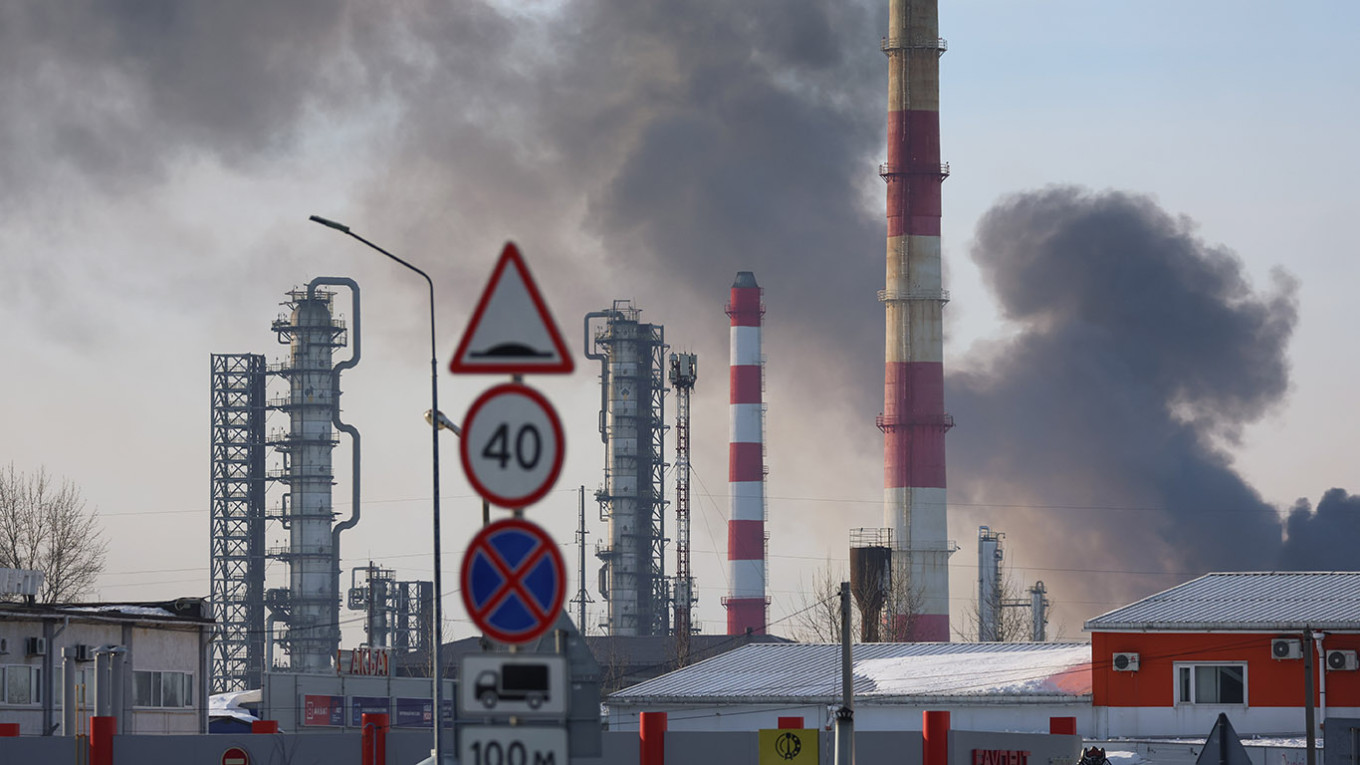
Russian oil companies suffered more than 1 trillion rubles ($12.9 billion) in losses as a result of Ukraine’s campaign of strikes on Russian oil refineries in 2025, a senior executive at insurance broker Mains told the Kommersant business daily.
Direct damage to the oil and gas sector from drone attacks has already exceeded 100 billion rubles ($1.29 billion), while lost profits and indirect losses have pushed the total above 1 trillion rubles ($12.9 billion), said Yevgeny Borovikov, Mains’ deputy CEO.
According to Bloomberg calculations based on statements by Ukrainian and Russian officials, Ukraine carried out 120 attacks on Russian energy facilities in 2025.
Oil refineries accounted for 81 of these attacks.
Maritime infrastructure, including offshore oil and gas fields, was targeted 27 times, while pipelines and tankers were struck eight and four times respectively.
August saw the highest number of refinery strikes with 14 incidents, while December recorded the largest number of attacks overall at 24.
Amid the attacks, pipeline supplies of crude oil to Russian refineries fell to their lowest level in 15 years in 2025, according to calculations by consultancy Argus.
Refineries received 228.34 million tons of crude, a 1.6% decrease year-on-year.
Total oil refining in Russia declined by 1.7% to 262.3 million tons, an industry source told Kommersant.
Insurers said losses from coverage of “terrorism” and sabotage risks exceeded 100% in 2025, rising severalfold due to a sharp increase in claims.
Market figures said this had led to significantly higher premiums and deductibles.
Alexei Khutoryansky, head of corporate underwriting at insurer Soglasie, told Kommersant that losses in the company’s portfolio had jumped more than tenfold.
“Market-wide dynamics are likely close to ours. Premiums for these risks are currently lower than payouts,” he said.
Another major insurer told Kommersant its losses had increased by at least 200%.
Insurance broker Remind said the number of insured events and the damage caused by them rose “many times over” in 2025, estimating the average loss from a single refinery attack at several hundred million rubles (several million dollars).
SOGAZ also reported a sharp rise in claims linked to “terrorism” risks.
Dmitry Gavrilov, head of property underwriting at Yugoria, said the increase reflected both the growing number of attacks on industrial and infrastructure facilities and changes in attack tactics, including the use of multiple drones and weapons systems in a single strike.
Defense Minister Andrei Belousov said in December that Russia’s air defense systems were operating at an average efficiency rate of 97%.
He said Ukraine had increased the average number of drones launched at Russia to about 3,700 per month in 2025.
Ukraine’s security service chief Vasyl Maliuk has said Ukrainian forces carried out around 160 successful strikes on oil production and refining facilities in Russia last year.
He said the highest number of targets was hit in September and October, including six refineries, two oil terminals, three storage depots and nine pumping stations.
A Message from The Moscow Times:
Dear readers,
We are facing unprecedented challenges. Russia's Prosecutor General's Office has designated The Moscow Times as an "undesirable" organization, criminalizing our work and putting our staff at risk of prosecution. This follows our earlier unjust labeling as a "foreign agent."
These actions are direct attempts to silence independent journalism in Russia. The authorities claim our work "discredits the decisions of the Russian leadership." We see things differently: we strive to provide accurate, unbiased reporting on Russia.
We, the journalists of The Moscow Times, refuse to be silenced. But to continue our work, we need your help.
Your support, no matter how small, makes a world of difference. If you can, please support us monthly starting from just $2. It's quick to set up, and every contribution makes a significant impact.
By supporting The Moscow Times, you're defending open, independent journalism in the face of repression. Thank you for standing with us.

Remind me later.