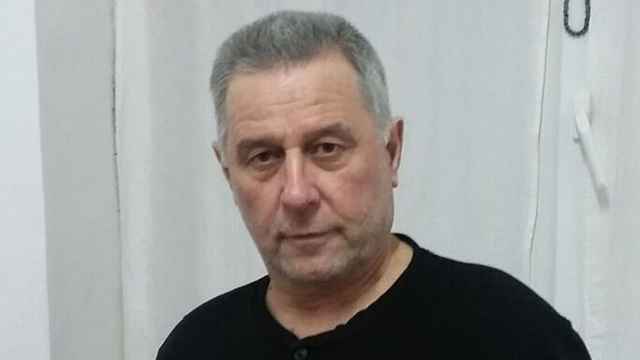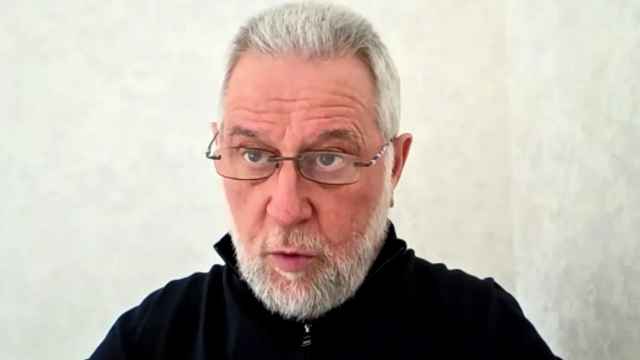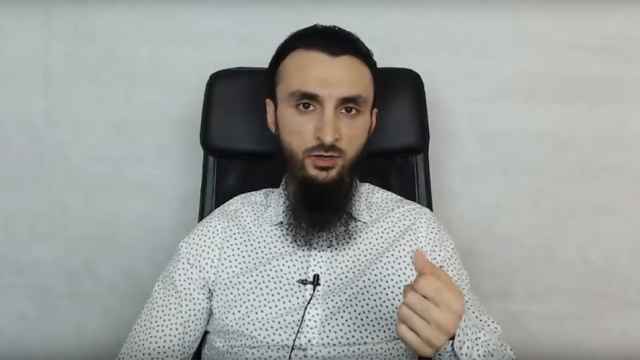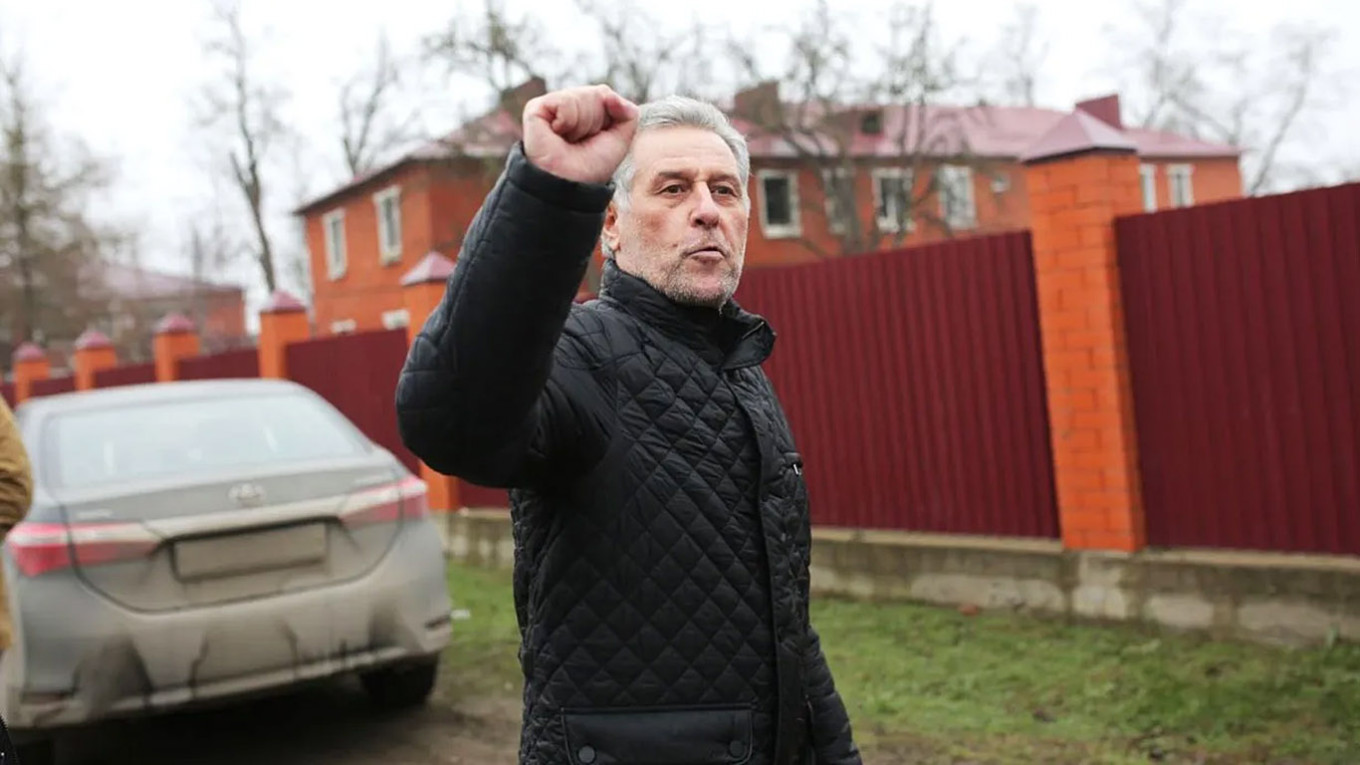
The head of Europe’s leading human rights body said Wednesday that Ruslan Kutayev, a Chechen member of a newly formed European advisory body for exiled Russian dissidents, was suspended from his post after comments he made about LGBTQ+ people and so-called “honor killings” in the North Caucasus.
Kutayev is one of five representatives of Russia’s Indigenous peoples and national minorities serving on the 15-member Platform for Dialogue with Russian Democratic Forces at the Parliamentary Assembly of the Council of Europe (PACE).
In an interview with exiled journalist Alexander Plyushchev last week, Kutayev, a self-described conservative, said he had never been contacted to help women and LGBTQ+ people fleeing violence in Chechnya and had “no desire to look into” the issue.
“I am part of the conservative part of Chechen society. In our society, this kind of behavior isn’t just seen as sensitive — it’s taken very, very seriously,” he said. “In defending the rights of minorities, the rights of the majority shouldn’t be infringed upon.”
Kutayev also defended Chechen society’s right to “protect itself from internal deviants and perverts” who “discredit” the majority, which some considered to be a reference to LGBTQ+ people, though he rejected that interpretation in a later interview.
At the same time, Kutayev described honor as the paramount value in Chechen culture, describing the family’s role in upholding it as “higher than life.” When Plyushchev asked about so-called “honor killings” — sometimes used to justify the murder of relatives perceived to have brought shame to the family — Kutayev stopped short of an outright justification, yet notably refused to condemn the practice.
“The decision is made exclusively by the family,” he said. “Whatever they do — kill, bring home, expel, arrange a wedding — it’s all decided by the family.”
In a follow-up interview with Plyushchev on Wednesday, Kutayev clarified that he does not condone violence. “People have no right to encroach on life, because life is given by the Almighty, and it is His right alone,” he said.
Still, PACE President Petra Bayr said in a statement on Wednesday that she decided to suspend Kutayev’s membership in the Platform for Dialogue with Russian Democratic Forces after receiving “several complaints” about his adherence to the assembly’s rules.
“The case will now be referred to the Bureau of the Parliamentary Assembly, which will take a final decision regarding his participation at its next meeting,” Bayr wrote on X.
The North Caucasus SOS Crisis Group (NC SOS), which helps women and LGBTQ+ people facing violence in the region, first called for Kutayev’s dismissal from PACE on Monday, accusing him of making statements that “effectively legitimize extrajudicial killings, fuel violence and impunity and violate the core principles of human rights.”
Kutayev told The Moscow Times on Tuesday that he was aware of the fact that some people were demanding his removal, but he suggested his comments in the interview with Plyushchev last week were misinterpreted or taken out of context.
“Like every person, I have my own point of view, and I won’t allow anyone to accuse me of things I haven’t said or done,” he said.
“I was asked to give my expert opinion about [Chechen] society, so I spoke about real attitudes toward [LGBTQ+] people in the Caucasus... I explained the situation as I know it from the inside,” Kutayev told The Moscow Times.
“What [LGBTQ+ people] do and how they do it is their own business,” he added.
Kutayev previously served as deputy prime minister of the self-proclaimed Chechen Republic of Ichkeria from 1996 to 1997. A court in the republic of Chechnya recently designated a group claiming to represent the unrecognized state in exile as a “terrorist” organization.
Leyla Latypova contributed reporting.
A Message from The Moscow Times:
Dear readers,
We are facing unprecedented challenges. Russia's Prosecutor General's Office has designated The Moscow Times as an "undesirable" organization, criminalizing our work and putting our staff at risk of prosecution. This follows our earlier unjust labeling as a "foreign agent."
These actions are direct attempts to silence independent journalism in Russia. The authorities claim our work "discredits the decisions of the Russian leadership." We see things differently: we strive to provide accurate, unbiased reporting on Russia.
We, the journalists of The Moscow Times, refuse to be silenced. But to continue our work, we need your help.
Your support, no matter how small, makes a world of difference. If you can, please support us monthly starting from just $2. It's quick to set up, and every contribution makes a significant impact.
By supporting The Moscow Times, you're defending open, independent journalism in the face of repression. Thank you for standing with us.

Remind me later.