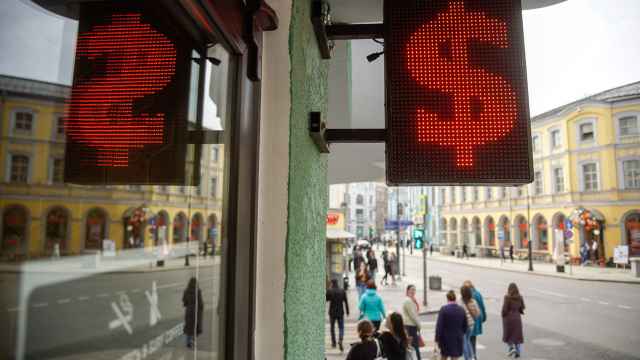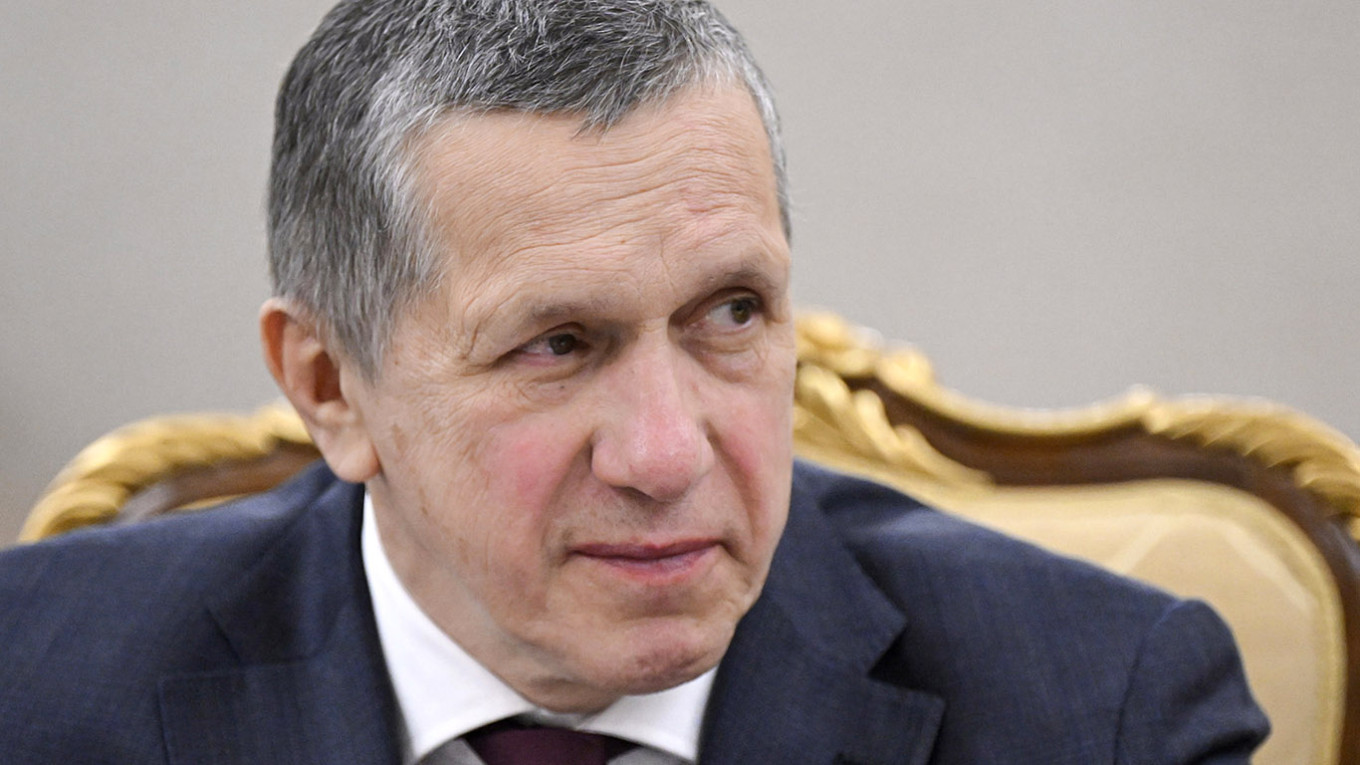
A single large apple costs 300 rubles ($3.99) and a kilogram sells for about 1,000 rubles ($13.30) in Russia’s far eastern Chukotka region despite government efforts to make essential goods more affordable in the Arctic, Deputy Prime Minister Yury Trutnev said Wednesday.
Trutnev, who also serves as President Vladimir Putin’s envoy to the Far East, said the prices highlighted persistent problems with the so-called “northern delivery” system, a state-backed logistics program intended to reduce the cost of food, fuel and construction materials in remote northern regions.
“To be honest, that kind of price is striking,” the state-run RIA Novosti news agency quoted Trutnev as saying during a meeting on the socio-economic development of the Chukotka autonomous district.
“I would ask the Ministry for the Development of the Far East and the Arctic, after the governor’s report, to explain to me why apples cost 300 rubles apiece. We are clearly doing something wrong,” he said.
Food prices in Chukotka and other remote Russian regions have traditionally been several times higher than in European Russia because of harsh weather, long transport routes and limited local production.
The government in 2023 adopted the law “On Northern Delivery,” a long-delayed initiative developed on Putin’s instructions and aimed at improving supplies to remote northern territories. Officials had sought the legislation for nearly 20 years.
The program covers 19 Russian regions with a combined population of 2.16 million people and includes 386 infrastructure facilities such as roads, railway stations, ports and transport-logistics hubs.
Authorities said the law was meant to help address social issues by lowering the cost of basic goods and improving living conditions in the Far North.
But complaints over shortages and high prices have persisted.
In June 2023, then-acting Chukotka Governor Vladislav Kuznetsov, who now heads the region, said residents had complained about high food prices and restrictions on egg sales in the town of Bilibino, where eggs were reportedly sold only upon presentation of a passport.
“The approach is like in the 1990s,” Kuznetsov said at the time.
He ordered officials to ensure the town maintained a two-month reserve supply of eggs, including through the construction of a local poultry farm.
Kuznetsov also said locals had raised concerns about the quality and availability of medical services. In one case, a pregnant woman had to fly to the regional capital Anadyr to undergo an ultrasound scan.
Read this article in Russian at The Moscow Times' Russian service.
A Message from The Moscow Times:
Dear readers,
We are facing unprecedented challenges. Russia's Prosecutor General's Office has designated The Moscow Times as an "undesirable" organization, criminalizing our work and putting our staff at risk of prosecution. This follows our earlier unjust labeling as a "foreign agent."
These actions are direct attempts to silence independent journalism in Russia. The authorities claim our work "discredits the decisions of the Russian leadership." We see things differently: we strive to provide accurate, unbiased reporting on Russia.
We, the journalists of The Moscow Times, refuse to be silenced. But to continue our work, we need your help.
Your support, no matter how small, makes a world of difference. If you can, please support us monthly starting from just $2. It's quick to set up, and every contribution makes a significant impact.
By supporting The Moscow Times, you're defending open, independent journalism in the face of repression. Thank you for standing with us.

Remind me later.