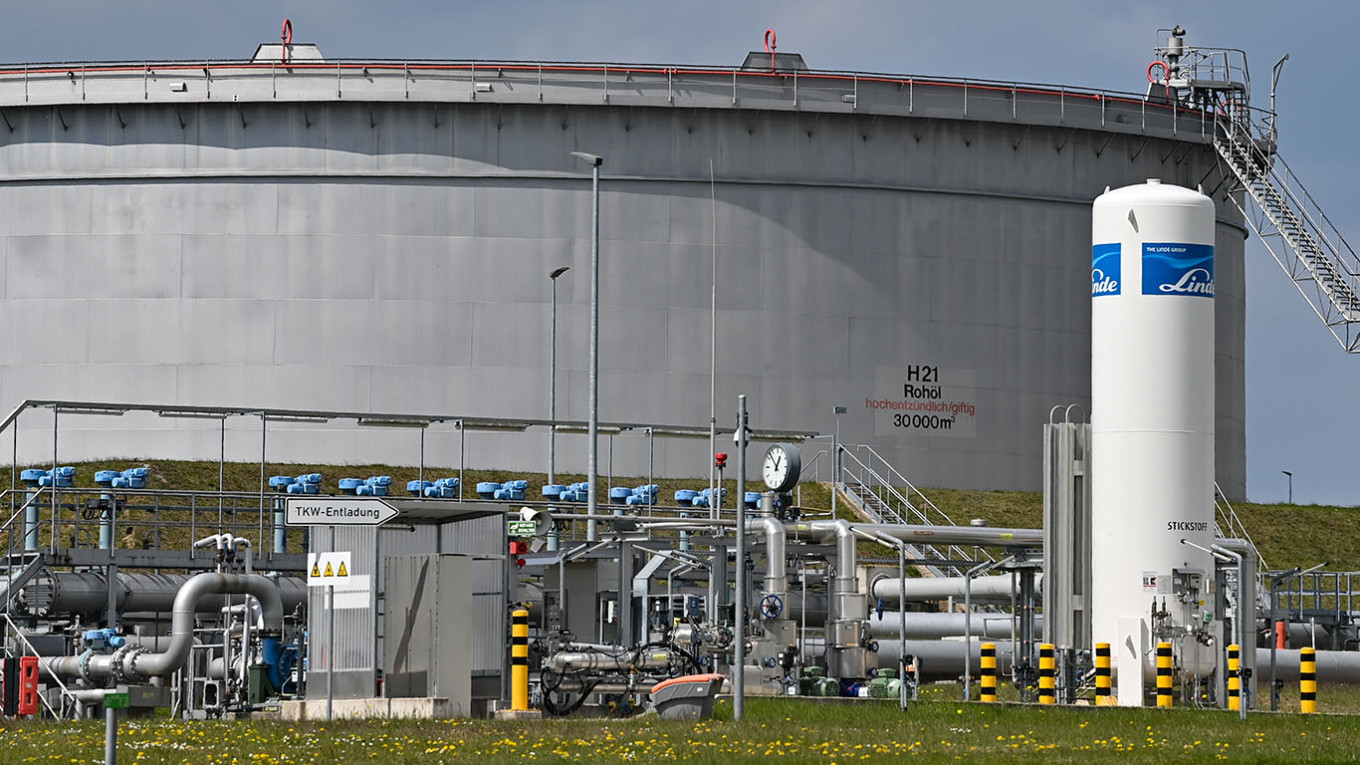
Russia plans to halt the flow of Kazakh oil through the Druzhba pipeline to a refinery in eastern Germany starting May 1, the energy ministry in Berlin told AFP on Wednesday.
The German subsidiary of Russia's state-owned oil company Rosneft told German regulators that the Russian Energy Ministry had ordered the suspension. Moscow has not confirmed the decision directly to the German government, officials in Berlin said.
Rosneft Germany "is currently assessing the implications" of the pipeline closure for the refinery and is "utilizing all available options to ensure security of supply in Germany," the German energy ministry said.
Russia's Deputy Prime Minister Alexander Novak later confirmed the suspension, saying Kazakh oil will be redirected to "other available logistics routes."
"This is due to current technical capacities," Novak told journalists without providing a timeline for the resumption. "The Germans have given up on Russian oil, so they are doing fine."
According to Reuters, Novak said the logistical change had previously been agreed with Kazakhstan, whose energy minister said the disruption was likely caused by Ukrainian drone strikes on Druzhba.
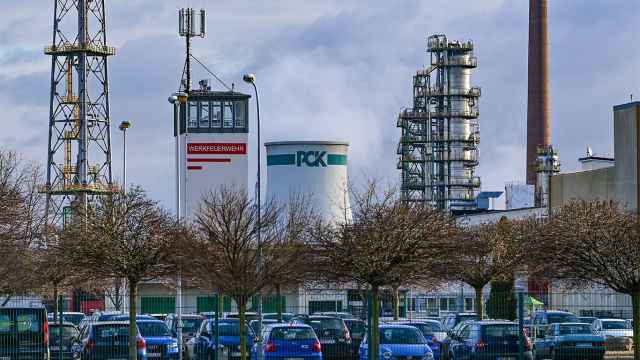
The refinery in east Germany supplies much of the Berlin region with fuel, but officials said the impact would likely be limited.
"The lack of Kazakh oil deliveries to the PCK refinery does not ultimately jeopardize the security of supply of mineral oil products in Germany, even if PCK Schwedt would have to operate at a lower capacity utilization," Germany's energy ministry said.
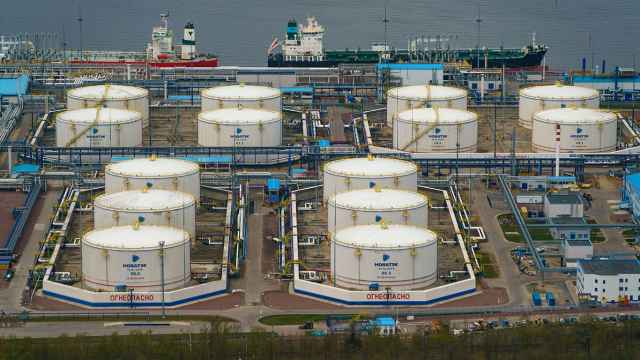
Kazakh oil is currently transported via the Druzhba pipeline, which runs through Russian territory. One branch of the pipeline runs through Belarus and Poland before reaching Germany, while another branch runs through Ukraine to Hungary.
The German government took Rosneft Germany into trusteeship after Russia's 2022 invasion of Ukraine. Kazakh oil has been sourced for the PCK refinery to replace Russian crude imports.
Germany has been searching for a new buyer to take over the Rosneft subsidiary, which is the majority owner of the refinery.
Last year, Berlin received a U.S. sanctions exemption for the refinery, with officials arguing that Rosneft Germany had been entirely "decoupled" from its parent company.
AFP contributed reporting.
A Message from The Moscow Times:
Dear readers,
We are facing unprecedented challenges. Russia's Prosecutor General's Office has designated The Moscow Times as an "undesirable" organization, criminalizing our work and putting our staff at risk of prosecution. This follows our earlier unjust labeling as a "foreign agent."
These actions are direct attempts to silence independent journalism in Russia. The authorities claim our work "discredits the decisions of the Russian leadership." We see things differently: we strive to provide accurate, unbiased reporting on Russia.
We, the journalists of The Moscow Times, refuse to be silenced. But to continue our work, we need your help.
Your support, no matter how small, makes a world of difference. If you can, please support us monthly starting from just $2. It's quick to set up, and every contribution makes a significant impact.
By supporting The Moscow Times, you're defending open, independent journalism in the face of repression. Thank you for standing with us.

Remind me later.