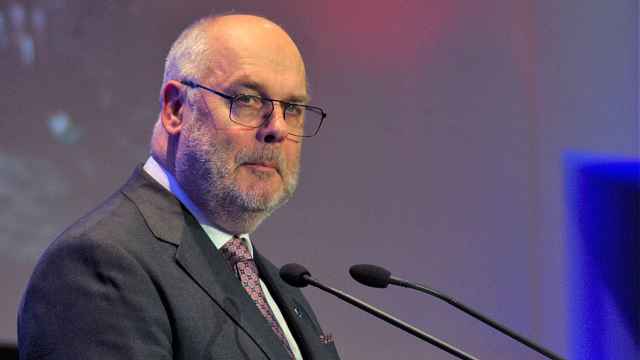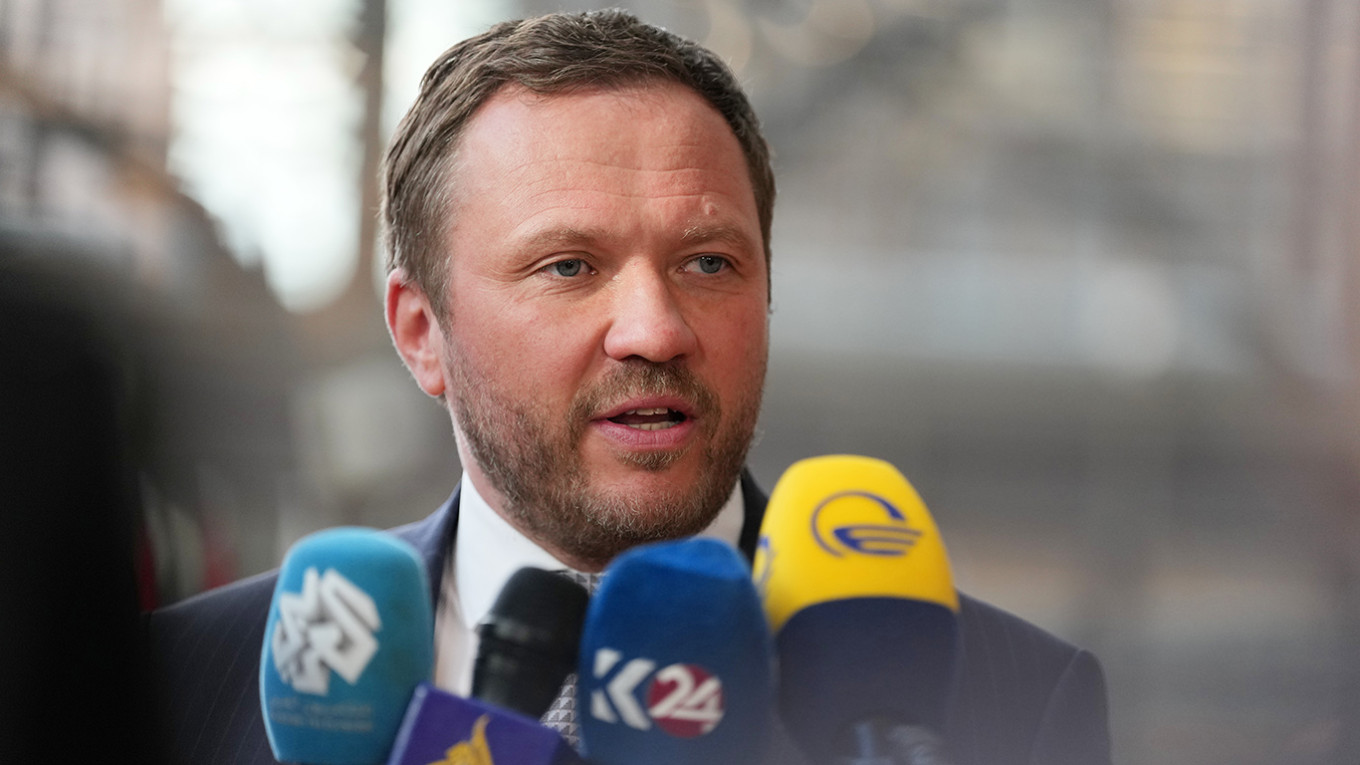
Estonia’s top diplomat on Monday dismissed claims by Ukrainian President Volodymyr Zelensky that Russia may be preparing to invade the Baltic states, stating there is currently no evidence of a military buildup near NATO borders.
“We don’t see Russia concentrating its forces or preparing in any way militarily to attack NATO or the Baltic states,” Estonian Foreign Minister Margus Tsahkna told the public broadcaster ERR.
“Rather, it is the opposite. Russia is not in a very strong position on the Ukrainian front, and economically as well,” he added.
Zelensky told Ukrainian television on Sunday that Russia could be planning a new military mobilization drive to either step up its war in Ukraine or invade the Baltic.
He claimed that ongoing mobile internet restrictions in Russia, which the Kremlin says are aimed at combating Ukrainian drone strikes and sabotage operations, are meant to lay the groundwork for suppressing possible mass protests against another wave of mobilization.
“Why? Because one state or another, for example, a Baltic one, is not ready for a high-intensity confrontation. Because they are small — not because they aren’t brave,” Zelensky said.
Tsahkna told ERR that Zelensky’s comments “do not make cooperation any easier.” Estonia, a former Soviet republic with long-strained relations with Moscow, has been a strong supporter of Ukraine since Putin ordered the full-scale invasion in February 2022.
In December, the head of Estonia’s foreign intelligence service said there is no indication that President Vladimir Putin is planning to attack the Baltic states or NATO despite mounting warnings from European officials that a direct conflict between the West and Russia could break out in the coming years.
Putin has dismissed the warnings as hysteria, insisting Russia has no interest in a direct military confrontation with NATO. He has said, however, that Russia is prepared “right now” to go to war with Europe if forced into such a position.
A Message from The Moscow Times:
Dear readers,
We are facing unprecedented challenges. Russia's Prosecutor General's Office has designated The Moscow Times as an "undesirable" organization, criminalizing our work and putting our staff at risk of prosecution. This follows our earlier unjust labeling as a "foreign agent."
These actions are direct attempts to silence independent journalism in Russia. The authorities claim our work "discredits the decisions of the Russian leadership." We see things differently: we strive to provide accurate, unbiased reporting on Russia.
We, the journalists of The Moscow Times, refuse to be silenced. But to continue our work, we need your help.
Your support, no matter how small, makes a world of difference. If you can, please support us monthly starting from just $2. It's quick to set up, and every contribution makes a significant impact.
By supporting The Moscow Times, you're defending open, independent journalism in the face of repression. Thank you for standing with us.

Remind me later.