
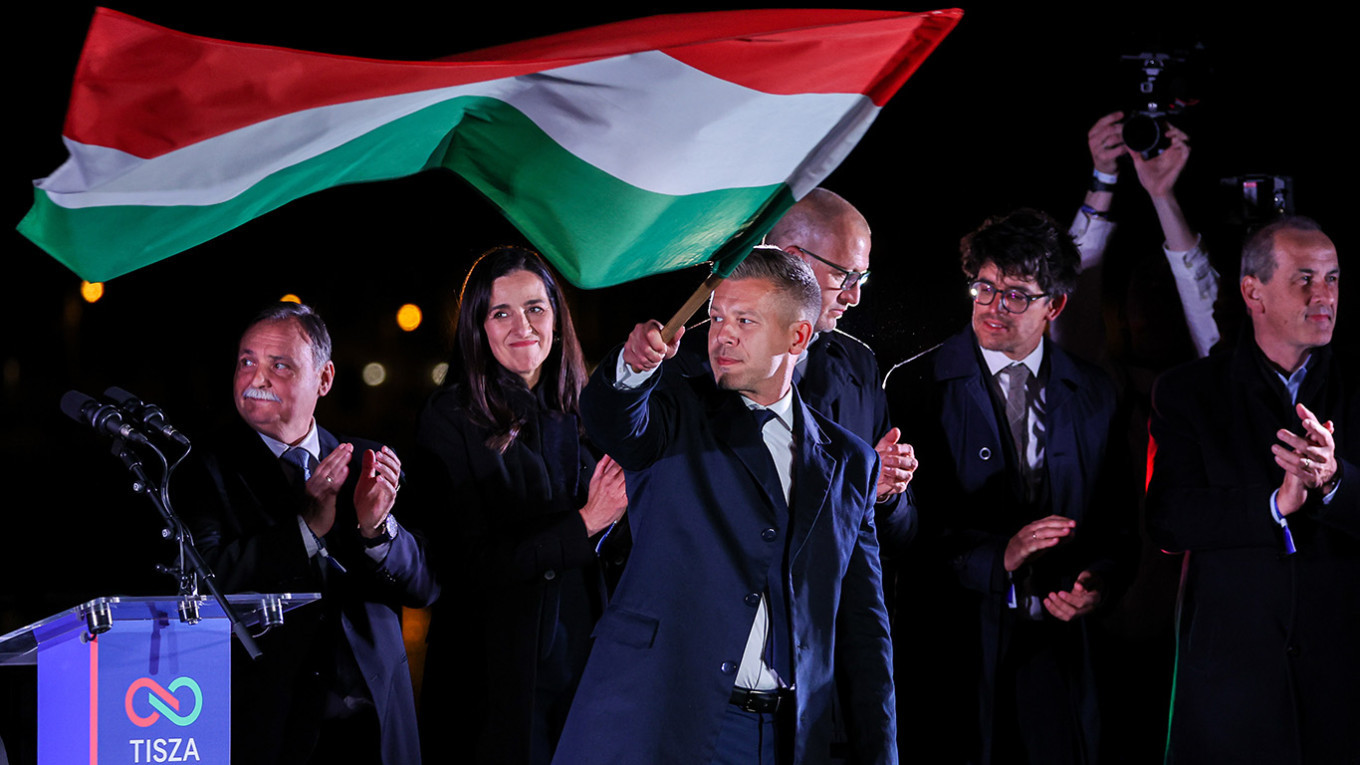
While the Kremlin said it respected the results of Sunday’s Hungarian elections that saw far-right populist Prime Minister Viktor Orbán defeated, other officials and pro-Kremlin figures said the outcome would “only accelerate the EU’s collapse.”
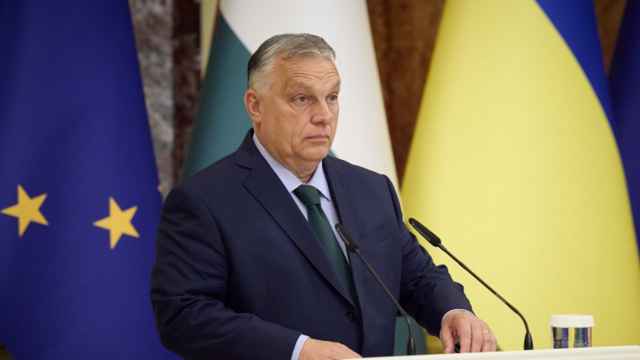
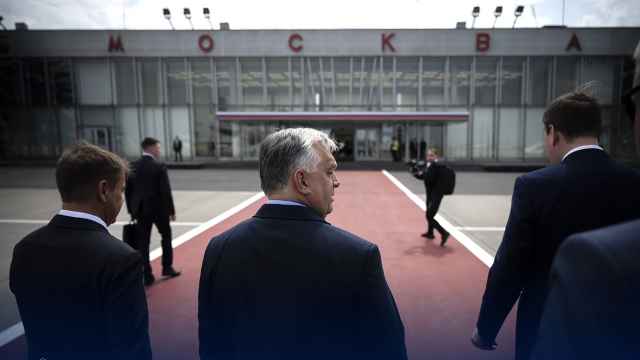
Orbán had been one of Europe’s most Kremlin-friendly leaders during his 16 years in power, using Hungary’s veto to repeatedly delay decisions on aid to Ukraine and EU sanctions on Russia. He conceded defeat to center-right, pro-EU challenger Péter Magyar following a landslide vote in what observers call a setback for right-wing populism worldwide.
Kremlin spokesman Dmitry Peskov said Monday that Moscow respects the election result and expects “pragmatic contacts” with the new government in Budapest.
“The Hungarians have made their choice. We respect this choice. We expect to continue our pragmatic contacts with the new leadership of Hungary,” Peskov said. “What actions the new Hungarian leadership will take — we will probably have to be patient and see how things develop.”
“Once again, we are interested in building good relations with Hungary, as well as with all European countries. … Unfortunately, we cannot yet speak of reciprocity from European countries, but Russia remains open to dialogue,” he said.
State-run broadcaster Rossia 24 opened its Monday news segment on Hungary’s elections with Peskov’s comments.
While the Kremlin struck a measured tone, other officials and pro-Kremlin voices seized on the chance to criticize Russia’s adversaries in Europe.
Kirill Dmitriev, a Kremlin envoy in U.S.-led talks on ending the war in Ukraine, said Orbán’s defeat would “just accelerate the collapse of the EU.”
“Check if I am right in four months,” Dmitriev, who also serves as CEO of Russia’s Direct Investment Fund, added on X.
Senator Konstantin Kosachev predicted that the EU’s economic problems would worsen due to what he called anti-Russian sentiment across the bloc.
“Orbán is leaving, but the problems remain — and in fact are snowballing,” he said.
“In fact, the European Union is now heading into a perfect storm. First, it will have to find 90 billion euros for Ukraine — money that Brussels lacks and that other European capitals lack even more,” Kosachev said.
“Second, fuel and utility prices will continue to rise due to events in the Middle East, which is distant from the EU, offering little optimism either in households or in the corridors of power,” he added.
Pro-Kremlin tabloid Komsomolskaya Pravda said Orbán “has largely stood alone in recent years in opposing the determined course of the EU leadership toward turning the bloc into a kind of ‘United States of Europe,’ in which the decisive say would belong to Brussels.”
“Orbán was labeled a ‘Kremlin agent’ and subjected to repeated attempts to discredit him,” Komsomolskaya Pravda said. “Now, talk of ‘terrifying Russian interference’ has suddenly been forgotten.”
Prime Minister-designate Magyar has expressed openness to engaging with Moscow, saying in an interview ahead of the elections that “if the situation arises, one must sit down with the Russian president.”
“The geographical position of neither Russia nor Hungary will change. Our energy exposure will also be here for a while. Diversification needs to be strengthened, but this won't happen overnight. If necessary, we will negotiate, but we won't become friends,” he said.
In December, Russia and Hungary signed a 12-point cooperation plan covering energy, infrastructure, trade and cultural ties, Politico reported last week.
According to a Russian document cited by Politico, the Dec. 9 agreement commits Moscow and Budapest to “reverse the negative trend” in bilateral trade and expand cooperation in sectors including energy, industry, healthcare, agriculture and construction.
The document also calls for “developing long-term, mutually beneficial ties” and could pave the way for closer collaboration on oil, gas and nuclear fuel, as well as Russian involvement in Hungary’s electricity and hydrogen projects.
AFP contributed reporting.
A Message from The Moscow Times:
Dear readers,
We are facing unprecedented challenges. Russia's Prosecutor General's Office has designated The Moscow Times as an "undesirable" organization, criminalizing our work and putting our staff at risk of prosecution. This follows our earlier unjust labeling as a "foreign agent."
These actions are direct attempts to silence independent journalism in Russia. The authorities claim our work "discredits the decisions of the Russian leadership." We see things differently: we strive to provide accurate, unbiased reporting on Russia.
We, the journalists of The Moscow Times, refuse to be silenced. But to continue our work, we need your help.
Your support, no matter how small, makes a world of difference. If you can, please support us monthly starting from just $2. It's quick to set up, and every contribution makes a significant impact.
By supporting The Moscow Times, you're defending open, independent journalism in the face of repression. Thank you for standing with us.

Remind me later.