Russia and Hungary signed a 12-point cooperation plan in December covering energy, infrastructure, trade and cultural ties, Politico reported Wednesday.
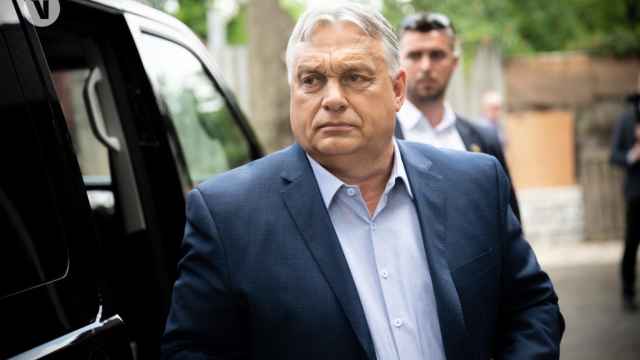
The report comes days before a closely watched election in Hungary, where Prime Minister Viktor Orbán is seeking re-election amid a campaign marred by leaks and accusations of foreign interference.
According to a Russian document cited by Politico, the Dec. 9 agreement commits Moscow and Budapest to “reverse the negative trend” in bilateral trade and expand cooperation in sectors including energy, industry, healthcare, agriculture and construction.
The document also calls for “developing long-term, mutually beneficial ties” and could pave the way for closer collaboration on oil, gas and nuclear fuel, as well as Russian involvement in Hungary’s electricity and hydrogen projects.
The contents of the plan, which include instructions to Russian government agencies on implementation, had not been previously disclosed. It was signed during the first meeting of the Russian-Hungarian Intergovernmental Commission on Economic Cooperation since the full-scale invasion of Ukraine in 2022.
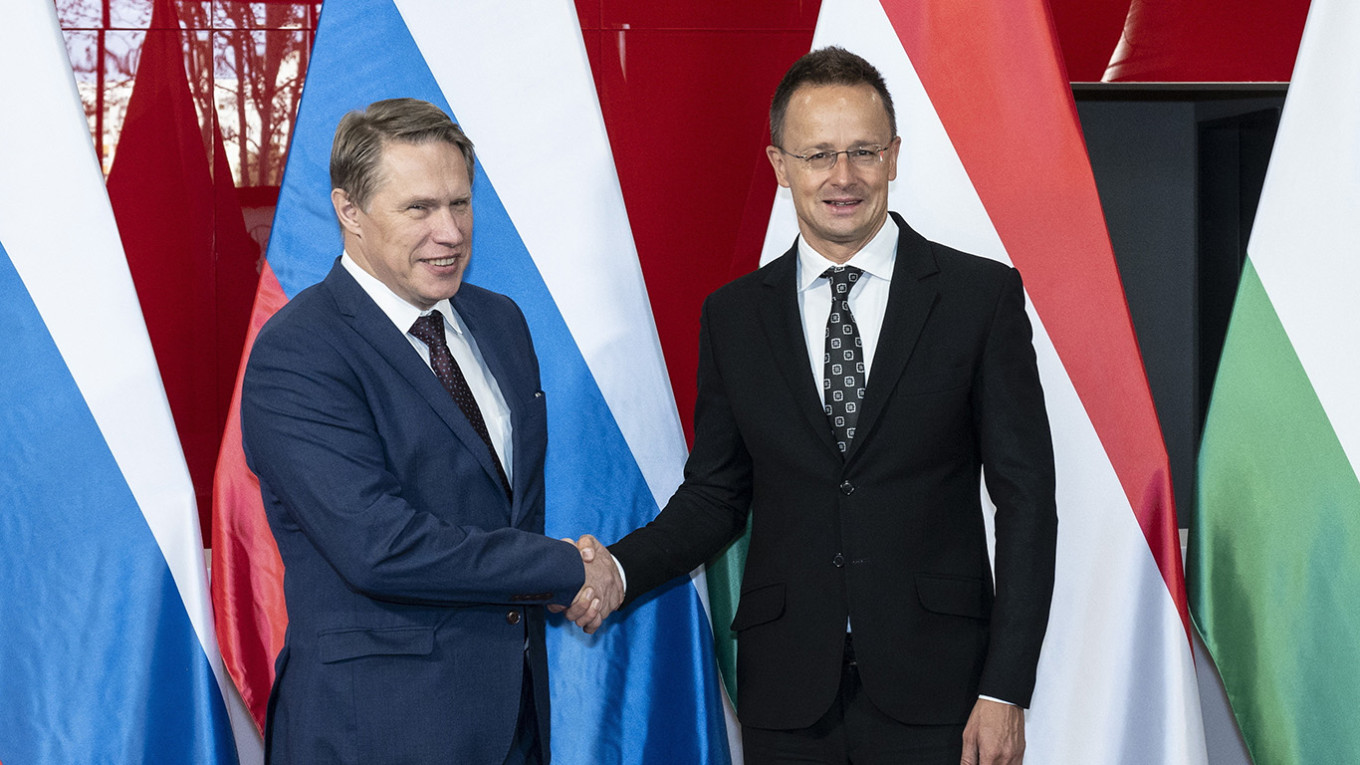
Hungarian Foreign Minister Péter Szijjártó, who signed the document alongside Russian Health Minister Mikhail Murashko, defended cooperation with Moscow as being driven by national interests rather than “pressure to conform to the extremely biased liberal mainstream media.”
Orbán met with Putin at the Kremlin on Nov. 28 for energy talks less than two weeks before the agreement was signed.
Separately, Bloomberg reported Tuesday that Orbán offered to help Putin “in any way” during an Oct. 17 phone call, likening himself to “a mouse that helps a lion” in a Hungarian folk story, which appears based on one of Aesop’s fables.
The Kremlin on Wednesday said the report portrayed Orbán as “pragmatic and effective” and dismissed suggestions it could hurt his electoral prospects.
“I would even see it as material in support of Orbán,” Kremlin spokesman Dmitry Peskov told reporters, adding that Moscow takes a “very sensitive approach” to high-level conversations and does not welcome their disclosure.
A Message from The Moscow Times:
Dear readers,
We are facing unprecedented challenges. Russia's Prosecutor General's Office has designated The Moscow Times as an "undesirable" organization, criminalizing our work and putting our staff at risk of prosecution. This follows our earlier unjust labeling as a "foreign agent."
These actions are direct attempts to silence independent journalism in Russia. The authorities claim our work "discredits the decisions of the Russian leadership." We see things differently: we strive to provide accurate, unbiased reporting on Russia.
We, the journalists of The Moscow Times, refuse to be silenced. But to continue our work, we need your help.
Your support, no matter how small, makes a world of difference. If you can, please support us monthly starting from just $2. It's quick to set up, and every contribution makes a significant impact.
By supporting The Moscow Times, you're defending open, independent journalism in the face of repression. Thank you for standing with us.

Remind me later.