Russian tour operators have lost about 3 billion rubles ($37 million) in the first 10 days of the war in the Middle East as they scrambled to evacuate tens of thousands of tourists and deal with mass trip cancellations, an industry group said.
The financial hit underscores the vulnerability of Russia’s outbound tourism sector to geopolitical shocks, particularly in the Middle East, which has become one of the country’s most popular travel regions after Western destinations largely closed to Russian travelers.
Most of the losses stem from the cost of returning stranded tourists from Gulf countries, particularly the United Arab Emirates, after flight disruptions forced companies to pay for additional plane tickets and hotel stays, said Dmitry Gorin, vice president of the Russian Union of Travel Industry (RST).
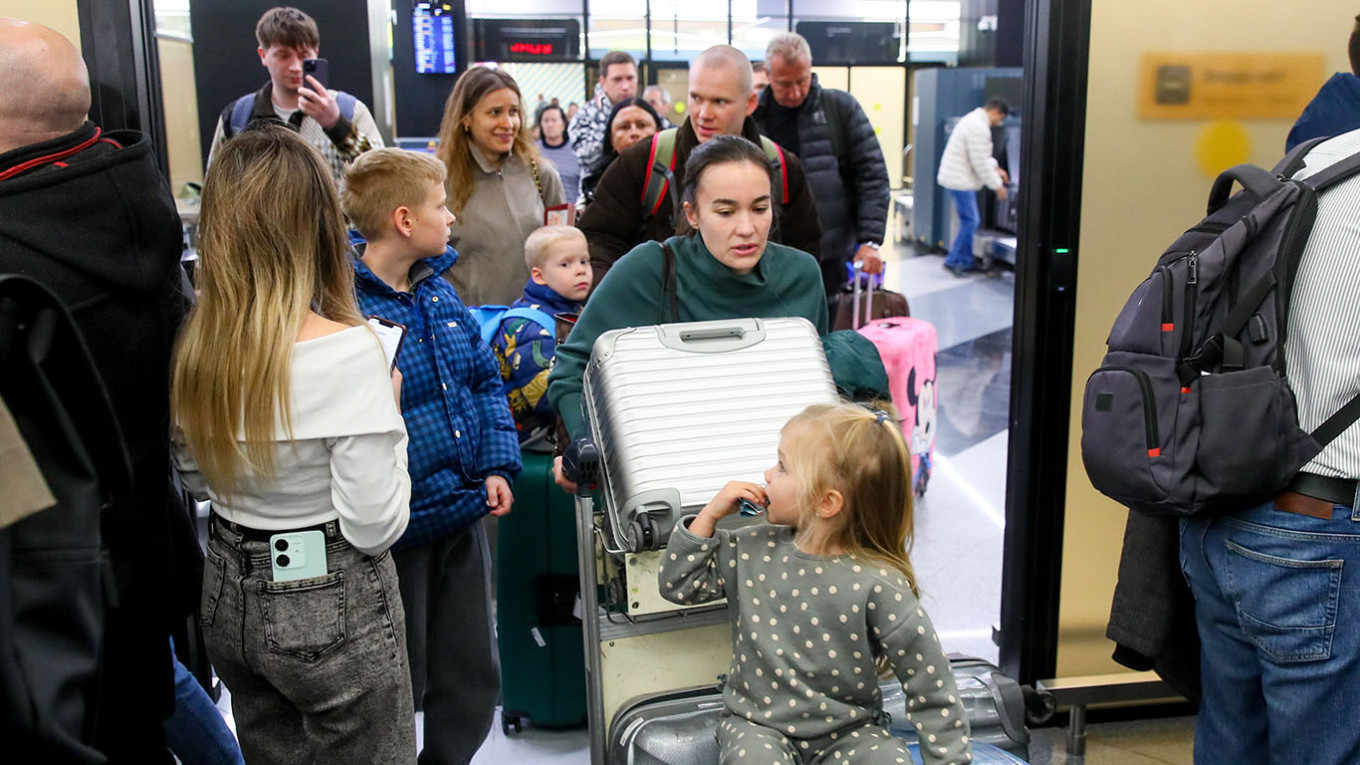
About 46,000 Russians have already been evacuated from the Persian Gulf region, roughly half of them organized tourists who booked through tour operators, Gorin said.
More than 5,000 Russians remain abroad in several countries, including around 1,500 organized tourists, many of them transit passengers whose routes passed through the UAE.
The industry’s biggest financial blow may still lie ahead, however, as tour operators prepare to refund customers for canceled trips to the Middle East scheduled for March, April and May.
Russia’s Economic Development Minister Maxim Reshetnikov said last week that companies must fully reimburse travelers after the Foreign Ministry advised Russians to avoid visiting the region because of the fighting. That means operators cannot deduct costs already incurred in organizing the tours.
To ease pressure on the sector, the government has allowed companies to use funds from their personal liability reserves to process refunds and postponed their annual contributions to the fund by three months.
The Middle East has become a key destination for Russian travelers in recent years. According to Russia’s FSB border service, Russians made 13.4 million tourist trips abroad last year, including 4.6 million to Turkey and 1.7 million to the UAE, the country’s second-most popular destination.
Read this article in Russian at The Moscow Times' Russian service.
A Message from The Moscow Times:
Dear readers,
We are facing unprecedented challenges. Russia's Prosecutor General's Office has designated The Moscow Times as an "undesirable" organization, criminalizing our work and putting our staff at risk of prosecution. This follows our earlier unjust labeling as a "foreign agent."
These actions are direct attempts to silence independent journalism in Russia. The authorities claim our work "discredits the decisions of the Russian leadership." We see things differently: we strive to provide accurate, unbiased reporting on Russia.
We, the journalists of The Moscow Times, refuse to be silenced. But to continue our work, we need your help.
Your support, no matter how small, makes a world of difference. If you can, please support us monthly starting from just $2. It's quick to set up, and every contribution makes a significant impact.
By supporting The Moscow Times, you're defending open, independent journalism in the face of repression. Thank you for standing with us.

Remind me later.