Parallel imports of new passenger cars into Russia have surpassed official deliveries from abroad, in a sign of how the market has adapted to the departure of many Western and Japanese automakers after the invasion of Ukraine.
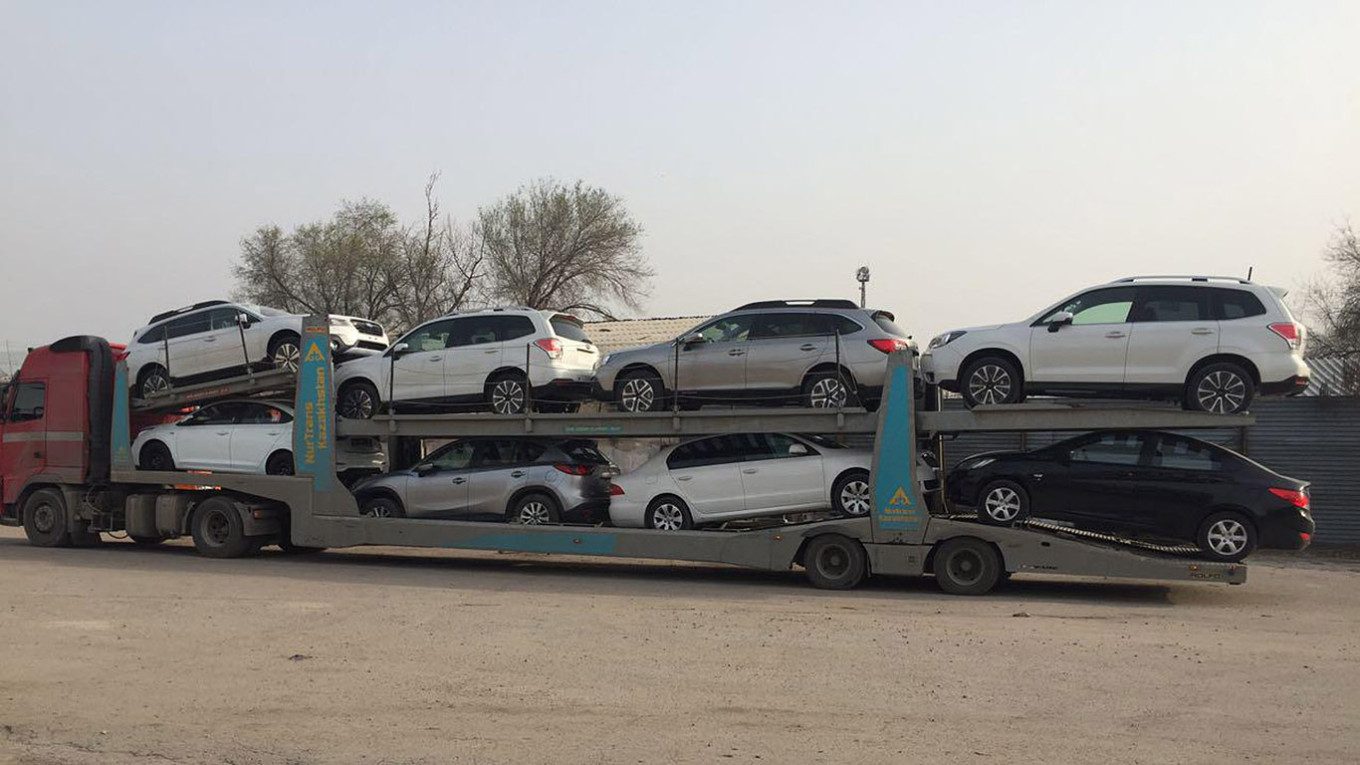
Vehicles brought in through so-called “grey” import channels, or imports routed via a third country, accounted for 53% of Russia’s total car imports in January-February, according to data from the Avtostat analytics agency.
That is an increase from 46% in 2025 and from less than 20% in 2024, though those figures reflect full-year data.
Russia imported 44,800 new cars in the first two months of the year, down 7% from the same period in 2025, Avtostat said.
Shipments from China and Belarus, traditionally among Russia’s largest suppliers since Western brands exited the market, fell sharply, dropping 23% and 11% respectively.
At the same time, imports routed through alternative channels surged. Deliveries via Kyrgyzstan increased more than fourfold, while imports from Japan and South Korea rose by 2.9 times and 2.8 times.
Chinese and Japanese brands dominated the list of the most popular imports.
Chinese auto giant Geely had the largest number of total imports, displaying a 918% growth since last year. The smaller Chinese luxury brand HongQi ranked third both in raw imports and rate of growth (390%).
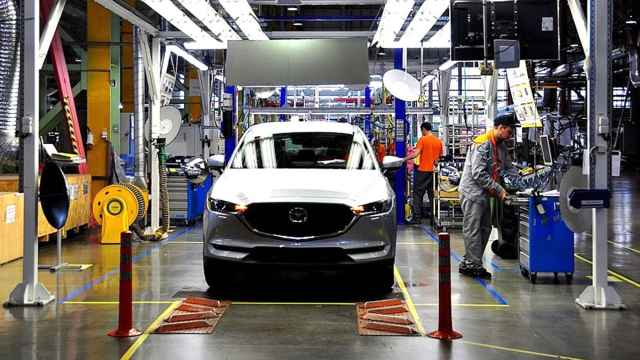
Mazda shipments totaled about 4,800 vehicles, a 15-fold increase from a year earlier, while Toyota imports reached roughly 2,600 cars, a 60% increase from 2025.
Demand for vehicles from brands that left Russia after the invasion of Ukraine has been boosted by the government’s efforts to close loopholes that allowed Russians to import cars while avoiding high recycling fees, Stanislav Zingirevich, an expert at consulting firm Kept, told the Kommersant business daily.
Russia’s Industry and Trade Ministry has warned that preferential recycling-fee rates for individuals importing cars from members of the Eurasian Economic Union — Armenia, Belarus, Kazakhstan and Kyrgyzstan — will be abolished starting April 1.
Logistical factors have also helped drive the popularity of grey import schemes, said Vladimir Chernov, an analyst at Freedom Finance Global.
Importing a vehicle from China into Kyrgyzstan typically involves customs payments of 10-15% of its value compared with significantly higher charges in Russia, he said.
Russian importing costs for new cars include a customs duty that can be up to 48% of the vehicle’s value before including other costs like the recycling fee.
“This is what gave rise to the so-called Kyrgyz import scheme,” Chernov said, adding that intermediary companies in Eurasian Economic Union countries can also help bypass some banking restrictions.
Avtostat CEO Sergei Tselikov said transit through Kyrgyzstan was having a “last gasp” ahead of the tightening of recycling-fee rules.
He also attributed rising parallel imports to buyers losing hope that foreign brands will soon return to the Russian market.
“Having realized there was nothing to wait for, they finally decided to fulfill their dream of buying anything but a Chinese car,” Tselikov said.
Tselikov added that official imports have also fallen because some Chinese automakers have shifted to assembling vehicles inside Russia under local brands.
Imports of China’s Chery, for example, almost disappeared: only 41 vehicles were imported in January-February, roughly 100 times fewer than a year earlier. Industry sources told Kommersant that Chery remains present in Russia indirectly through the Tenet brand.
Analysts expect the share of parallel imports to keep rising and potentially reach as high as 60% of total deliveries.
However, overall imports of new cars could fall by a further 10-15% in the first half of the year amid weak demand, high borrowing costs and market uncertainty.
Avtostat data shows that 160,600 new cars were sold in Russia in January-February 2026, a drop of 3.9% from the same period in 2025.
Issues linked with imports and foreign competition are rising as domestic Russian brands have struggled with high prices and declining sales, with Russia’s largest manufacturer AvtoVAZ cutting production.
Read this story in Russian at The Moscow Times' Russian service.
A Message from The Moscow Times:
Dear readers,
We are facing unprecedented challenges. Russia's Prosecutor General's Office has designated The Moscow Times as an "undesirable" organization, criminalizing our work and putting our staff at risk of prosecution. This follows our earlier unjust labeling as a "foreign agent."
These actions are direct attempts to silence independent journalism in Russia. The authorities claim our work "discredits the decisions of the Russian leadership." We see things differently: we strive to provide accurate, unbiased reporting on Russia.
We, the journalists of The Moscow Times, refuse to be silenced. But to continue our work, we need your help.
Your support, no matter how small, makes a world of difference. If you can, please support us monthly starting from just $2. It's quick to set up, and every contribution makes a significant impact.
By supporting The Moscow Times, you're defending open, independent journalism in the face of repression. Thank you for standing with us.

Remind me later.