
This article was originally published by the International Institue for Strategic Studies.
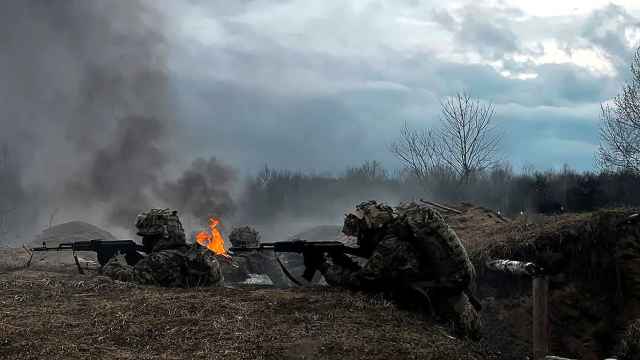
The fifth year of Russia’s full-scale war in Ukraine has begun. It is Russia’s longest continuous major war since the 18th century (the 1979-89 Soviet war in Afghanistan was a sideshow in terms of tempo and casualties by comparison). It is also one of the longest wars between neighbors globally since 1945. In 2025, Russia gained less than 1% of Ukrainian territory and lost over 416,000 troops. Given the length, cost and stasis of the war, how likely is it to end soon?
The driver of the war has not changed over the past four years. Russia seeks to subordinate Ukraine, which Kyiv is determined to resist. These positions remain incompatible. Both states are materially capable of continuing to fight and judge the costs politically tolerable. The war will end only if Russia wins it or accepts that it cannot win. It cannot currently do the first and refuses to do the second. Since it will not scale back its goals, it must scale up the resources it commits to them. This is a strategy of attrition: generating sustained, superior mass and firepower to grind down an enemy. It is the opposite strategy to the initial invasion plan to seize Kyiv in days. Mass has replaced speed.
In an attritional war, the side with more blood and treasure usually wins, where commitment remains equal. But though Russia’s population is over three times larger than Ukraine’s — and its economy over 10 times larger — its attrition has so far failed. Ukraine’s remarkable ingenuity and resilience cannot alone explain this, for Russia has the resources to convert into superior mass. Yet so far Moscow has mobilized only a small, though growing, proportion of its total potential strength. This reflects an underappreciated tension in its strategy. While the Kremlin sees the war as a core interest, it implicitly understands that most of Russian society does not. Few Russians are genuine enthusiasts of the war, though more are willing to profit from it. This has forced the Kremlin to carefully calibrate the pace and means of converting resources into usable force.
This is true above all of manpower. Rather than compel its citizens to fight, Russia pays them lavishly to do so. For the first time in modern history, it is waging a major war with a contract, not a mass conscript army — topped up with criminals, foreign recruits and up to 15,000 North Korean troops. By trading the rate of battlefield progress for stability at home, it has tried to flatten the curve of social strain. The result is not merely attrition but prolonged, constrained attrition.
Russia is approaching an inflection point in recruitment. Battlefield losses have begun to exceed the number of recruits. Quality is also falling: recruiting officers now complain of alcoholics, drug addicts and the destitute. Moscow may sooner or later face the choice of ordering a compulsory mobilization or accepting decisive failure. In anticipation, it is building a system for issuing mass call-ups. Activating this would be a moment of truth for the regime. The brief partial mobilization the Kremlin reluctantly imposed in September 2022 provoked widespread anxiety and a large outflow of draft avoiders. Moscow wants to avoid repeating, let alone expanding, this precedent.
A second reason for Russia’s failure is Western financial and material support for Ukraine. This now comes overwhelmingly from Europe. By a curious symmetry, Europe’s margin of superiority over Russia — over 10 times economically and over three times by population — is almost identical to Russia’s over Ukraine. It provides a much smaller proportion of its resources than Russia or Ukraine is devoting to the war. It is capable of contributing far more.
The present battlefield stasis thus rests on a rough equilibrium of power, defined by an inverse relationship between resources and resolve across the major actors. Ukraine has the fewest resources but the deepest commitment. Its mobilization of military technology and manpower has been strong enough to offset, but not overwhelm, Russia’s resource advantage. Russia has mobilized enough force to pressure Ukraine, but not to defeat it. Europe is devoting a tiny part of its huge economy to support Ukraine — enough to prevent Kyiv’s defeat, but not to defeat Russia.
A costly war that no side can win should be ripe for ending through mutual compromise that is preferred by none but acceptable to all. But the Kremlin — driven by President Vladimir Putin’s historical psychological obsession with Ukraine — does not accept this logic and remains committed to victory. For this reason, the apparent equilibrium of power is unstable. Rather than inducing moderation, it is driving escalation.
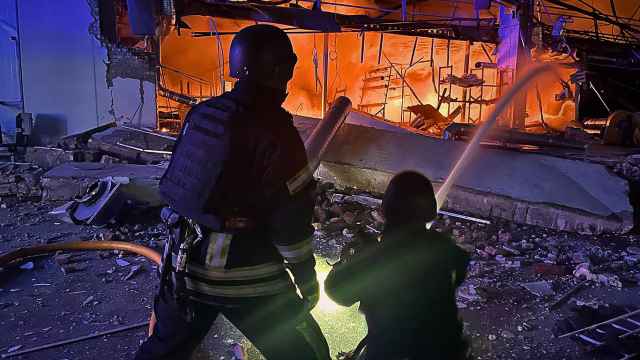
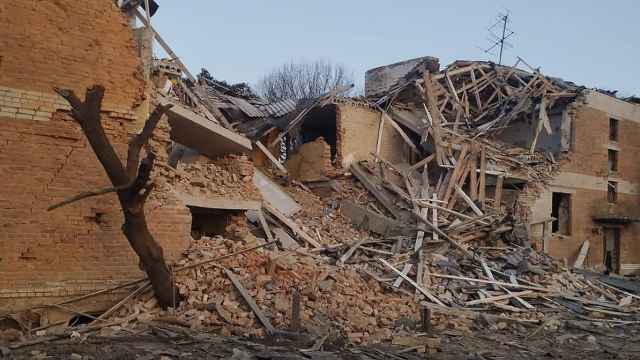
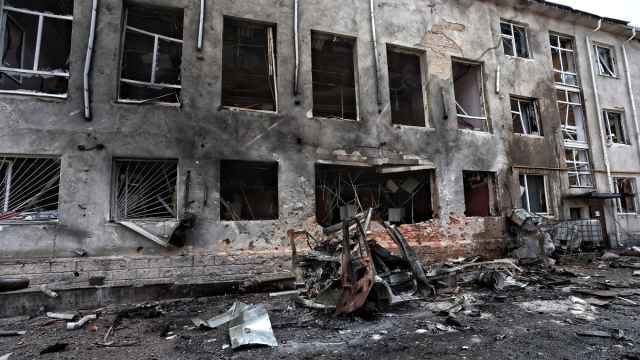
Since Russia cannot break the front line, it is intensifying efforts to break its adversaries’ will by conducting air attacks of unprecedented severity on Ukrainian infrastructure and by widening its campaign of sabotage and threats in Europe. Its now-deep ties of trade and joint production with China and North Korea help it to manage the domestic strains of war production.
Ukraine, as the weaker combatant, is also incentivized to escalate to escape the attritional clash of mass. It has intensified attacks against Russia’s energy and military-industrial sectors. Its maritime campaign now targets not only Russia’s Black Sea navy but its sanctions-violating shadow fleet vessels beyond. Europe has begun to move more assertively against these, too, while preparing further sanctions. NATO member states are committed to raising defense spending to 5% of GDP by 2035.
In sum, the war is not a stalemate. On land, sea and air, in sanctions’ design and enforcement, and in the geography of resourcing, the war is escalating and will continue to do so. It is also driving a revolution in military affairs, based on uninhabited vehicles and artificial intelligence, whose implications are still poorly understood. Negotiations cannot succeed while Russia still believes in victory. A year of turbulent diplomacy has, in essence, amounted to rival efforts by Russia and Ukraine to persuade U.S. President Donald Trump that the other side is responsible for the war.
Three strategic choices will shape the war’s evolution. Russia must, sooner or later, decide whether to mobilize manpower forcibly. NATO’s European members must decide how far and fast to push defense spending commitments through tight fiscal budgets. China must decide how deep its commitment to Russia will become. The grand strategic future depends on Russia’s home front, Europe’s finances and China’s calculations.

A Message from The Moscow Times:
Dear readers,
We are facing unprecedented challenges. Russia's Prosecutor General's Office has designated The Moscow Times as an "undesirable" organization, criminalizing our work and putting our staff at risk of prosecution. This follows our earlier unjust labeling as a "foreign agent."
These actions are direct attempts to silence independent journalism in Russia. The authorities claim our work "discredits the decisions of the Russian leadership." We see things differently: we strive to provide accurate, unbiased reporting on Russia.
We, the journalists of The Moscow Times, refuse to be silenced. But to continue our work, we need your help.
Your support, no matter how small, makes a world of difference. If you can, please support us monthly starting from just $2. It's quick to set up, and every contribution makes a significant impact.
By supporting The Moscow Times, you're defending open, independent journalism in the face of repression. Thank you for standing with us.

Remind me later.