The number of newly registered companies in Russia fell to its lowest level in 14 years in 2025 as high costs, expensive credit and tighter regulation weighed on business activity, the pro-Kremlin daily Izvestia reported Monday.
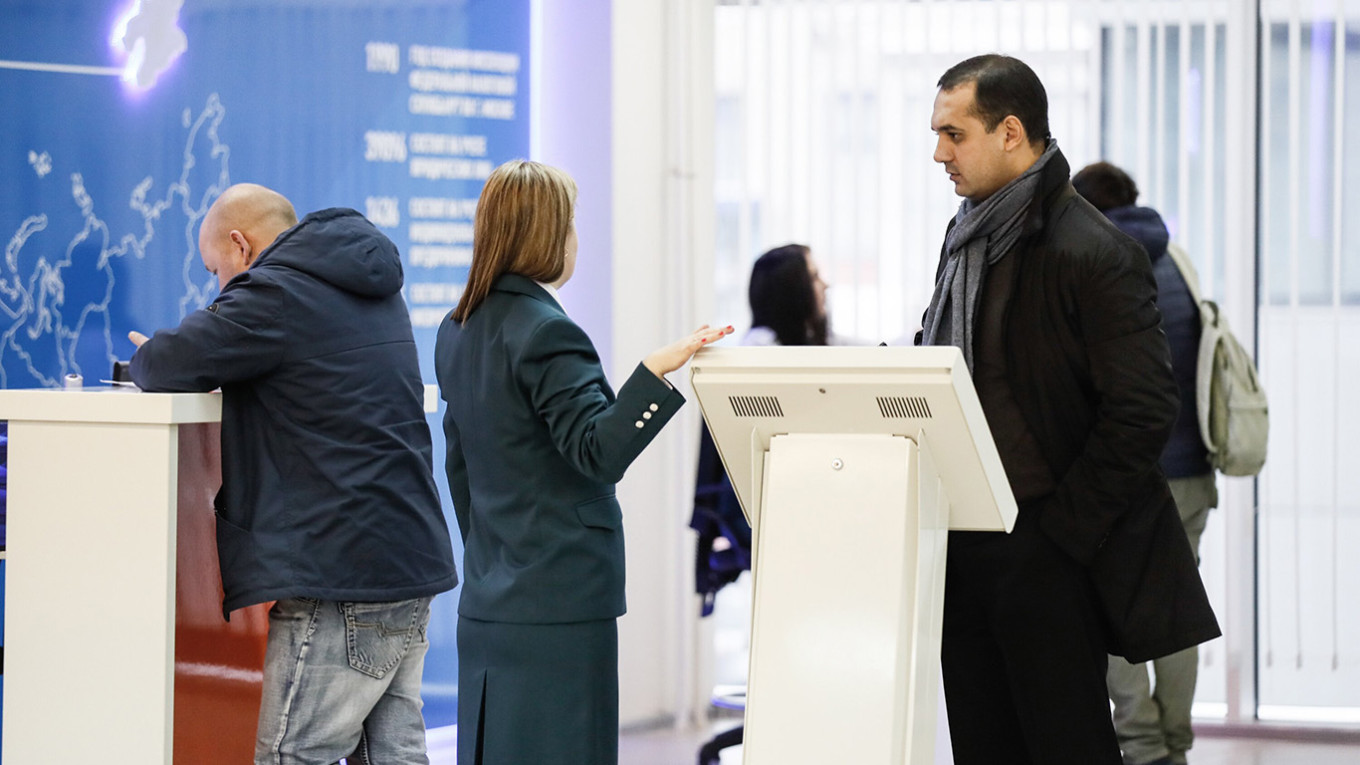
Just 173,000 legal entities were registered during the year, a 20% decrease from 2024, figures from audit and consulting firm FinExpertiza cited by Izvestia showed.
New company registrations declined in 60 regions, including Moscow, St. Petersburg and the Sverdlovsk region.
At the same time, the number of liquidated companies rose 15% to 233,000, leaving closures 26% higher than openings.
FinExpertiza said 88% of liquidations were carried out by tax authorities, mainly involving firms struck from the state register for regulatory violations.
More than half of those, or about 110,000 companies, showed signs of being shell entities, while the rest were closed voluntarily or struck off as inactive.
About 13% were removed under simplified procedures due to a lack of funds for full bankruptcy proceedings.
The decline in company formation reflects rising operating costs, high borrowing rates and stricter tax and financial compliance, Sergei Katyrin, head of Russia’s Chamber of Commerce and Industry, told Izvestia.
Entrepreneurs are prioritizing existing projects over new ones amid weak growth, uncertainty and continued sanctions pressure, said Andrei Shubin of the Opora Russia business association.
Payment delays, tax changes including wider use of value-added tax, tougher competition and labor shortages linked to demographic trends have further strained businesses, industry representatives said.
The number of legal entities is expected to keep falling in 2026 as firms adapt to new rules including changes to the simplified tax system, while tight monetary policy, cautious bank lending and stronger tax enforcement remain constraints, analysts said.
By contrast, the small and medium-sized business sector continues to expand through sole proprietors.
Nearly 1.3 million new participants entered the sector last year when individual entrepreneurs were included, bringing the total close to 7 million by January 2026, said Alexander Isayevich, head of the state-backed SME Corporation.
He said individual entrepreneurs now account for 68% of small businesses, up from an even split a decade ago, reflecting simpler registration and lower administrative burdens.
Read this story in Russian at The Moscow Times' Russian service.
A Message from The Moscow Times:
Dear readers,
We are facing unprecedented challenges. Russia's Prosecutor General's Office has designated The Moscow Times as an "undesirable" organization, criminalizing our work and putting our staff at risk of prosecution. This follows our earlier unjust labeling as a "foreign agent."
These actions are direct attempts to silence independent journalism in Russia. The authorities claim our work "discredits the decisions of the Russian leadership." We see things differently: we strive to provide accurate, unbiased reporting on Russia.
We, the journalists of The Moscow Times, refuse to be silenced. But to continue our work, we need your help.
Your support, no matter how small, makes a world of difference. If you can, please support us monthly starting from just $2. It's quick to set up, and every contribution makes a significant impact.
By supporting The Moscow Times, you're defending open, independent journalism in the face of repression. Thank you for standing with us.

Remind me later.