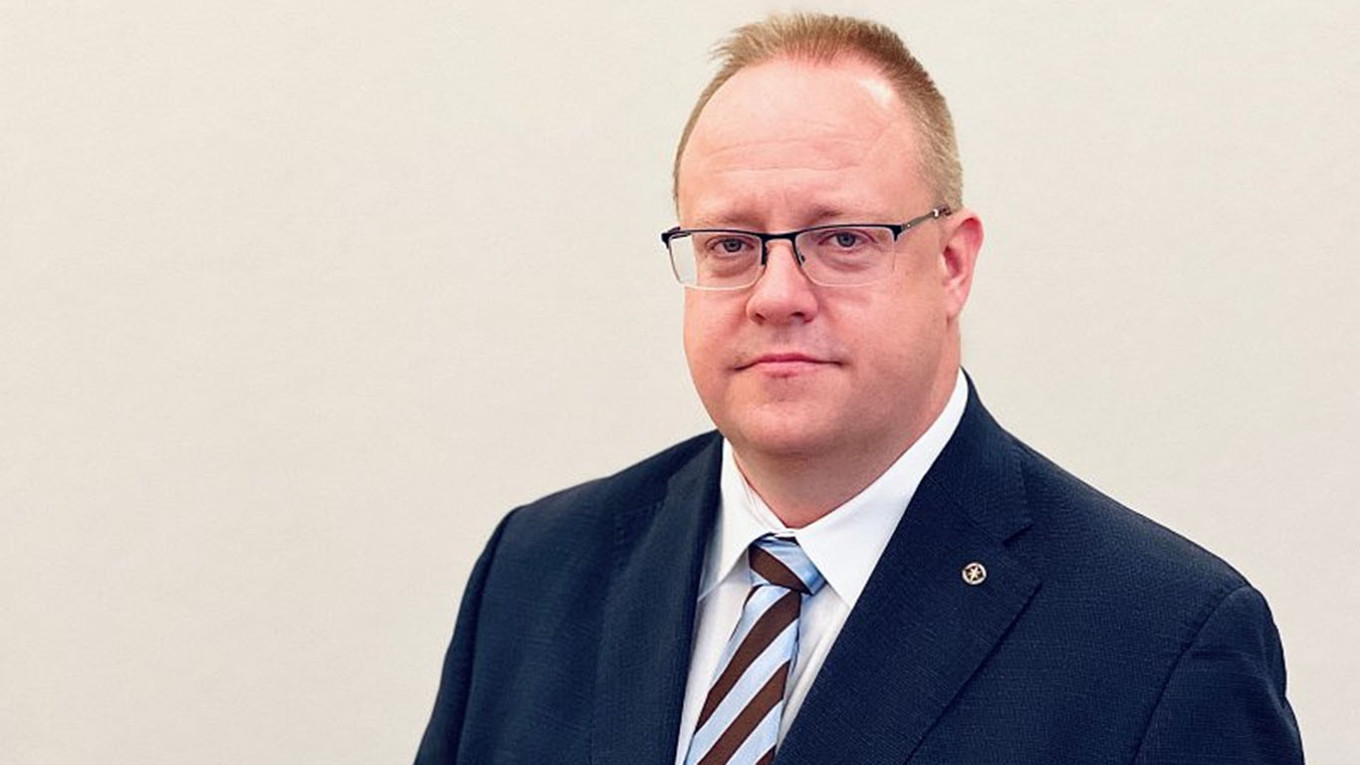
There is no indication that President Vladimir Putin is planning to attack the Baltic states or NATO despite mounting warnings from European officials that a direct conflict between the West and Russia could break out in the coming years, the head of Estonia’s foreign intelligence service said Monday.
“We’ve seen that, as a result of our responses, Russia has altered its behavior following various incidents that have occurred more broadly in the region,” Estonian Foreign Intelligence Service Director General Kaupo Rosin told public broadcaster ERR. “So far, it’s still clear that Russia respects NATO and is currently trying to avoid any open conflict.”
Estonia, a former Soviet republic with long-strained relations with Moscow, has been at the forefront of countering Russian security threats and has strongly backed Ukraine since Putin ordered the full-scale invasion in February 2022.
Rosin said NATO’s coordinated responses to Russian airspace violations and suspected acts of sabotage, including damage to undersea cables in the Baltic Sea, have forced Moscow to act more cautiously, leading to a noticeable decline in such incidents in recent months.
“This doesn’t rule out the possibility of future incidents because military activity remains high and the war in Ukraine is ongoing,” the spy chief said. “In theory, such events are still possible, but at the moment we don’t see any indication that Russia is deliberately trying to escalate.”
Rosin’s remarks stand in stark contrast with ominous warnings from European officials that Putin may be planning a direct military confrontation with the West if Russia comes out victorious in its war with Ukraine.
NATO Secretary Mark Rutte said earlier this month that the Western military alliance must be prepared for a possible Russian attack within the next five years, suggesting that the scale of a future NATO-Russia conflict could resemble that which Europe witnessed during World War II.
“The dark forces of oppression are on the march again,” Rutte said during a speech in Berlin. “We are Russia’s next target.”
Other officials have offered shorter timelines. German Defense Minister Boris Pistorius has suggested a conflict could break out within a couple of years, while the head of Britain’s MI6 intelligence service said last week that the West is already operating in a “space between peace and war” with Russia.
Putin has dismissed the warnings as hysteria, insisting Russia has no interest in a direct military confrontation with NATO. He has said, however, that Russia is prepared “right now” to go to war with Europe if forced into such a position.
Some analysts have also questioned whether Russia is currently willing or able to confront NATO, arguing that the dire warnings may serve to justify higher defense spending as U.S. President Donald Trump presses alliance members to boost military budgets.
In the ERR interview, Rosin criticized the frequent use of the term “hybrid attacks” to describe alleged Russian activities in Europe, including sabotage of infrastructure, cyberattacks and drone incidents near airports.
“We should call things by their proper names. If it’s sabotage, then it’s sabotage. If it’s a cyberattack, then it’s a cyberattack,” the spy chief said. “The term ‘hybrid’ tends to soften the reality and gives an overly innocent impression of what’s actually happening.”
Despite playing down the risk of an imminent military clash, Rosin said Russia is still seeking to slow Europe’s rearmament. He argued that the Kremlin is trying to persuade Western audiences that Russia poses no threat, with Putin suggesting that Moscow could even codify a policy of non-aggression toward Europe into its laws.
“On the other hand, Russia clearly sees value in engaging with certain political parties or population groups to promote the idea that an arms race is pointless — that it diverts money away from other areas like social welfare and that, ultimately, it’s harmful to Europe itself,” he said.
Rosin warned that while Russia may not currently be planning an attack, the situation could change. He said sustained deterrence, including continued support for Ukraine, remains essential.
“To achieve that, we have to invest in our defense — we meaning Estonia, meaning the European Union and NATO. Keeping the situation as it is today requires significant effort,” he said.
A Message from The Moscow Times:
Dear readers,
We are facing unprecedented challenges. Russia's Prosecutor General's Office has designated The Moscow Times as an "undesirable" organization, criminalizing our work and putting our staff at risk of prosecution. This follows our earlier unjust labeling as a "foreign agent."
These actions are direct attempts to silence independent journalism in Russia. The authorities claim our work "discredits the decisions of the Russian leadership." We see things differently: we strive to provide accurate, unbiased reporting on Russia.
We, the journalists of The Moscow Times, refuse to be silenced. But to continue our work, we need your help.
Your support, no matter how small, makes a world of difference. If you can, please support us monthly starting from just $2. It's quick to set up, and every contribution makes a significant impact.
By supporting The Moscow Times, you're defending open, independent journalism in the face of repression. Thank you for standing with us.

Remind me later.