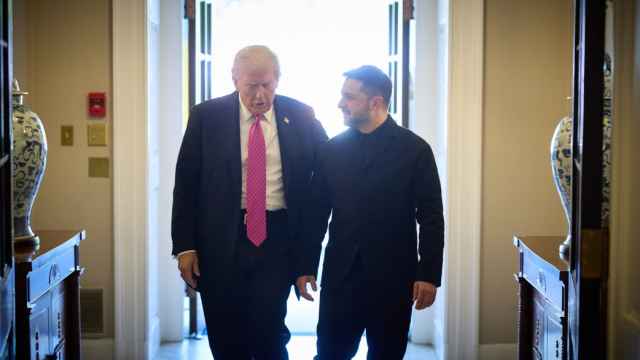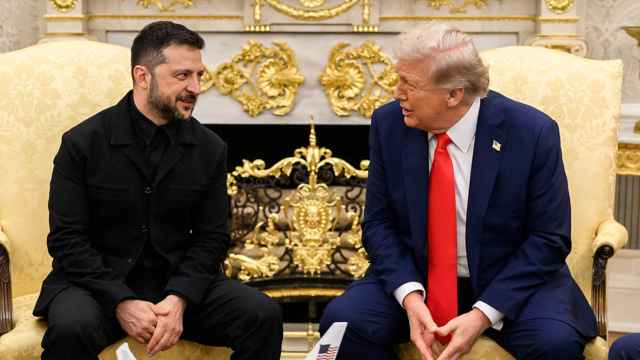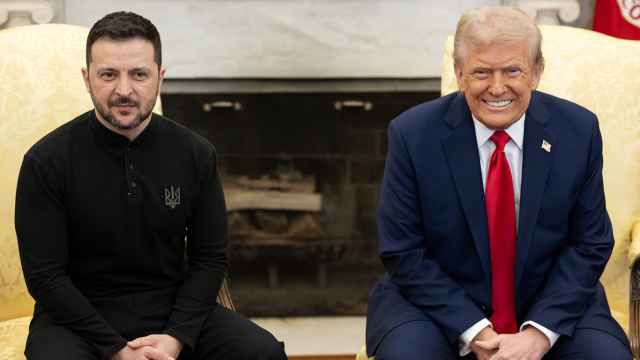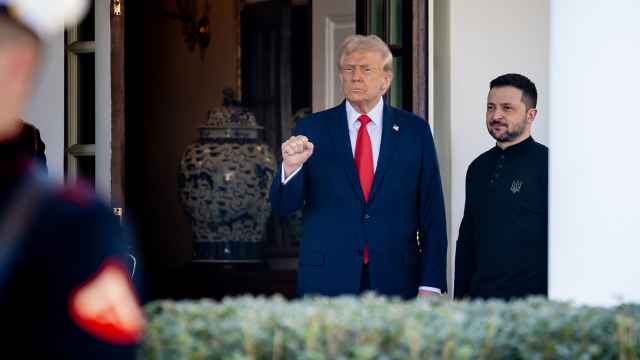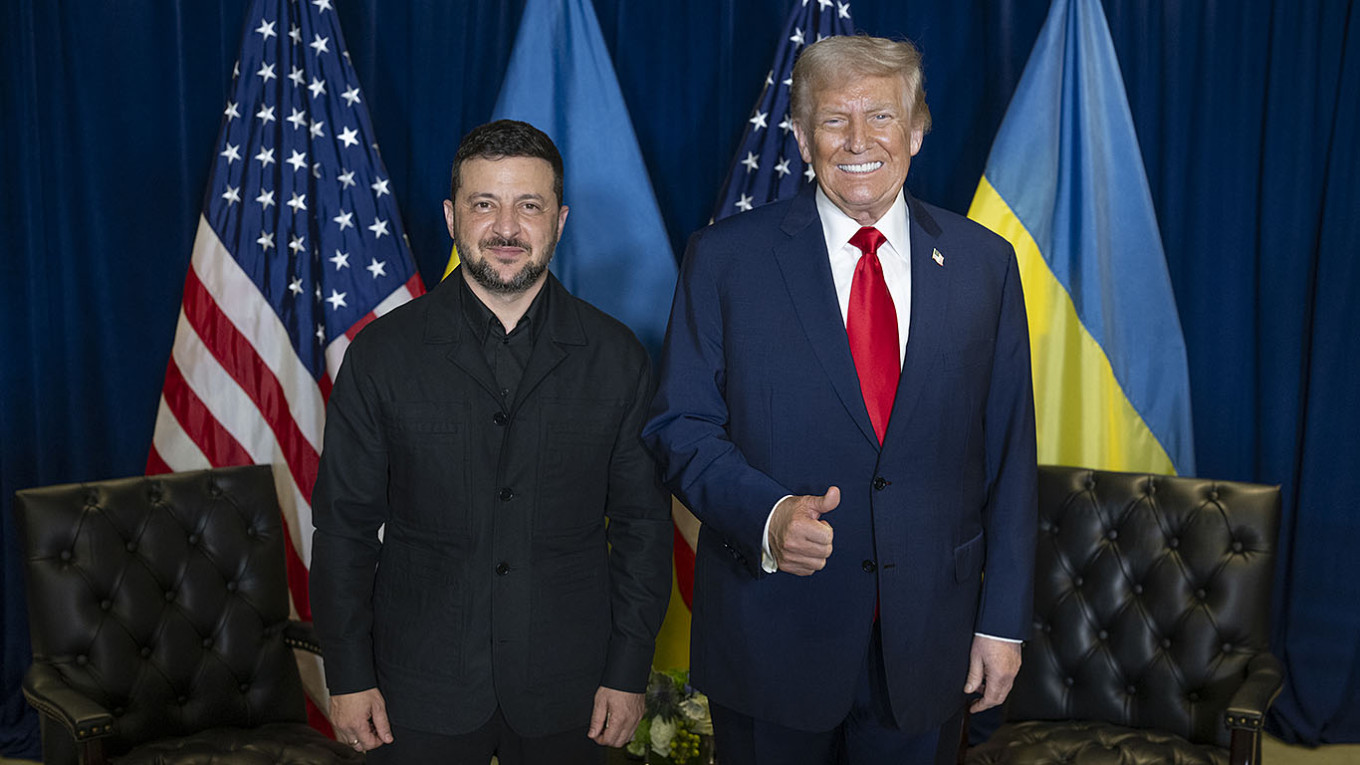
Ukrainian President Volodymyr Zelensky said Friday that will meet U.S. President Donald Trump in Florida this weekend to discuss ongoing efforts to end the war with Russia.
The meeting comes amid a renewed diplomatic push to end the war following the emergence in November of a 28-point peace framework drafted by the U.S. that critics said favored Russia.
The two leaders are expected to meet Sunday at Mar-a-Lago, Trump’s private club, to hammer out the details of the latest peace proposal, which U.S. and Ukrainian officials have revised down to 20 points.
“This meeting is specifically intended to refine things as much as we possibly can,” Zelensky told reporters, adding that the proposed 20-point peace plan was “90% ready.”
On Thursday, Zelensky said he had held “very good” talks with White House special envoy Steve Witkoff and Trump’s son-in-law Jared Kushner, adding that diplomats were “working 24/7” to craft a peace proposal that was “realistic, effective and reliable.”
The revised 20-point plan has been sent to Moscow for consideration.
Zelensky outlined elements of the plan to reporters this week, saying it would freeze the current front line and drop a requirement for Ukraine to legally renounce its bid to join NATO.
He acknowledged that some provisions were unfavorable to Ukraine but said negotiators had succeeded in removing demands for an immediate Ukrainian withdrawal from the Donetsk region or formal recognition of Russian control over occupied territory.
“He doesn't have anything until I approve it,” Trump said of Zelensky's latest plan in comments to news outlet Politico on Friday. “So we'll see what he's got.”
While Zelensky has signaled a willingness to make concessions to reach a peace deal, Russian President Vladimir Putin has stuck by several of his maximalist demands, including full control of the Donbas region, where fighting between Ukrainian and Russian forces rages on.
The Kremlin said Friday that Putin’s economic envoy Kirill Dmitriev briefed the Russian leader on the results of recent talks with U.S. officials after returning from a trip to Florida last weekend.
“At Putin’s direction, talks between U.S. and Russian officials were held. We’ve agreed to continue the discussions,” Kremlin spokesman Dmitry Peskov told reporters.
Asked to comment on Moscow’s current assessment of the negotiations, Peskov declined to answer, saying doing so could negatively affect the talks.
Deputy Foreign Minister Sergei Ryabkov voiced more open skepticism toward the current peace efforts.
“Our ability to make the final push and reach an agreement will depend on our own work and the political will of the other party,” Ryabkov said on Russian television. “Especially in a context where Kyiv and its sponsors — notably within the European Union, who are not in favor of an agreement — have stepped up efforts to torpedo it.”
He said the proposal drawn up with Zelensky input “differs radically” from points initially drawn up by U.S. and Russian officials in contacts this month.
He reiterated Moscow's stance that any deal had to “remain within the limits” fixed by Trump and Putin when they met in Alaska in August, or else “no accord can be reached.”
AFP contributed reporting.
A Message from The Moscow Times:
Dear readers,
We are facing unprecedented challenges. Russia's Prosecutor General's Office has designated The Moscow Times as an "undesirable" organization, criminalizing our work and putting our staff at risk of prosecution. This follows our earlier unjust labeling as a "foreign agent."
These actions are direct attempts to silence independent journalism in Russia. The authorities claim our work "discredits the decisions of the Russian leadership." We see things differently: we strive to provide accurate, unbiased reporting on Russia.
We, the journalists of The Moscow Times, refuse to be silenced. But to continue our work, we need your help.
Your support, no matter how small, makes a world of difference. If you can, please support us monthly starting from just $2. It's quick to set up, and every contribution makes a significant impact.
By supporting The Moscow Times, you're defending open, independent journalism in the face of repression. Thank you for standing with us.

Remind me later.