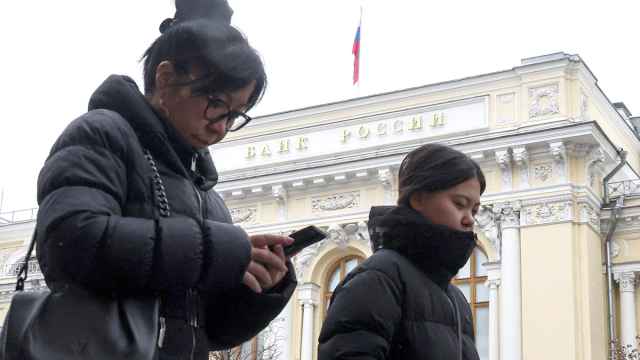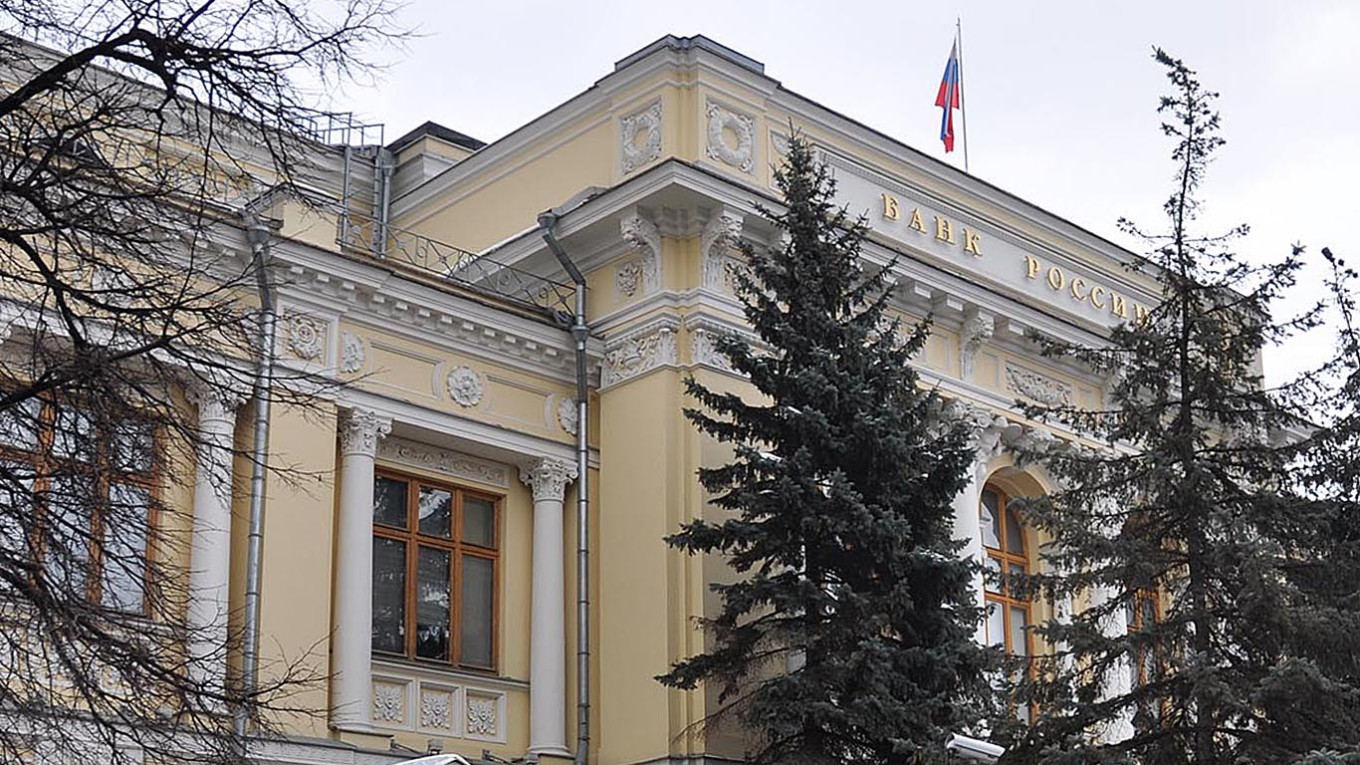
Russia’s Central Bank has filed a lawsuit seeking 18.2 trillion rubles ($229 billion) in damages from Europe’s largest securities depository Euroclear, the Interfax news agency reported Monday.
The legal move comes as the EU debates how to use frozen Russian sovereign assets to support Ukraine. Euroclear holds around 185 billion euros ($217 billion) of those immobilized reserves, which are subject to EU sanctions imposed following the 2022 invasion.
Russia’s Central Bank announced last week that it would sue Euroclear after the EU agreed to freeze its assets indefinitely, a step tied to efforts to provide long-term financial assistance to Ukraine.
A spokesperson for Moscow’s Arbitration Court told Interfax on Monday that the Central Bank had filed a claim seeking 18.2 trillion rubles in damages, equivalent to 195.5 billion euros, according to the official exchange rate as of Dec. 12.
The court spokesperson said the Central Bank would later decide how to enforce any ruling against Euroclear’s assets, including those held outside Russia, once a decision takes effect. No further details of the case were disclosed.
On Monday, EU foreign policy chief Kaja Kallas acknowledged that talks on using Russian frozen assets had become “increasingly difficult” ahead of a summit of European leaders scheduled for Thursday.
The European Commission has proposed a so-called reparations loan of about 90 billion euros ($105.6 billion), which Ukraine would repay only if Russia eventually pays war reparations. The structure is intended to avoid the outright confiscation of Russian assets, a move some member states fear could expose them to legal retaliation.
Belgium, where Euroclear is based, has emerged as a key opponent of the plan, warning that it could face significant legal and financial risks if Moscow prevails in international courts. Italy has also spoken out against the proposed confiscation.
The European Commission has outlined what it calls a “three-tier defense” to shield both Belgium and Euroclear from potential claims, but the proposal has so far failed to break the deadlock among member states.
Momentum behind the loan proposal has grown in recent weeks after a U.S.-backed peace deal outlined alternative uses for the same frozen Russian assets, prompting concerns in Europe that the funds could otherwise be returned on terms favorable to the Kremlin.
A Message from The Moscow Times:
Dear readers,
We are facing unprecedented challenges. Russia's Prosecutor General's Office has designated The Moscow Times as an "undesirable" organization, criminalizing our work and putting our staff at risk of prosecution. This follows our earlier unjust labeling as a "foreign agent."
These actions are direct attempts to silence independent journalism in Russia. The authorities claim our work "discredits the decisions of the Russian leadership." We see things differently: we strive to provide accurate, unbiased reporting on Russia.
We, the journalists of The Moscow Times, refuse to be silenced. But to continue our work, we need your help.
Your support, no matter how small, makes a world of difference. If you can, please support us monthly starting from just $2. It's quick to set up, and every contribution makes a significant impact.
By supporting The Moscow Times, you're defending open, independent journalism in the face of repression. Thank you for standing with us.

Remind me later.