One of Russia’s largest “systemically important” banks has disclosed severe financial strains as overdue loans mount across the corporate sector.
Credit Bank of Moscow (MKB), closely linked to state oil major Rosneft, reported an eightfold surge in overdue debt since the start of the year, the Kommersant business daily reported, citing the bank’s financial records.
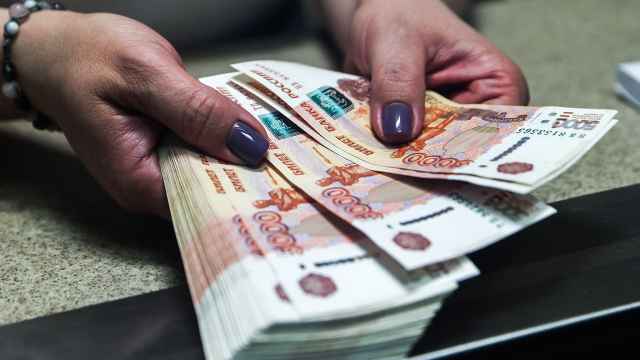
Clients failed to repay 585 billion rubles ($7.66 billion) in loans on time between January and September, pushing total non-performing loans to 668 billion rubles ($8.75 billion), or about 28% of the bank’s loan book.
A source told Kommersant that the problems were uncovered during a Central Bank inspection that began in summer 2024.
MKB was the only major bank to post a net interest loss in the third quarter, with the loss amounting to 157.6 billion rubles ($2.06 billion).
Founded by billionaire Roman Avdeev, MKB was drawn into Rosneft’s orbit in 2017 after nearly collapsing alongside other lenders in the so-called “Moscow ring” — Otkritie FC Bank, Binbank and Promsvyazbank.
Rosneft effectively rescued MKB by injecting capital, placing long-term deposits maturing in 2066 and shifting into the bank hundreds of billions of rubles in reverse-repo deals used to finance its operations.
It remains unclear which borrowers defaulted in 2025, as the bank’s disclosures do not specify.
The Central Bank noted in November that several mining and metals companies required debt restructuring amid falling demand and prices, while the oil and gas sector has been hit by sanctions and a sharp decline in crude prices.
According to Central Bank data, problem loans across the Russian banking sector reached 10.4 trillion rubles ($136.24 billion) by the end of the third quarter, or 1.9 trillion rubles ($24.89 billion) more than at the start of the year.
Analysts at rating agency Expert RA estimate that one in four companies with bank loans has fallen behind on payments, the highest share in six years.
Roughly 165,000 legal entities had overdue loans, up 41,000 since January and 100,000 more than before the war.
The government-linked Center for Macroeconomic Analysis and Forecasting (CMASF) has forecast that a systemic banking crisis could hit Russia by October 2026.
Declining output and profits in the real economy, combined with heavy interest burdens, could drive more corporate defaults, eroding banks’ asset quality and capital buffers, the analysts warned.
A recession would also risk weakening employment and rattling retail depositors, potentially triggering a bank run if sparked by a sharp information shock, CMASF wrote.
The center identified a deterioration in asset quality and volatile funding as the key “drivers” of a potential system-wide crisis.
A Message from The Moscow Times:
Dear readers,
We are facing unprecedented challenges. Russia's Prosecutor General's Office has designated The Moscow Times as an "undesirable" organization, criminalizing our work and putting our staff at risk of prosecution. This follows our earlier unjust labeling as a "foreign agent."
These actions are direct attempts to silence independent journalism in Russia. The authorities claim our work "discredits the decisions of the Russian leadership." We see things differently: we strive to provide accurate, unbiased reporting on Russia.
We, the journalists of The Moscow Times, refuse to be silenced. But to continue our work, we need your help.
Your support, no matter how small, makes a world of difference. If you can, please support us monthly starting from just $2. It's quick to set up, and every contribution makes a significant impact.
By supporting The Moscow Times, you're defending open, independent journalism in the face of repression. Thank you for standing with us.

Remind me later.