
Imagine JPMorgan Chase’s Jamie Dimon accusing Jeff Bezos of cheating the U.S. government out of billions in tax revenue by offering discounts to Amazon shoppers. Now picture a letter from Federal Reserve Chair Jerome Powell backing Dimon, addressed to the Treasury Department, leaking to the press and then Bezos firing back with his own open letter in The Wall Street Journal.
It sounds convoluted. But that’s more or less what has unfolded in Russia over the past few weeks.
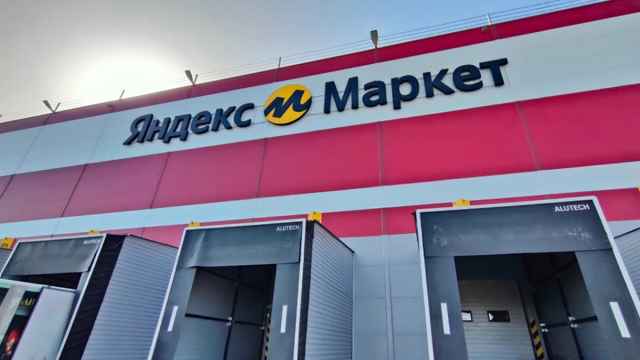
What began as a niche policy argument has become an unusually public fight pitting Russia’s biggest banks and financial regulators against the country’s top e-commerce platforms over the seemingly mundane question of discounts.
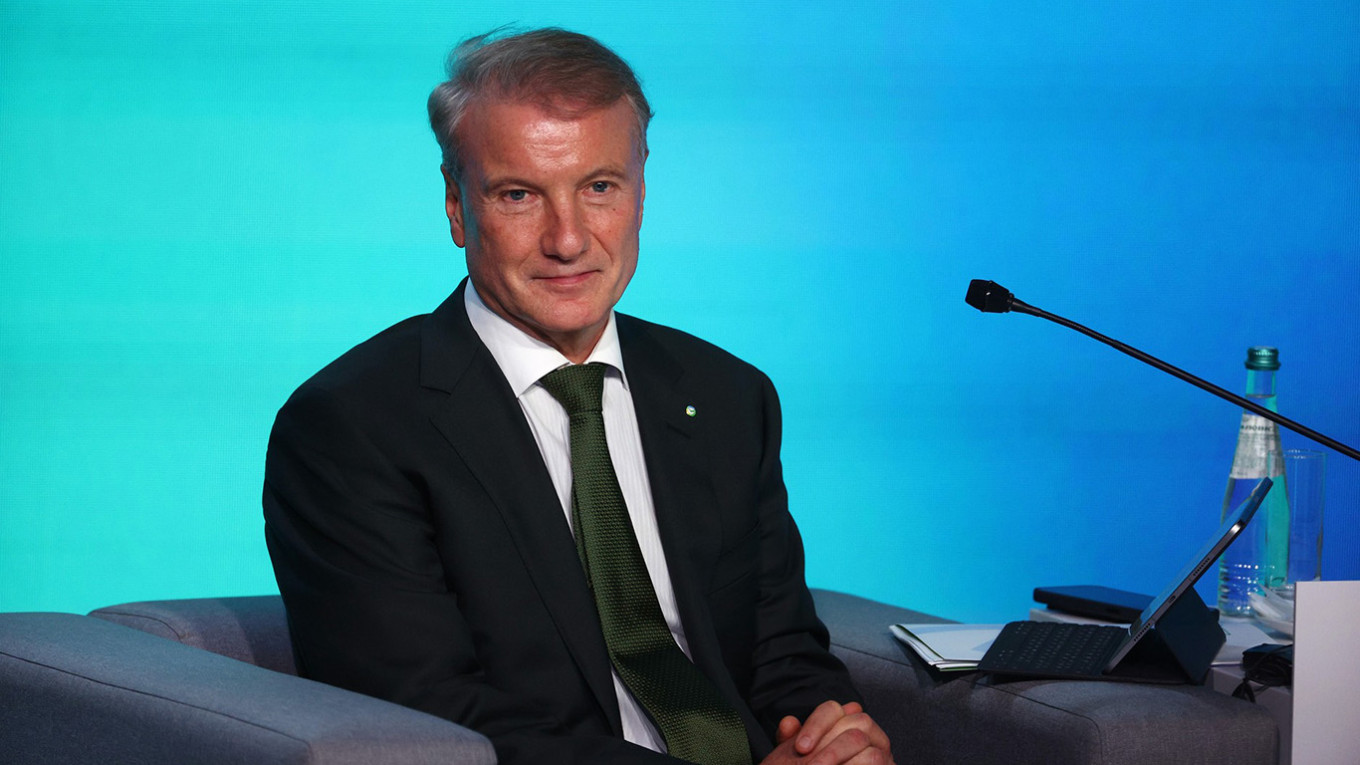
The clash erupted in mid-November when German Gref, the influential head of state-owned Sberbank, used an industry conference to accuse marketplaces of undercutting traditional lenders. Gref argued that online platforms were unfairly offering customers discounts if they used the platforms’ own in-house banking services rather than regular bank cards.
Major lenders including Sber, VTB and T-Bank had already complained to lawmakers that these discounts hindered competition.
But Gref escalated the argument, claiming the practice was artificially deflating retail prices and, as a result, depriving the government of tax revenue. He put the alleged loss for 2025 so far at 1.5 trillion rubles ($19.4 billion).
“In other words, all these discounts they hand out — they’re being paid for by you and me,” the CEO said, adding that e-commerce platforms were grabbing market share thanks to “non-market competitive conditions created by the state.”
Gref went further: “Marketplaces are still unregulated in our country. We need to lock them into a normal regulatory environment.”
The very idea that e-commerce companies in Russia operate their own banks may come as a surprise. Most countries have laws prohibiting those kinds of arrangements. One notable exception is China, where online retail giant Alibaba has its own bank, MyBank, which was launched by Alibaba’s financial subsidiary Ant Group.
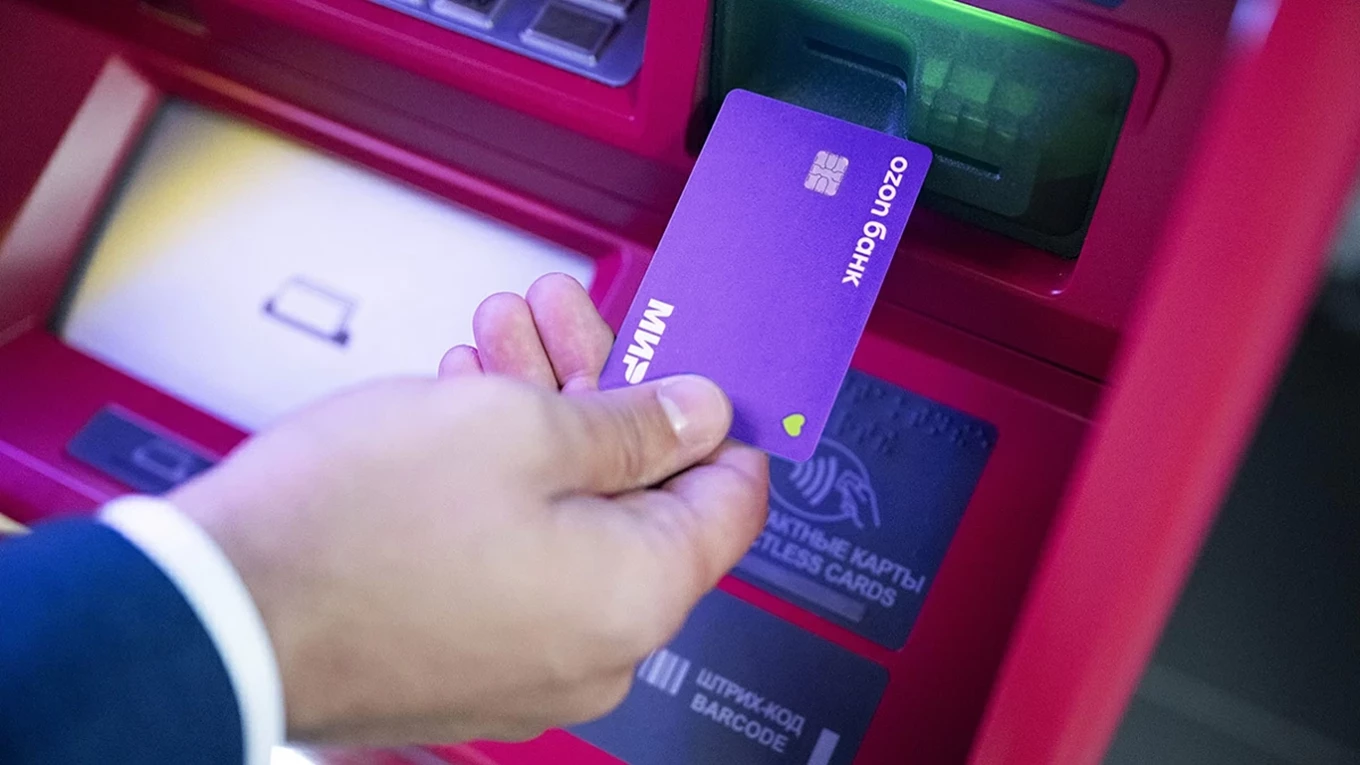
In Russia, marketplaces entered the financial sector almost simultaneously in 2021 — not by building banks from scratch but by acquiring small, existing ones. The result is that today, Wildberries Bank, Ozon Bank and Yandex Bank function as fully licensed lenders inside sprawling retail ecosystems.
The shift has been fast. By late 2024, marketplaces held 17% of the banking market by number of active cards and 4.7% of the consumer loan portfolio, according to market research firm Frank RG. The three major marketplace banks issued 57 million cards in 2024 alone, though only about half of users had actually activated them.
Disputes like the one currently playing out in Russia are not all that unusual when non-banks begin offering bank-like services, said Nick Trickett, an economist focusing on Russia.
“This is actually a relatively common issue in antitrust and competition law,” Trickett told The Moscow Times. “There’s also the question of how you regulate platforms that basically act like banking entities even though they don’t have deposit insurance.”
In the U.S., for instance, airlines can partner with banks but are barred from owning them. In Russia, these platforms own fully licensed financial institutions, resulting in significantly different levels of integration, control and risk.
At the same time, according to Trickett, by framing discounts as lost tax revenue, Gref may be trying to “appeal to patriotic sensibilities” as the Russian government looks for ways to boost revenue amid falling oil and gas earnings and ballooning military expenditures.
“He’d be likely to get a sympathetic ear by doing that, and also getting backing from regulators, and possibly even the presidential administration if it ends up caring,” Trickett said.
While Gref’s comments unsettled the industry, the confrontation with e-commerce platforms really exploded days later, when a letter from Central Bank Governor Elvira Nabiullina to Economic Development Minister Maxim Reshetnikov leaked in the press.
In the letter, Nabiullina, siding with the banks, urged the Federal Anti-Monopoly Service to ban marketplace discounts tied to in-platform banking products and went so far as to suggest prohibiting platforms from advertising their financial services on their own websites.
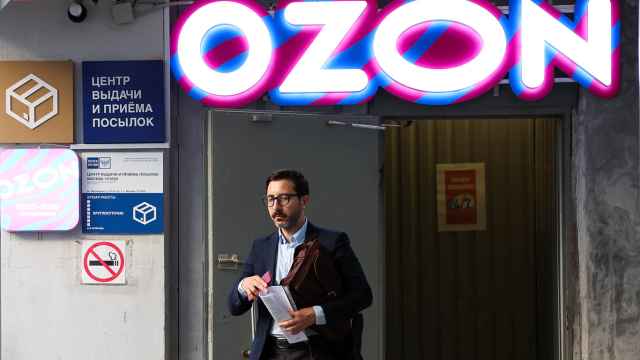
Ozon rejected the accusations, saying it had already discussed equal access to loyalty programs with banks and was in talks with more than a dozen lenders about standardizing them.
The Association of E-Commerce Companies, a lobby group representing Wildberries, Ozon and Yandex.Market, countered that banks had been using card-linked cash-back schemes inside their own ecosystems for years without facing comparable scrutiny.
Ministries and government agencies appeared reluctant to pick a side after Nabiullina’s letter was leaked.
The Economic Development Ministry told Kommersant that it was reviewing her proposals, but noted that Russia’s platform economy law already allows the government to regulate marketplace pricing. Any new restrictions would need careful evaluation to avoid harming sellers, consumers or the digital economy, it said.
The Anti-Monopoly Service struck a similarly cautious note.
“The largest platforms are already regulated under competition law,” the agency’s deputy head Adilya Vyaseleva said, adding that practices like differentiated pricing and ecosystem cashbacks “are not directly prohibited.”
Trickett said that beneath the public fight lies a deeper structural conflict.
“Banks are upset that they don’t have a monopoly, especially state banks that want to cement their position as the main centers controlling the flow of credit,” he said.
After Nabiullina’s proposals leaked, Tatiana Kim, the billionaire founder of Wildberries and Russia’s wealthiest woman, published an open letter in Kommersant addressed to the Central Bank, parliament and the government. In it, she accused banks of trying to eliminate competitors under the guise of tax concerns.
According to Kim, Russia’s largest banks earned 24 times more than e-commerce banking in the first 10 months of 2025. All the while, banks spend heavily on their own loyalty programs.
“Sber alone spent around 790 billion rubles on non-banking assets in 2024, most of it on loyalty programs,” Kim wrote, arguing that traditional lenders are motivated not by fairness but by a desire to preserve commission income and avoid offering their own discounts to clients when they buy products on e-commerce sites.
Some analysts have noted flaws in her comparisons. Semyon Novoprudsky, a business commentator at BFM, pointed out that Kim contrasted profits from marketplace banking services with profits earned by banks overall — an uneven comparison, given that banking is only a small part of marketplace revenues.

Still, like Trickett, Novoprudsky argues that the fight reflects a deeper struggle.
With card limits falling and credit demand slowing in Russia, traditional banks remain highly profitable but increasingly worried about marketplaces’ ambitions to become full-scale ecosystems, a role banks themselves have developed over the past decade.
“The Central Bank doesn’t regulate trade, but it regulates marketplace banks. The government regulates trade, but not banking,” Novoprudsky noted. “These government agencies will inevitably have to reach an agreement at some point.”
For banks, the issue is likely not that marketplaces own banks, but that marketplaces’ data advantage gives them power traditional lenders lack, analysts say.
“Marketplaces can tailor discounts precisely to each user, thanks to their understanding of customer behavior,” said Oleg Abelev, head of analytics at investment firm Rikom-Trust. “Traditional banks can’t do that.”
Marketplaces, meanwhile, might be preparing for a crackdown.
Analysts say that if the government bans bank-linked discounts, platforms may simply change tack by expanding Amazon Prime-like subscription programs like Ozon Premium that offer free shipping, rewards and in-platform currencies.
As officials weigh their options in the ongoing debate, the public spat points to a larger breakdown in how Russia’s business community communicates with its own regulators, Trickett said.
“There’s a tradition of big businesses getting so fed up, and having no idea who to talk to, that they basically freak out,” he told The Moscow Times. “And e-commerce platforms have not been strategically vital to the Kremlin.”
Kim’s letter suggests that companies “don’t know who to talk to because no one is actually there to listen,” he said. “The feedback mechanisms that existed maybe 10 years ago are broken now. They just don’t work anymore.”
A Message from The Moscow Times:
Dear readers,
We are facing unprecedented challenges. Russia's Prosecutor General's Office has designated The Moscow Times as an "undesirable" organization, criminalizing our work and putting our staff at risk of prosecution. This follows our earlier unjust labeling as a "foreign agent."
These actions are direct attempts to silence independent journalism in Russia. The authorities claim our work "discredits the decisions of the Russian leadership." We see things differently: we strive to provide accurate, unbiased reporting on Russia.
We, the journalists of The Moscow Times, refuse to be silenced. But to continue our work, we need your help.
Your support, no matter how small, makes a world of difference. If you can, please support us monthly starting from just $2. It's quick to set up, and every contribution makes a significant impact.
By supporting The Moscow Times, you're defending open, independent journalism in the face of repression. Thank you for standing with us.

Remind me later.