The U.K. on Thursday sanctioned Russia's intelligence service and summoned Moscow's ambassador after an inquiry found President Vladimir Putin bore "moral responsibility" for the death of a British woman in a 2018 nerve agent attack.
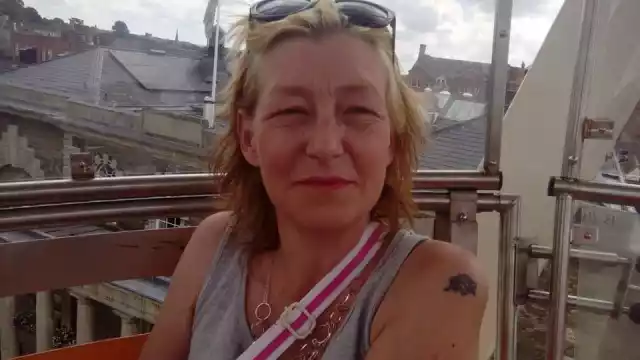
Mother-of-three Dawn Sturgess, 44, died after spraying herself with what she thought was perfume from a discarded bottle of chic Nina Ricci fragrance — but turned out to be the deadly chemical Novichok.
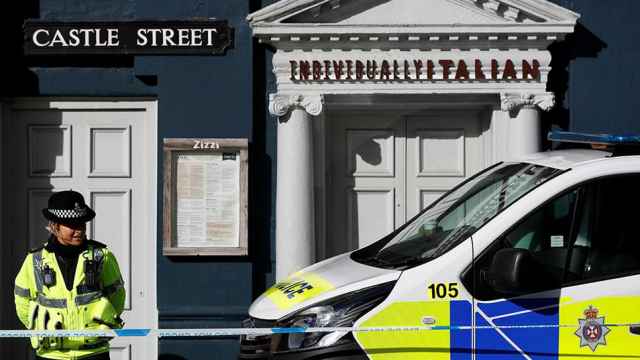
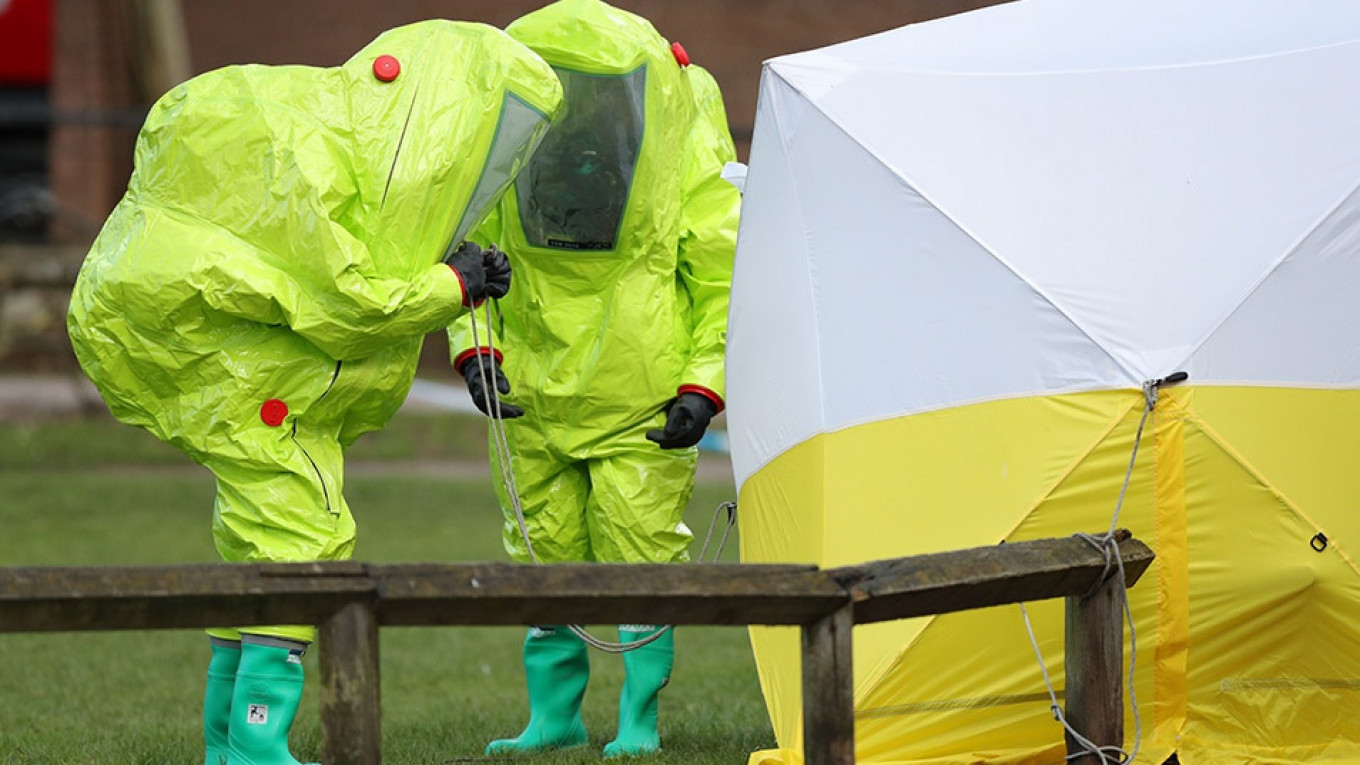
The bottle had been dumped in Salisbury in southwest England after two suspects thought to be Russian spies brought it there in a failed attempt to assassinate former double agent Sergei Skripal in March 2018.
The inquiry's report found the assassination attempt "must have been authorized at the highest level, by President Putin," and concluded the Russian leader bears "moral responsibility" for Sturgess's death four months later.
"It is clear that this attack showed considerable determination and was expected to stand as a public demonstration of Russian power," the report concluded.
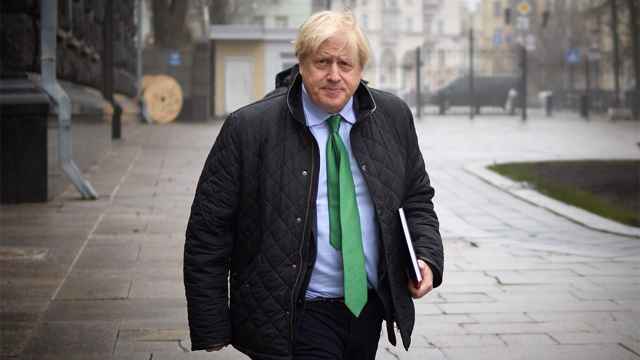
"This report is clear: moral responsibility lies with Putin," U.K. Prime Minister Keir Starmer told reporters on Thursday.
"It's further evidence of the shocking and reckless hostile activity on U.K. soil," he added.
Following its publication, London said it had summoned the Russian ambassador.
The U.K. also sanctioned the Russian intelligence agency blamed for the attack, the GRU, "in its entirety," the Foreign Ministry said.
Russian Foreign Ministry spokeswoman Maria Zakharova told the state-run RIA Novosti news agency that Russia "does not recognize illegitimate sanctions which are imposed under trumped-up pretexts... and reserves the right to retaliate."
The attack against Skripal led to what was then the largest-ever expulsion of diplomats between Western powers and Russia, and a limited round of sanctions by the West.
The attempt on Skripal's life was the latest in a line of espionage thriller-worthy episodes to damage U.K.-Russian relations.
A previous British inquiry found in 2016 that Putin "probably approved" the 2006 killing in London of ex-spy Alexander Litvinenko, a prominent Kremlin critic, with radioactive polonium.
'Astonishingly reckless'
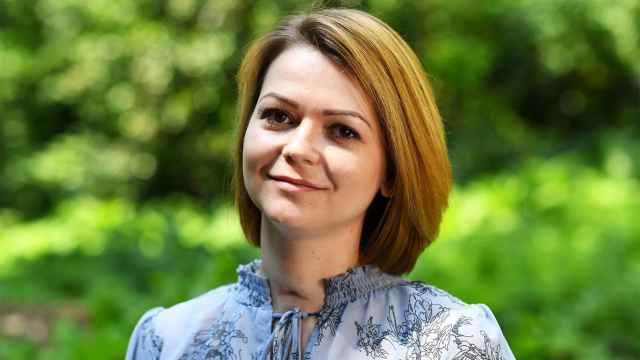
Skripal and his daughter Yulia were found slumped unconscious on a park bench in Salisbury in March 2018 after the door handle to Skripal's house was daubed with Novichok.
They survived after intensive hospital treatment and now live under protection.
The bottle containing "Novichok made in Russia" was brought to Salisbury by two suspects, Alexander Petrov and Ruslan Boshirov — thought to be GRU agents, the report states.
"The conduct of Petrov and Boshirov, their GRU superiors, and those who authorised the mission up to and including, as I have found, President Putin, was astonishingly reckless," the inquiry chair, former senior judge Anthony Hughes, said after the report was published.
"They, and only they, bear moral responsibility for Dawn's death," said Hughes, adding Sturgess was "the entirely innocent victim of the cruel and cynical acts of others."
The public inquiry into Sturgess's death, which began last year, was also told the perfume bottle contained enough Novichok to poison "thousands" of people.
"The risk that others beyond the intended target, Sergei Skripal, might be killed or injured was entirely foreseeable," the report said.
The inquiry found that while there were some "failings" in the handling of Skripal's security as an exchanged former agent, it was not "unreasonable" for British intelligence to believe there was no high risk of assassination.
The lawyer representing Sturgess's family, Michael Mansfield, said they felt the report was "not satisfactory" as it left questions about whether the attack was preventable "unanswered."
In a witness statement to the inquiry, Skripal said he believed Putin had ordered the attack "based on my years of experience and my analysis of the continuous degradation of Russia."
Relations between London and Moscow remain in deep freeze over Russia's war in Ukraine.
A Message from The Moscow Times:
Dear readers,
We are facing unprecedented challenges. Russia's Prosecutor General's Office has designated The Moscow Times as an "undesirable" organization, criminalizing our work and putting our staff at risk of prosecution. This follows our earlier unjust labeling as a "foreign agent."
These actions are direct attempts to silence independent journalism in Russia. The authorities claim our work "discredits the decisions of the Russian leadership." We see things differently: we strive to provide accurate, unbiased reporting on Russia.
We, the journalists of The Moscow Times, refuse to be silenced. But to continue our work, we need your help.
Your support, no matter how small, makes a world of difference. If you can, please support us monthly starting from just $2. It's quick to set up, and every contribution makes a significant impact.
By supporting The Moscow Times, you're defending open, independent journalism in the face of repression. Thank you for standing with us.

Remind me later.