

Yelena Valyavina, first deputy chairwoman of the Supreme Arbitration Court, told Moscow's Dorogomilovsky District Court that Valery Boyev, an adviser on personnel appointments in the presidential administration, said she would not be returned to her post if she refused to change her position, Kommersant reported Tuesday.
"I was told unambiguously [by Boyev] that if I wanted to be re-elected [to my position], I'd face problems," Valyavina testified as a defense witness Monday in a libel lawsuit filed by Boyev against radio news program host Vladimir Solovyov.
On the Solovyiniye Treli program on Serebryany Dozhd radio, Solovyov said there were "no independent courts in Russia," but there were "courts dependent on Boyev," Kommersant reported.
In her testimony, Valyavina said Boyev asked her in the fall of 2005 to change her ruling regarding the proper ownership of a share package in Tolyattiazot, the country's biggest producer of ammonia. She said Boyev made his threat when she refused to comply.
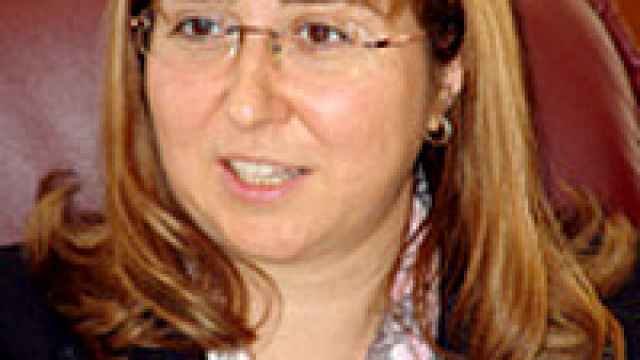 legalworld.ru Valyavina |  |
| |
In 1996, the Samara region's Property Fund sold a 6.1 percent stake in Tolyattiazot to joint Russian-Swiss agricultural company Tafco.
In March 2004, The Federal Property Ministry appealed the deal. After having its first two attempts turned down, a third appellate court ruled that the Tolyattiazot deal should be voided. The Supreme Arbitration Court overturned that ruling in November 2005.
Valyavina could not be reached at her office Tuesday afternoon.
Solovyov's lawyer, Shota Gorgadze, praised Valyavina for her testimony Tuesday, calling it an "exceptionally courageous and heroic act."
A source in the presidential administration, speaking on condition of anonymity, said "the final decision was up to the court."
The next hearing in Boyev's libel case is scheduled for May 26, Gorgadze said.
In 2001, then-deputy head of the presidential administration Dmitry Kozak introduced a legal reform program, part of which involved trying to guarantee greater independence for judges, although charges of governmental pressure on judges are made regularly in the legal community.
In a January campaign speech, President Dmitry Medvedev called Russia "a country of legal nihilism" with a "disregard for the law." He has promised to strengthen the rule of law to fight corruption and to encourage growth.
A Message from The Moscow Times:
Dear readers,
We are facing unprecedented challenges. Russia's Prosecutor General's Office has designated The Moscow Times as an "undesirable" organization, criminalizing our work and putting our staff at risk of prosecution. This follows our earlier unjust labeling as a "foreign agent."
These actions are direct attempts to silence independent journalism in Russia. The authorities claim our work "discredits the decisions of the Russian leadership." We see things differently: we strive to provide accurate, unbiased reporting on Russia.
We, the journalists of The Moscow Times, refuse to be silenced. But to continue our work, we need your help.
Your support, no matter how small, makes a world of difference. If you can, please support us monthly starting from just $2. It's quick to set up, and every contribution makes a significant impact.
By supporting The Moscow Times, you're defending open, independent journalism in the face of repression. Thank you for standing with us.

Remind me later.