

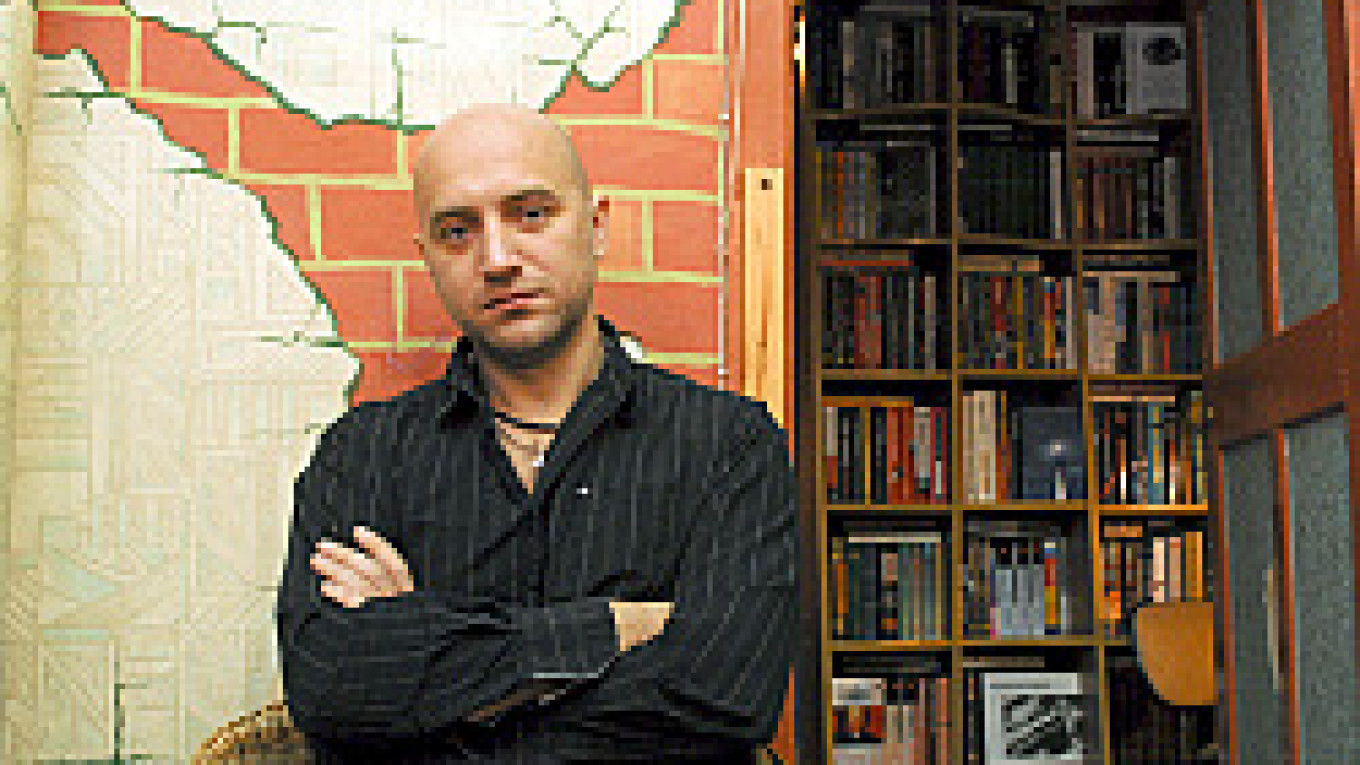
The debate, which quickly spread over the Internet but has not been reported on state-controlled television, has evoked memories of pre-1917 Russia where hatred between the ruling class and the poor sparked a Communist revolution.
The dispute started when Aven, president of Alfa Bank, wrote a damning review of "Sankya," a novel by Zakhar Prilepin, a member of the banned National Bolshevik Party.
It tells how Sasha Tishin, a disillusioned young Russian from a provincial town, joins a radical party hoping to change the political system by force, and leads an attack on a local administration headquarters.
"Most of what one needs to hate in life, from my point of view, can be found in writer Prilepin's book," Aven wrote in the Russian Pioneer glossy magazine, which targets wealthy educated Russians and has a circulation of 20,000.
The revolutionary views of the book's protagonist, he added, made him "reach for a pistol."
Tishin takes part in violent protests, fights with police, plots killings of officials in Latvia, and is subjected to brutal torture by security agents.
"Why, instead of bringing order -- planting a tree, building a house, washing socks or reading a fairytale to a child -- does one need to engage in doing nothing, then after a good booze, taking up a club and smashing everything?" Aven wrote.
Little-noticed when it was first published in paperback by niche publisher Ad Marginem two years ago, the book's sales jumped to 35,000 this year. Publication rights have been sold to Poland, France, Serbia, China and Turkey.
Prilepin opposes what he terms the "social Darwinism" that has split Russian society. Despite Russia's oil wealth, about 21 million Russians, or 15 percent, of the population live below the poverty line of $158 income per month.
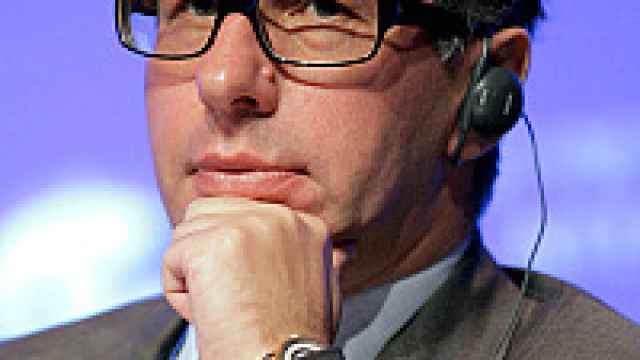 Dmitry Beliakov / bloomberg Pyotr Aven |  |
| |
"I do not understand what else I should do to be able to buy an apartment because we do not fit in the one we have," Prilepin wrote in Ogonyok magazine, which has a circulation of 70,000 and a wider readership than Russian Pioneer.
He said he had been living with his family in a tiny two-room apartment in Nizhny Novgorod, which was the hometown of early 20th-century writer Maxim Gorky.
"The ghost of poverty is still lurking in front of me, it has not gone so far away that I cannot sense its sickening smell," Prilepin wrote.
He said he and his family had sometimes been forced to eat fried cabbage for months to survive.
Some book reviewers have likened Prilepin to Gorky, who was often called "a thunderbird of the Revolution" for books like "The Mother," written in 1907, about a young factory worker who becomes a revolutionary.
"Russia is on the brink of the social revolution, and such a revolution is badly needed," a skinny, clean-shaven Prilepin said in an interview in a Moscow cafe. "Russia is now in a turbulent state, now it is all going to start."
With Russia's rich-poor divide brought into sharp focus by the oil bonanza, there is widespread hatred of billionaires such as Roman Abramovich, the owner of Chelsea football club in Britain, or market reform ideologists like Aven. He was 29th in Forbes magazine's list of richest Russians this year.
Prilepin served in the police special forces, fought in Chechnya, and then worked as a crime reporter before becoming a writer.
"The difference between me and Aven is basic -- in case of a crisis, he and his family can leave this country and watch developments from the outside," Prilepin wrote in the Russian Life magazine, referring to Aven's properties abroad.
Aven, bespectacled and fast-talking, said in an interview that the reaction to his book review had taken him by surprise but he could understand the resentment.
"It was like a letter from a world that is totally unknown," he said by telephone. "I can understand that reaction perfectly well -- the outrageous behavior of the rich showing off their wealth."
After eight years of economic boom, Russia is plunging into economic crisis that is threatening to crush the fragile stability fostered by Vladimir Putin's government with the help of buoyant oil revenues, compliant state media and heavy-handed police.
"Despite the financial crisis, there are people able to defend the future," Aven said, justifying his attack on the book.
"Moreover, today's rich came from the same slums as Tishin and had to go through you know what," he added, recalling the often violent birth of Russian capitalism.
Political analyst Stanislav Belkovsky said Aven's views were "an ideological manifesto of Russia's ruling elite" and were in line with the general thinking in the Kremlin. "As long as Aven sits in his office, the regime will not change," he said.
A Message from The Moscow Times:
Dear readers,
We are facing unprecedented challenges. Russia's Prosecutor General's Office has designated The Moscow Times as an "undesirable" organization, criminalizing our work and putting our staff at risk of prosecution. This follows our earlier unjust labeling as a "foreign agent."
These actions are direct attempts to silence independent journalism in Russia. The authorities claim our work "discredits the decisions of the Russian leadership." We see things differently: we strive to provide accurate, unbiased reporting on Russia.
We, the journalists of The Moscow Times, refuse to be silenced. But to continue our work, we need your help.
Your support, no matter how small, makes a world of difference. If you can, please support us monthly starting from just $2. It's quick to set up, and every contribution makes a significant impact.
By supporting The Moscow Times, you're defending open, independent journalism in the face of repression. Thank you for standing with us.

Remind me later.