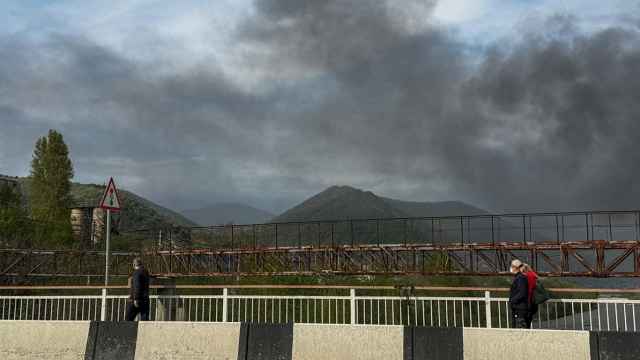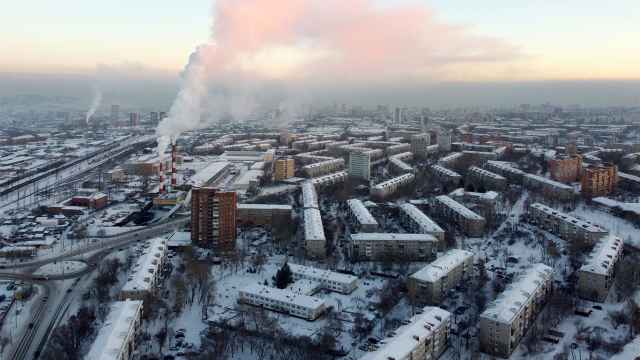
Authorities in Russia’s southern Krasnodar region have declared a high alert over nearly full landfills, years after a Kremlin-backed waste management overhaul was supposed to deliver new processing facilities.
Governor Veniamin Kondratyev introduced the measures on Oct. 22 in 10 districts, including the Black Sea resort city of Sochi and the port of Novorossiysk, the regional emergency task force said. It cited the “exhaustion of capacity at waste management facilities.”
The governor’s decree warned of a potential regional emergency, with disruptions to garbage collection threatening to leave waste piling up in towns and villages. It also warned of illegal dumping and the spread of infectious diseases carried by rodents and insects, the local news outlet Gorod Krasnodar reported.
The decree was published five days after Kondratyev signed it.
The regional task force said some landfills had begun operating as temporary waste storage sites, while others were undergoing reconstruction expected to take a “lengthy period of time.”
Authorities said the high alert would remain in place until landfill reconstruction is completed, the necessary permits are secured and new municipal waste processing facilities are built. Ten such facilities are currently under construction, according to the task force.
Officials pledged that garbage would continue to be collected regularly along existing routes.
Kondratyev put his deputy, Yevgeny Pergun, in charge of addressing the threat. Pergun is also overseeing efforts to resolve the region’s fuel crisis and contain gasoline prices.
He was instructed to draw up a plan for building and upgrading waste treatment and disposal facilities and using existing sites. Kondratyev also urged regional waste operators to keep their landfills running until the threat of an emergency has passed.
The Krasnodar region, which consistently ranks among Russia’s 10 largest regional economies, was supposed to receive at least eight municipal waste processing complexes under the nationwide waste management reform launched by President Vladimir Putin in 2019.
Regional prosecutors had already flagged serious problems in 2024, Gorod Krasnodar reported. Nine of the region’s 15 municipal waste disposal facilities were full, while coastal districts were left without legally operating landfills, prosecutors said.
They also found that violations in the selection of construction sites made some planned facilities unusable.
None of the nine facilities envisaged under the reform, including eight waste processing complexes, had opened by 2026. Authorities have since pushed back construction deadlines to 2027–2028.
The region has allocated 36.8 billion rubles ($456.3 million) to its waste management program through 2030, according to the Kommersant newspaper.
This article was translated with the help of artificial intelligence and was reviewed by a Moscow Times editor before publication. Learn more about our newsroom's AI policy here.
Read this article in Russian at The Moscow Times' Russian service.
A Message from The Moscow Times:
Dear readers,
We are facing unprecedented challenges. Russia's Prosecutor General's Office has designated The Moscow Times as an "undesirable" organization, criminalizing our work and putting our staff at risk of prosecution. This follows our earlier unjust labeling as a "foreign agent."
These actions are direct attempts to silence independent journalism in Russia. The authorities claim our work "discredits the decisions of the Russian leadership." We see things differently: we strive to provide accurate, unbiased reporting on Russia.
We, the journalists of The Moscow Times, refuse to be silenced. But to continue our work, we need your help.
Your support, no matter how small, makes a world of difference. If you can, please support us monthly starting from just $2. It's quick to set up, and every contribution makes a significant impact.
By supporting The Moscow Times, you're defending open, independent journalism in the face of repression. Thank you for standing with us.

Remind me later.