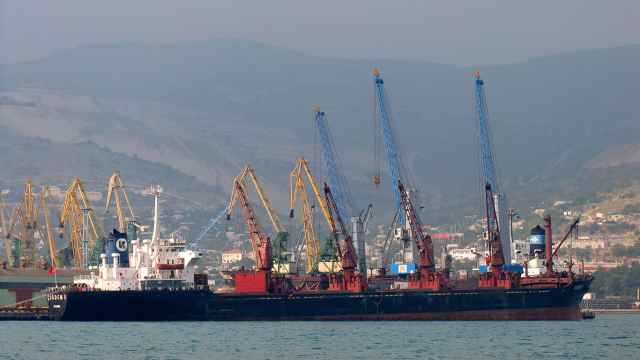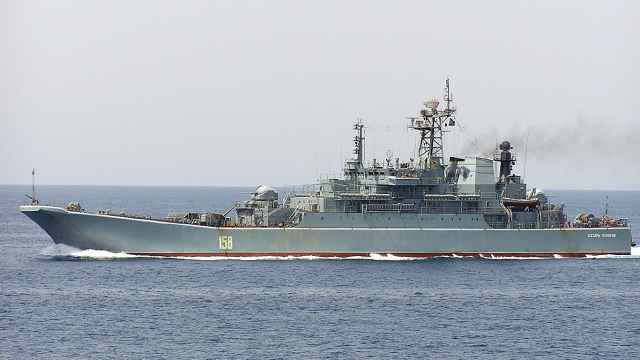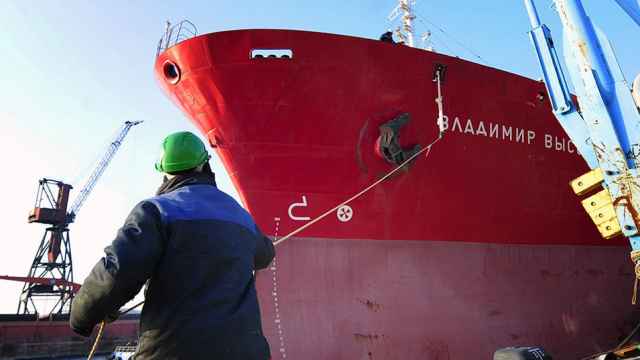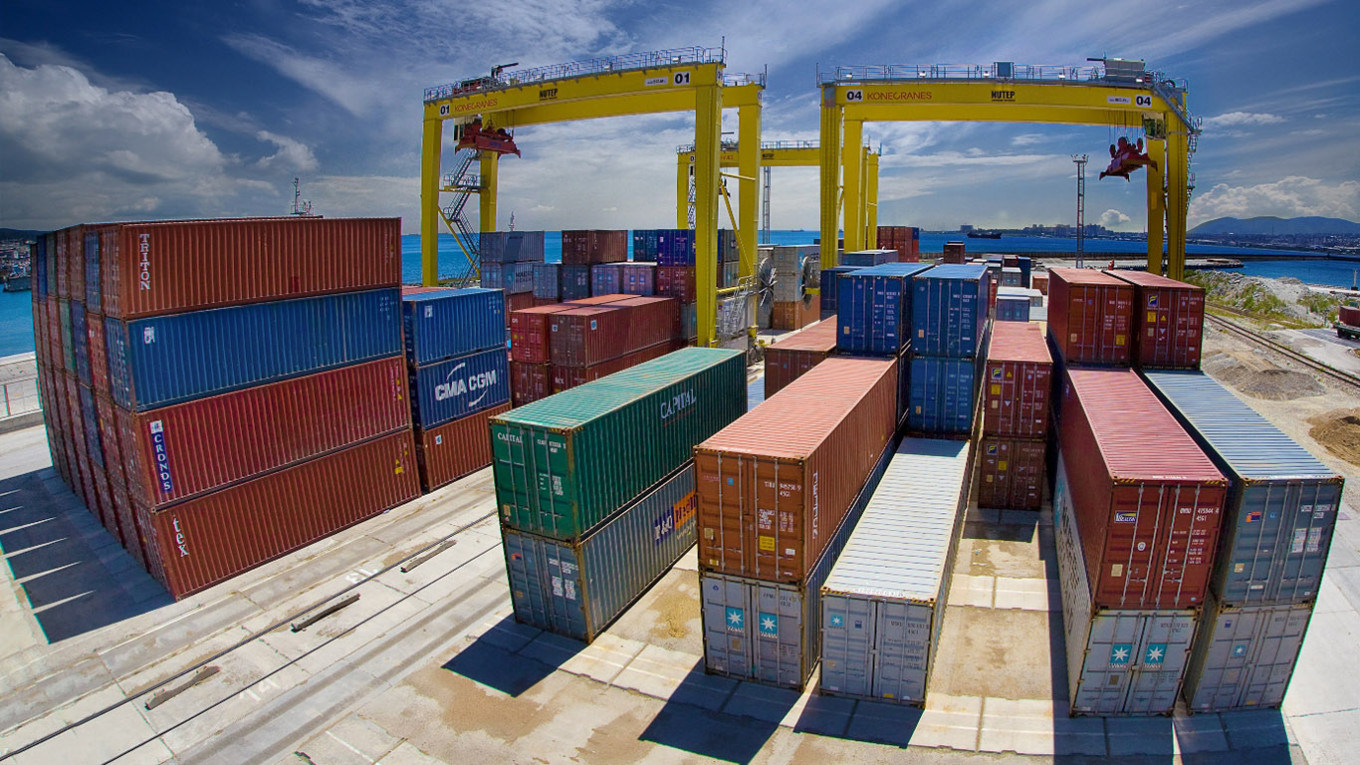
Russia’s Black Sea and Sea of Azov ports handled no container cargo in October after Ukrainian drone attacks drove shipping lines out of Novorossiysk, sending freight to Baltic and Far Eastern ports.
Container traffic across Russia nevertheless rose 5% from a year earlier in October as other ports absorbed the diverted cargo, Gazprombank’s Center for Economic Forecasting said.
The shift has raised shipping costs and strained rail capacity as well as disrupted grain exports, with one of Russia’s largest grain traders cutting jobs after two of its Black Sea terminals shut down.
The last container carriers serving Novorossiysk withdrew by October after Ukraine stepped up attacks on ships over the summer, Sea Shipping CEO Alexei Gagarinov told InfraNews. The port handled 1.1 million 20-foot equivalent units in 2025.
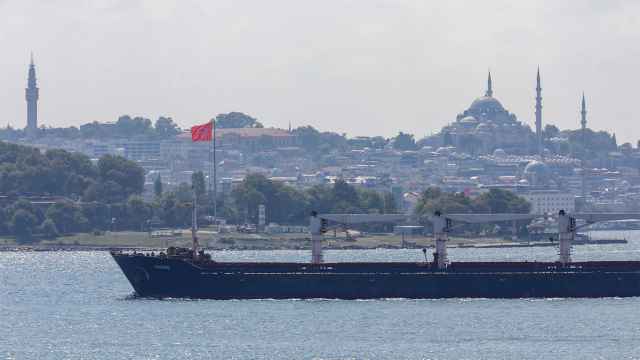
St. Petersburg has become the main alternative for shipments from Turkey, Gagarinov said. The voyage now takes two to three weeks, up from three to five days via Novorossiysk, and costs three to six times as much per container.
Russia’s Baltic ports handled more than 200,000 20-foot equivalent units in October for the first time since December 2021, while volumes in the Far East approached record levels, Gazprombank’s forecasting center said.
Nationwide, container traffic rose 4.5% to 4.57 million units in the first 10 months of the year, just shy of the 2021 record.
Container operator Logoper said St. Petersburg’s terminals had room for more cargo, but rail capacity limited how much they could move inland.
In the Far East, freight forwarder Tradest said containers were already waiting up to two weeks to be loaded onto trains in early October.
Two sources at grain trader Demetra Holding told Vedomosti that the company could cut its workforce by half after drone strikes halted operations at its Taman and Novorossiysk grain terminals over the summer.
Demetra confirmed it was cutting jobs and said it would retain workers at its port facilities.
Russia previously shipped about 80% of its grain exports through the Black Sea and Sea of Azov.
Exporters have since begun diverting some shipments to the Baltic and Murmansk, where Demetra sent 3,400 metric tons of grain in late October for a trial shipment to Morocco.
This article was translated with the help of artificial intelligence and was reviewed by a Moscow Times editor before publication. Learn more about our newsroom's AI policy here.
Read this article in Russian at The Moscow Times' Russian service.
A Message from The Moscow Times:
Dear readers,
We are facing unprecedented challenges. Russia's Prosecutor General's Office has designated The Moscow Times as an "undesirable" organization, criminalizing our work and putting our staff at risk of prosecution. This follows our earlier unjust labeling as a "foreign agent."
These actions are direct attempts to silence independent journalism in Russia. The authorities claim our work "discredits the decisions of the Russian leadership." We see things differently: we strive to provide accurate, unbiased reporting on Russia.
We, the journalists of The Moscow Times, refuse to be silenced. But to continue our work, we need your help.
Your support, no matter how small, makes a world of difference. If you can, please support us monthly starting from just $2. It's quick to set up, and every contribution makes a significant impact.
By supporting The Moscow Times, you're defending open, independent journalism in the face of repression. Thank you for standing with us.

Remind me later.