Russian exports to Turkey fell about 40% in August to their lowest monthly value since 2022, as Ukrainian attacks on southern Russian ports disrupted shipments, the Vedomosti newspaper reported, citing Turkish trade data and industry officials.
Shipments to Turkey, Russia’s third-largest trading partner, totaled $1.93 billion, down from $3.23 billion in July, according to figures from the Turkish Statistical Institute reviewed by Vedomosti.
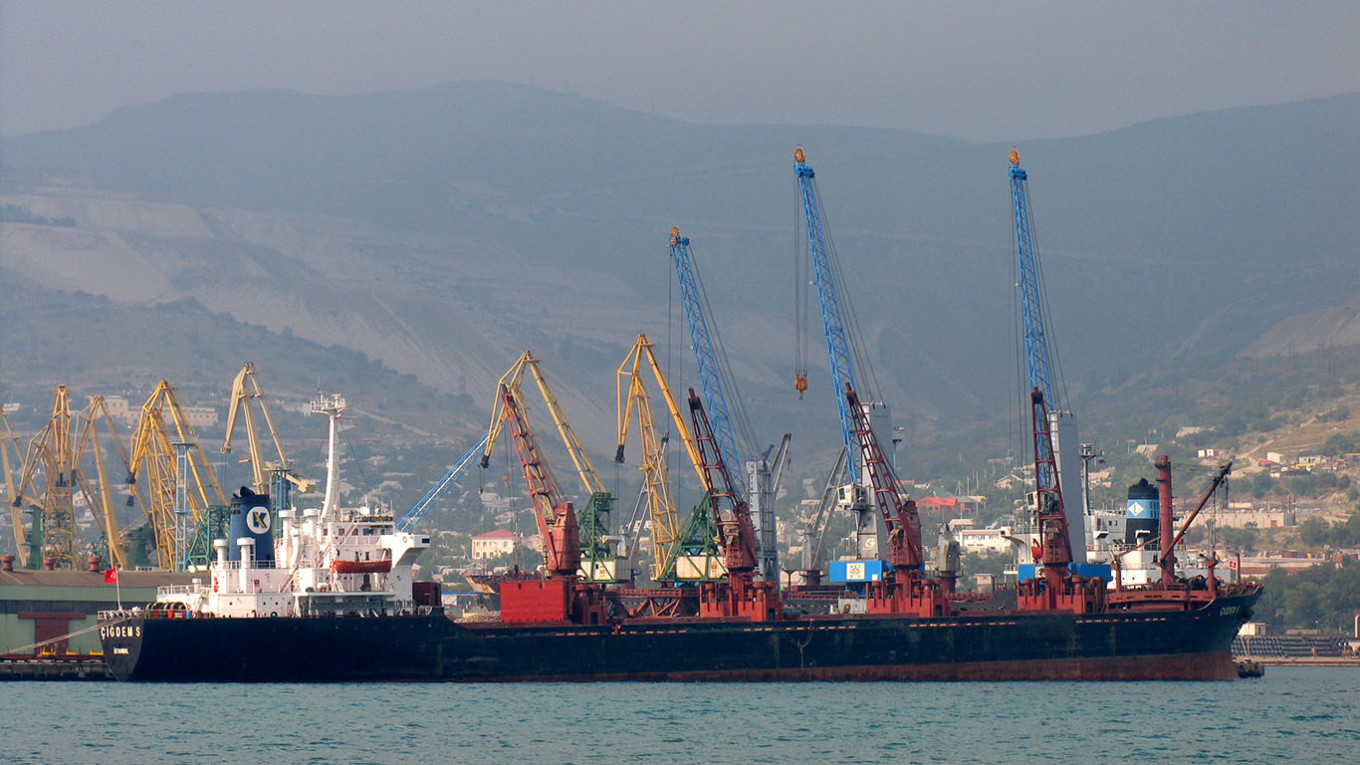
The decline highlights the growing disruption to Russian trade through the Black Sea and Sea of Azov, with exporters turning to longer, more expensive routes to reach the Turkish market.
Before August, monthly exports to Turkey had fallen below $3 billion only once this year, reaching $2.49 billion in February before recovering to $4.42 billion in April.
Andrei Gnidchenko, a leading expert at the Kremlin-linked Center for Macroeconomic Analysis and Short-Term Forecasting, attributed the decline to reduced or halted shipments of coal, iron and steel, copper, motor fuels and grain.
The Russian Grain Union said no grain was shipped to Turkey in August. Russian coal shipments to the country fell to 1.5 million metric tons from 2.1 million in July, according to commodity pricing agency Argus.
Yulia Shlenskaya, head of customs and logistics operator KVT Service, told Vedomosti that cargo flows through southern Russian ports had dwindled to almost nothing. Some shipments to Turkey were rerouted in September through the Caucasus or ports in northwestern Russia, increasing transit distances and costs, she said.
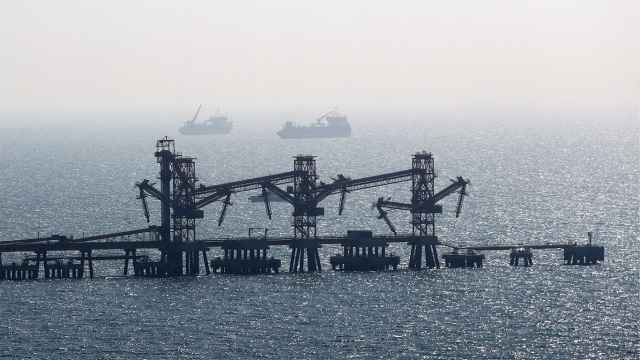
Ukraine began striking Russian ports on the Black Sea and Sea of Azov in July. The attacks destroyed terminals handling grain, food products, vegetable oil and petroleum, and damaged more than 100 vessels, according to the report.
Shipping in the Sea of Azov halted completely on July 11, Vedomosti said. Russia subsequently struck Ukrainian port infrastructure and foreign vessels, also bringing operations at the port of Odesa to a standstill.
Turkey’s Foreign Ministry has urged both countries to take urgent steps to ensure safe shipping.
Turkish Foreign Minister Hakan Fidan said on Sept. 19 that he had sent Moscow and Kyiv a draft memorandum proposing an end to the attacks. The Kremlin confirmed receiving the document but said no substantive negotiations were underway.
Ukraine has also proposed a Black Sea ceasefire to allow grain exports to resume, but Ukrainian Agriculture Minister Taras Vysotsky said Russia had rejected every proposed version of an agreement.
This article was translated with the help of artificial intelligence and was reviewed by a Moscow Times editor before publication. Learn more about our newsroom's AI policy here.
Read this article in Russian at The Moscow Times' Russian service.
A Message from The Moscow Times:
Dear readers,
We are facing unprecedented challenges. Russia's Prosecutor General's Office has designated The Moscow Times as an "undesirable" organization, criminalizing our work and putting our staff at risk of prosecution. This follows our earlier unjust labeling as a "foreign agent."
These actions are direct attempts to silence independent journalism in Russia. The authorities claim our work "discredits the decisions of the Russian leadership." We see things differently: we strive to provide accurate, unbiased reporting on Russia.
We, the journalists of The Moscow Times, refuse to be silenced. But to continue our work, we need your help.
Your support, no matter how small, makes a world of difference. If you can, please support us monthly starting from just $2. It's quick to set up, and every contribution makes a significant impact.
By supporting The Moscow Times, you're defending open, independent journalism in the face of repression. Thank you for standing with us.

Remind me later.