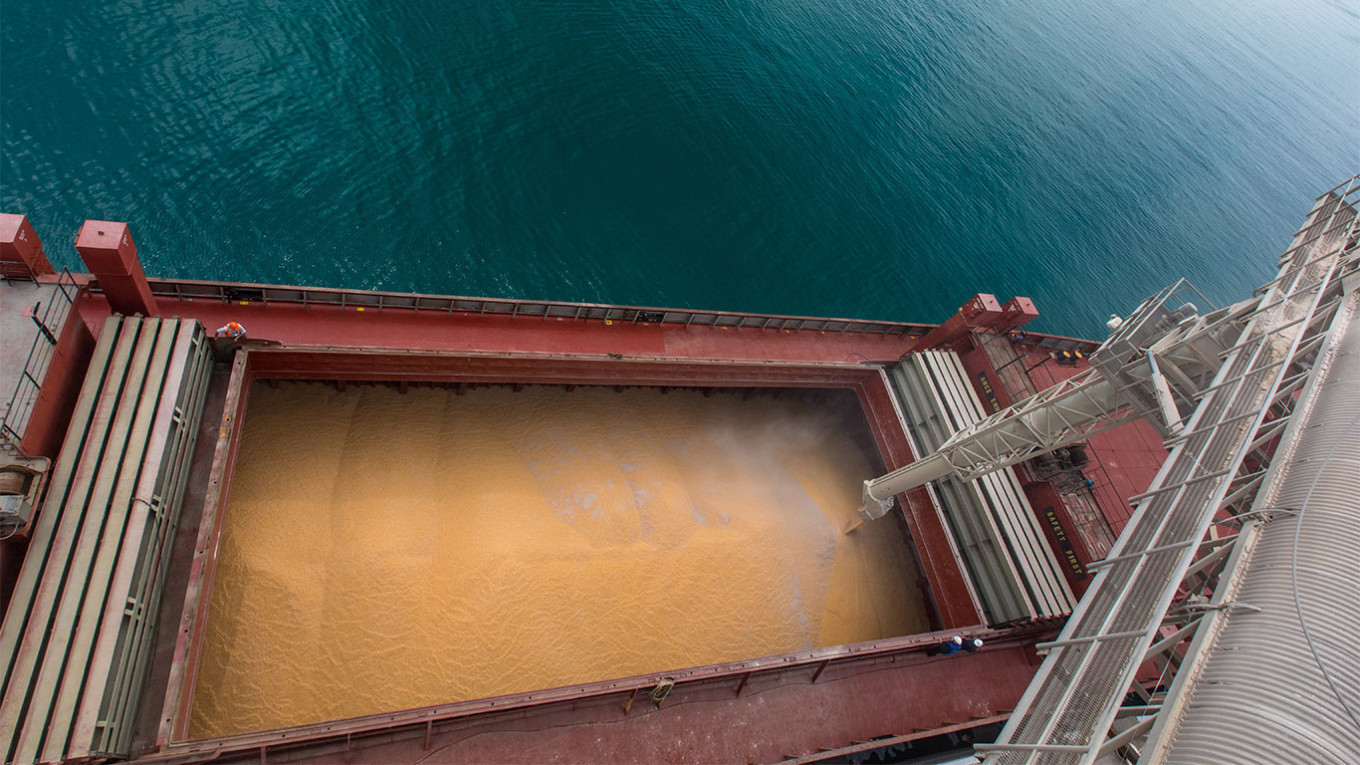
Ukrainian attacks in and around the Sea of Azov have sharply reduced Russia's grain exports at the start of the new agricultural season, leaving millions of tons of grain stranded in southern storage facilities, analysts and industry officials said.
Russian authorities stopped accepting applications for vessels to transit the Kerch Strait on July 11 after more than 100 ships operating in the Sea of Azov came under drone attacks, effectively halting grain shipments from Russia's Azov ports.
Russia is now expected to export 1.5 million metric tons of wheat in July, down about 30% from 2.1 million tons in the same month last year and less than half the five-year July average of 3.1 million tons, agricultural consultancy SovEcon said Monday.
If realized, the figure would mark Russia's weakest July wheat exports since 2017 and effectively return shipments to levels last seen about a decade ago, SovEcon Managing Director Andrey Sizov said in a post on Telegram.
"The main reason for the decline is navigation restrictions through the Kerch Strait," Sizov said.
SovEcon estimates that up to 25% of Russia's combined grain and sunflower oil exports are shipped through ports beyond the Kerch Strait.
Turkey, Russia's largest wheat buyer, purchases nearly one-fifth of the country's grain exports. Sizov added that weaker demand from buyers in Egypt and Turkey was also weighing on wheat exports.
Industry sources told the Rostov-based publication Gorod N that grain exports via the Don River have now come to a complete halt because of the disruption in the Kerch Strait.
During the previous agricultural season, Russia exported 14.7 million tons of grain and processed grain products through that route, accounting for 27% of the country's total grain exports.
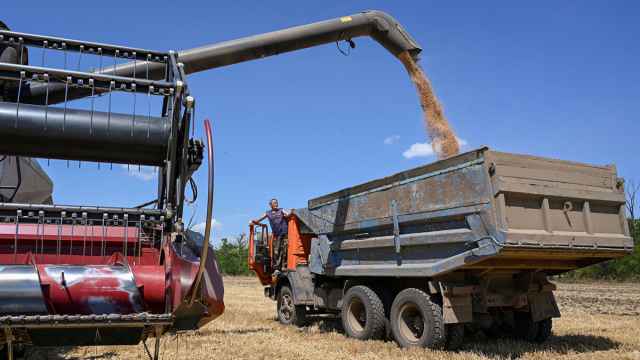
"At the moment, all grain elevators at the Don ports are full," Alexander Yaroshenko, president of agricultural holding Ural-Don, told Gorod N.
Grain purchases have effectively stopped, with exporters refusing new deliveries and previously agreed export contracts collapsing because cargo cannot be shipped, he said.
"Active trading should be picking up right now. Farmers should be receiving payment for half or all of their wheat harvest and putting that money back into circulation. But there's no one to sell to," Yaroshenko said.
While grain could theoretically be redirected to Russia's Black Sea ports such as Novorossiysk and Tuapse, Yaroshenko said existing infrastructure makes that impractical.
"The Black Sea ports in Krasnodar region simply cannot physically handle all the volumes exported by southern Russia during the season. Nor can we transport them there technically — the railway infrastructure isn't designed for those volumes," he said.
A grain trader cited by Gorod N said rail approaches to Novorossiysk and Tuapse would become severely congested if exporters attempted to reroute cargo there, potentially bringing traffic to a standstill for months.
The trader added that the Black Sea ports are also ill-equipped to handle exports of perishable processed agricultural products, legumes and durum wheat, warning that a prolonged closure of the Azov-Don shipping basin would not simply redirect trade but could cripple specialized export segments, idle processing facilities and leave high-value agricultural products stranded.
Read this article in Russian at The Moscow Times' Russian service.
A Message from The Moscow Times:
Dear readers,
We are facing unprecedented challenges. Russia's Prosecutor General's Office has designated The Moscow Times as an "undesirable" organization, criminalizing our work and putting our staff at risk of prosecution. This follows our earlier unjust labeling as a "foreign agent."
These actions are direct attempts to silence independent journalism in Russia. The authorities claim our work "discredits the decisions of the Russian leadership." We see things differently: we strive to provide accurate, unbiased reporting on Russia.
We, the journalists of The Moscow Times, refuse to be silenced. But to continue our work, we need your help.
Your support, no matter how small, makes a world of difference. If you can, please support us monthly starting from just $2. It's quick to set up, and every contribution makes a significant impact.
By supporting The Moscow Times, you're defending open, independent journalism in the face of repression. Thank you for standing with us.

Remind me later.