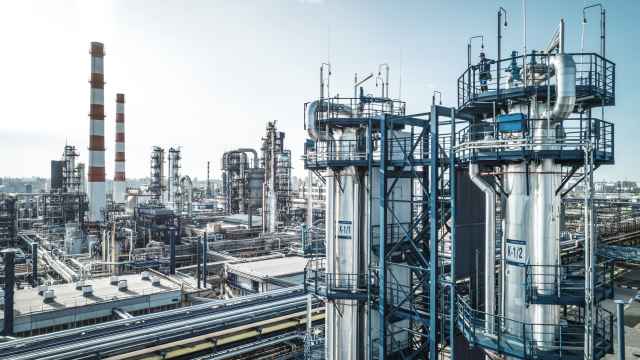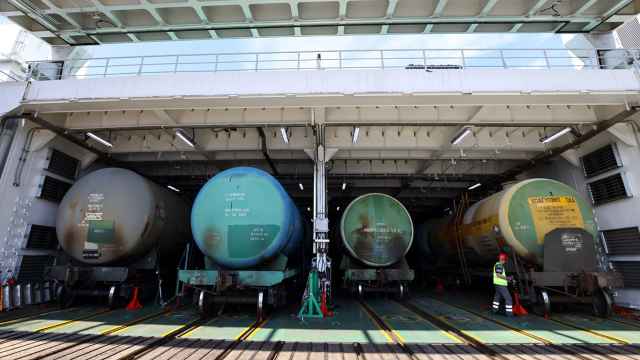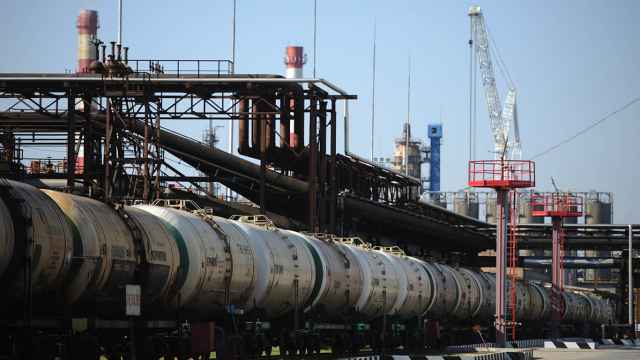
Russian authorities have urged oil companies to increase production of lower-grade gasoline to avert domestic shortages following a wave of Ukrainian attacks on refineries.
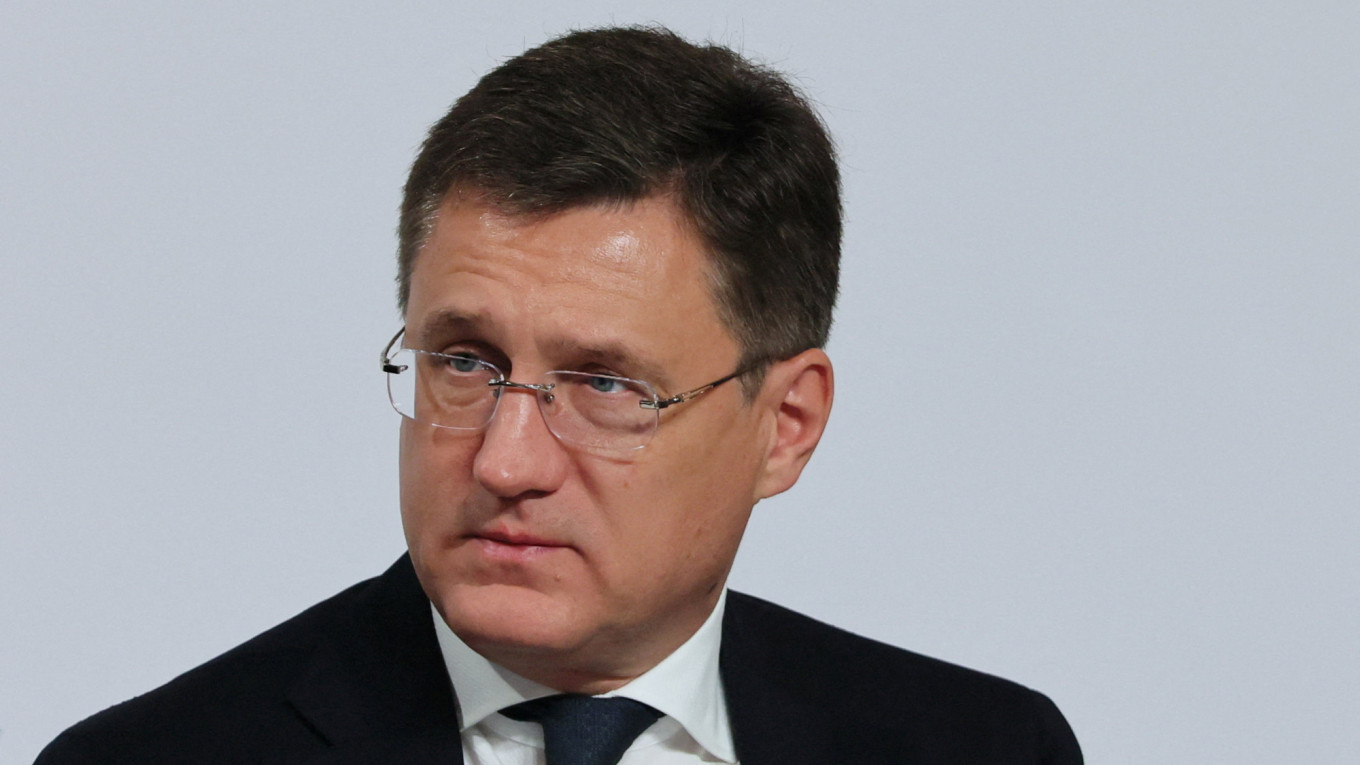
Producing additional volumes of fuel that falls below Russia’s usual environmental standards was identified as a priority at a meeting chaired Tuesday by Deputy Prime Minister Alexander Novak, who oversees the energy sector, the government said.
Novak also instructed companies to continue importing gasoline, a measure introduced during this summer’s fuel crisis, and speed up repairs at damaged refineries.
The government authorized the production and purchase of gasoline below the Euro-5 standard in August, allowing refiners to produce fuel meeting standards as low as Euro-2, which Russia banned in 2013.
Euro-2 gasoline can contain up to 50 times more sulfur than Euro-5 fuel, which Russia introduced a decade ago: 500 milligrams per kilogram compared with 10 milligrams.
Under an Energy Ministry order, the production and sale of gasoline meeting the lower K2, K3 and K4 environmental standards, broadly equivalent to Euro-2, Euro-3 and Euro-4, are permitted until July 1, 2027.
Ukraine’s latest campaign of refinery strikes, which began in late October, has hit at least 13 plants stretching from the Baltic Sea to Siberia.
The U.S. think tank Rand Corp estimated that three refineries — Norsi in the Nizhny Novgorod region, Yanos in Yaroslavl and Rosneft’s Novokuibyshevsk refinery — have completely halted production.
The Ryazan refinery, which supplies Moscow and the surrounding region, has lost about 90% of its capacity, according to the same estimates.
Russia’s largest refinery, in Omsk, lost half its processing capacity following a Nov. 11 attack. The Volgograd refinery has suffered a similar reduction, while the Kirishi refinery near St. Petersburg, Russia’s second-largest, is operating at about one-third of capacity.
Russia’s total oil processing has fallen to an estimated 3.7 million barrels per day, roughly a third below its usual prewar level, according to the estimates.
This article was translated with the help of artificial intelligence and was reviewed by a Moscow Times editor before publication. Learn more about our newsroom's AI policy here.
Read this article in Russian at The Moscow Times' Russian service.
A Message from The Moscow Times:
Dear readers,
We are facing unprecedented challenges. Russia's Prosecutor General's Office has designated The Moscow Times as an "undesirable" organization, criminalizing our work and putting our staff at risk of prosecution. This follows our earlier unjust labeling as a "foreign agent."
These actions are direct attempts to silence independent journalism in Russia. The authorities claim our work "discredits the decisions of the Russian leadership." We see things differently: we strive to provide accurate, unbiased reporting on Russia.
We, the journalists of The Moscow Times, refuse to be silenced. But to continue our work, we need your help.
Your support, no matter how small, makes a world of difference. If you can, please support us monthly starting from just $2. It's quick to set up, and every contribution makes a significant impact.
By supporting The Moscow Times, you're defending open, independent journalism in the face of repression. Thank you for standing with us.

Remind me later.