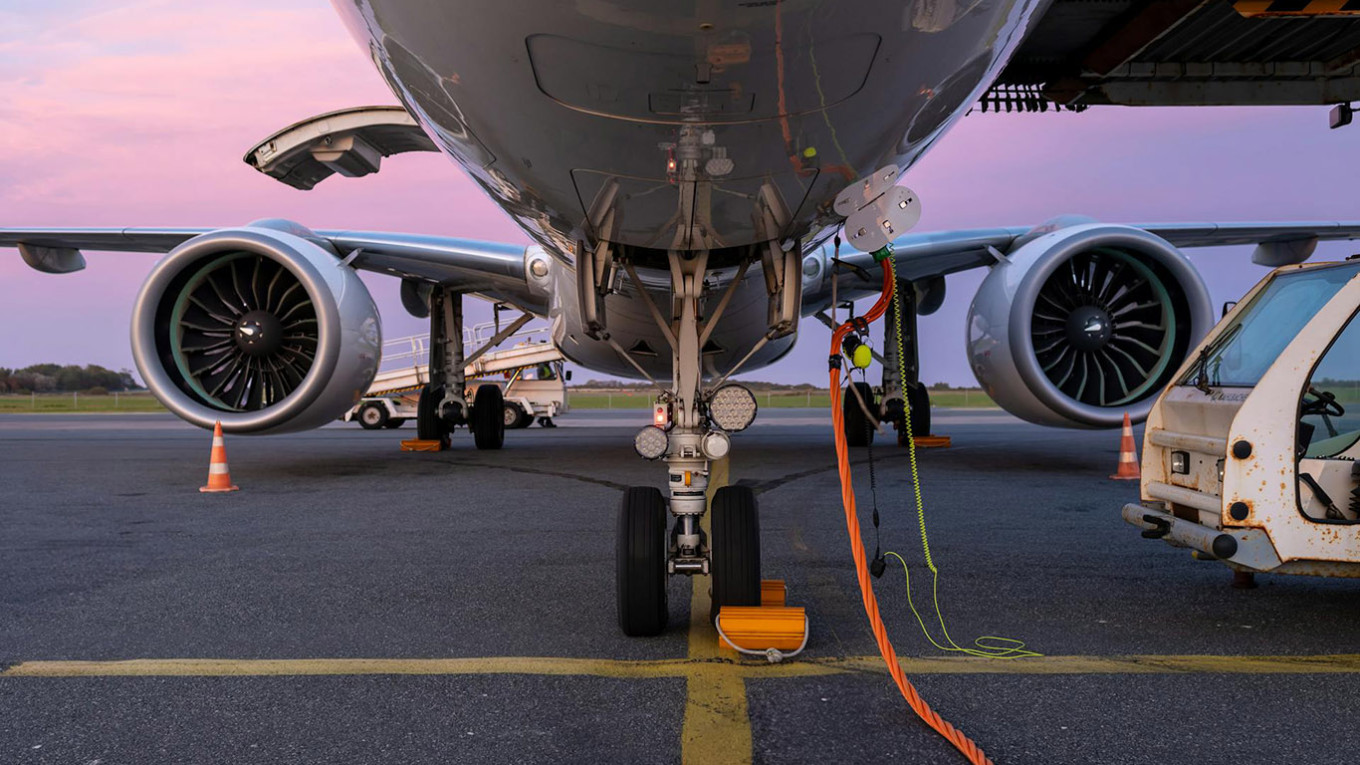
The Russian government on Monday announced a ban on jet fuel exports until the end of November, as Ukrainian strikes on oil refineries throughout the country have led to slumps in domestic production and gasoline shortages in some places.
In a statement, the government said the measure was introduced to “ensure stability in the domestic fuel market.” Supplies to countries that maintain active intergovernmental agreements with Russia will be exempt from the restriction.
The embargo, which expires on Nov. 30, marks Russia’s first-ever ban on jet fuel exports, according to the RBC news outlet.
Russian Transportation Minister Andrei Nikitin later told reporters that there was no shortage of jet fuel in the country and that the ban was introduced “based on the interests of our airlines.”
Ukraine has stepped up its attacks on Russian oil infrastructure over the past several months in a bid to deprive the Kremlin of energy windfalls amid the continued closure of the Strait of Hormuz.
Strikes on refineries have halted or scaled back production at facilities that account for around one-quarter of the country’s total refining capacity and more than 30% of its gasoline output, according to Reuters.
Bloomberg reported that processing volumes at Russian refineries have plummeted to 4.69 million barrels per day — the lowest level since 2009.
A total ban on gasoline exports remains in force across Russia through July 31. Despite that ban, gas stations in annexed Crimea have begun rationing fuel to deal with a local shortage.
Meanwhile, amid the global energy crisis caused by the Iran war, Britain last month eased sanctions on imports of Russian jet fuel and diesel “to protect U.K. consumers.” That decision followed a U.S. sanctions waiver for Russian oil shipments already at sea.
A Message from The Moscow Times:
Dear readers,
We are facing unprecedented challenges. Russia's Prosecutor General's Office has designated The Moscow Times as an "undesirable" organization, criminalizing our work and putting our staff at risk of prosecution. This follows our earlier unjust labeling as a "foreign agent."
These actions are direct attempts to silence independent journalism in Russia. The authorities claim our work "discredits the decisions of the Russian leadership." We see things differently: we strive to provide accurate, unbiased reporting on Russia.
We, the journalists of The Moscow Times, refuse to be silenced. But to continue our work, we need your help.
Your support, no matter how small, makes a world of difference. If you can, please support us monthly starting from just $2. It's quick to set up, and every contribution makes a significant impact.
By supporting The Moscow Times, you're defending open, independent journalism in the face of repression. Thank you for standing with us.

Remind me later.