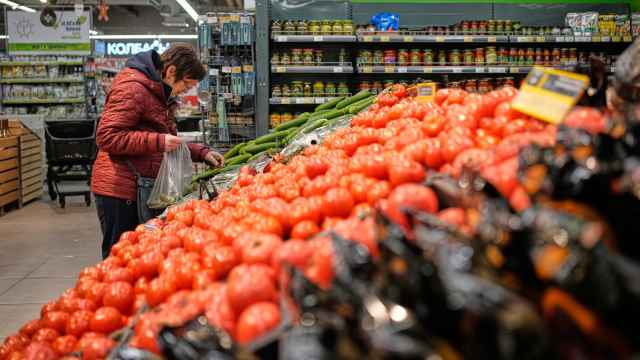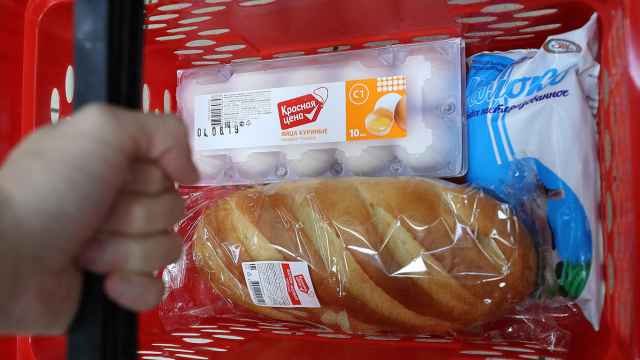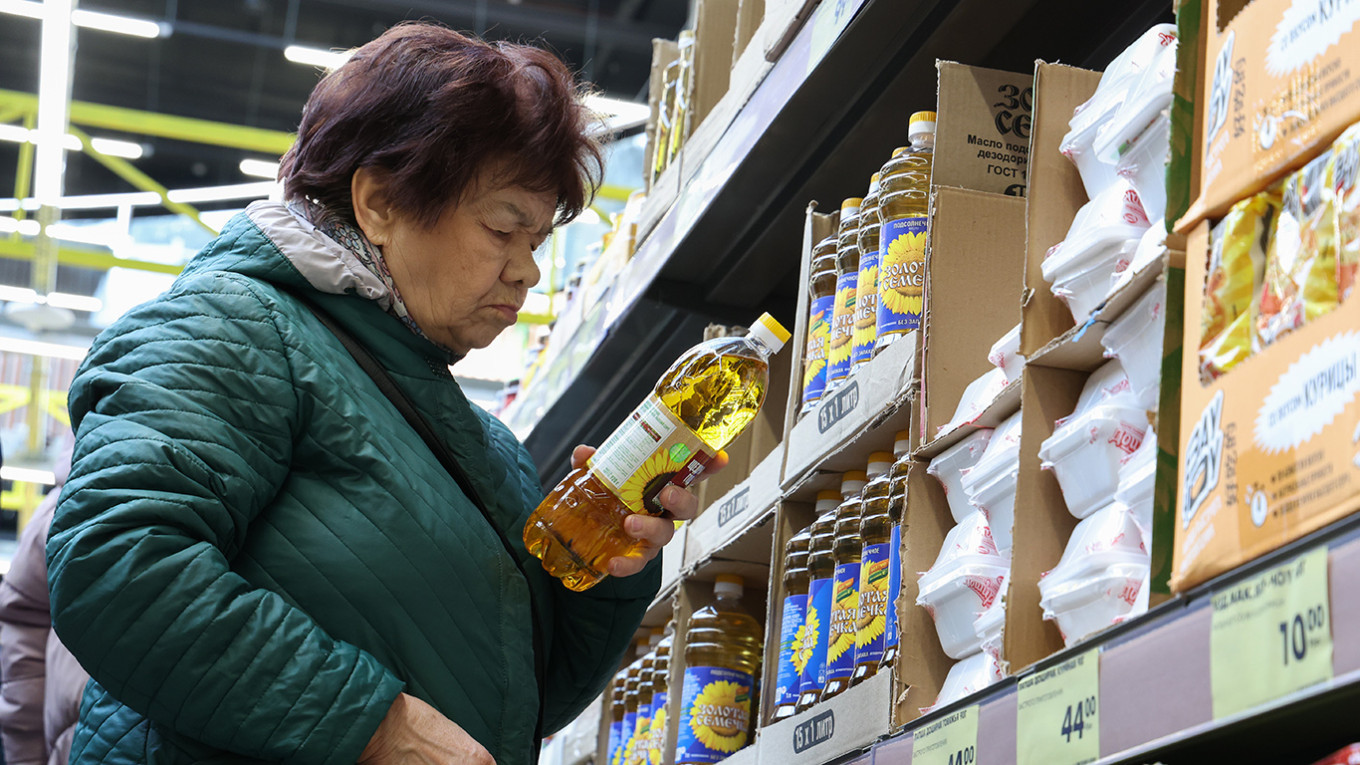
Russian consumers are increasingly switching to cheaper food products as real incomes come under pressure and households look to cut costs, a senior executive at the country’s largest food retailer said.
Yekaterina Lobacheva, president of X5 Group, which operates the Perekrestok, Pyaterochka and Chizhik chains, said the company had observed a sharp rise in demand for low-cost items and store-brand products.
The trend underscores a cooling in consumer demand in Russia’s slowing economy, where high interest rates and persistent inflation concerns are weighing on household spending, even as officials say price growth is easing.
“We recently noticed that cookie consumption has risen — almost two and a half times,” Lobacheva told the RBC news website in an interview. “It’s something sweet, a small indulgence, but cheaper than chocolate and other confectionery.”
Sales of X5’s own-brand products, which are typically priced below those of third-party manufacturers, have also increased notably, she said.
Another sign of tightening household budgets is rapid growth in discount retail formats that are traditionally aimed at lower-income shoppers.
Lobacheva said X5’s hard-discount chain Chizhik is expected to overtake Pyaterochka in revenue for the first time this year.
Pyaterochka reported revenue of 531 billion rubles ($7.06 billion) in 2025, up 8% year-on-year, while Chizhik’s revenue jumped 67% to 417 billion rubles ($5.55 billion).
Lobacheva said X5 does not segment customers into “rich” and “poor,” adding that retailers benefit when shoppers buy across a wide range of categories, including children’s goods, pet products and alcohol.
She also pointed to intensifying competition among retailers for a shrinking pool of consumers, as Russia’s population declines.
“One customer may visit up to 12 different stores over the course of a year,” she said, citing competition between retail chains, independent shops, markets and online platforms.
Household purchasing power is being squeezed by a combination of demographic decline, high interest rates set by the Central Bank and a prolonged effort to curb inflation, Lobacheva said.
At the same time, she added that food inflation has been “brought under control” and is currently at relatively low levels.
Central Bank Governor Elvira Nabiullina said in March that consumer demand was cooling.
According to state statistics agency Rosstat, real income growth slowed to 7.4% in 2025 from 8.2% a year earlier, with growth easing to 5.8% in the fourth quarter.
Other indicators point to rising caution among consumers. Russians have begun cutting spending not only on food but also on medicines, clothing and footwear, according to a survey by research group CSP Platform and analytics firm OnIn.
The poll found that 82% of respondents are concerned about the economic situation and expect prices for food and utilities to rise faster than incomes over the coming year.
Read this story in Russian at The Moscow Times' Russian service.
A Message from The Moscow Times:
Dear readers,
We are facing unprecedented challenges. Russia's Prosecutor General's Office has designated The Moscow Times as an "undesirable" organization, criminalizing our work and putting our staff at risk of prosecution. This follows our earlier unjust labeling as a "foreign agent."
These actions are direct attempts to silence independent journalism in Russia. The authorities claim our work "discredits the decisions of the Russian leadership." We see things differently: we strive to provide accurate, unbiased reporting on Russia.
We, the journalists of The Moscow Times, refuse to be silenced. But to continue our work, we need your help.
Your support, no matter how small, makes a world of difference. If you can, please support us monthly starting from just $2. It's quick to set up, and every contribution makes a significant impact.
By supporting The Moscow Times, you're defending open, independent journalism in the face of repression. Thank you for standing with us.

Remind me later.