

Viewing Russia’s economic problems as the sole result of the full-scale invasion of Ukraine would be a mistake. In fact, the war grew out of an economic system that had been built long before the first shots were fired.
Russia will not return to normal automatically in the event of a ceasefire or peace treaty. This may sound pessimistic. But acknowledging it is a necessary step in the conversation about what needs to be done to secure Russia’s future.
Russia chose guns over butter long before 2022. At the foundation of this model was an enormous concentration of power and resources among big business, regional elites and Kremlin bureaucrats, all of which hand the Kremlin the right to make key political decisions in exchange for guarantees of their own incomes and status.Thus, society became organized among lines of patronage: each group had its own niche, its own rules of the game, its own revenue. And each had its own dependence on the center that distributed this rent.
The technocrats who managed the economic bloc sincerely considered themselves pragmatists. Under the slogans of macroeconomic stability and fiscal responsibility, they accumulated reserves, restrained inflation and maintained low public debt. Much of what they did was reasonable — if one evaluates their work exclusively by financial indicators.
But there was a blind spot that financial indicators do not capture: the stability of public finances was ensured at the cost of systematically underfunding people and territories.
Underinvestment in hospitals, schools, roads and utility systems in most regions is not accidental oversights. Depressed regions, deprived of economic prospects, became the reservoir from which the Kremlin draws its contract soldiers, leaving the children of the ruling class unscathed. This is a war of wealth at the expense of poverty, and the economic model was built precisely this way, deliberately preserving inequality of opportunity between the center and the periphery.
For many Kremlin technocrats, the war became a personal tragedy. But in choosing stability at any cost and delegating political decisions, they created a system in which war became economically possible. Years of fiscal consolidation formed a strategic reserve that made it possible to wage war without immediate financial collapse.
The war accelerated and laid bare deformations that had been accumulating for years. Their nature is important to understand precisely because they will not disappear with a ceasefire.
Crucially, it struck the working-age population hardest, including those who were supposed to become the foundation of the economy of the 2030s and 2040s. Many of them are dead or maimed, have left the country for better opportunities and safety, or are unwilling to bring children into an uncertain world. Human capital evaporates faster than any financial reserves but cannot be restored with a stroke of a pen.
The demographic hole, intensified by the war, will not be compensated for by rising birth rates before the 2040s under any political scenario.
At the same time, the main factor of Russia’s economic resilience — the market character of the economy — is being destroyed.
Nationalization, which began in 2022 with foreign companies, now encompasses Russian businesses across a wide variety of sectors. Deals between private counterparties can be annulled at the discretion of the prosecutor’s office and become grounds for criminal cases.
The most basic economic institution — trust — has degraded. Entrepreneurs cease to plan long-term investments when it can rely neither on the physical security of their assets, nor on the predictability of the rules. The losses from this are invisible in the statistics, but they are real.
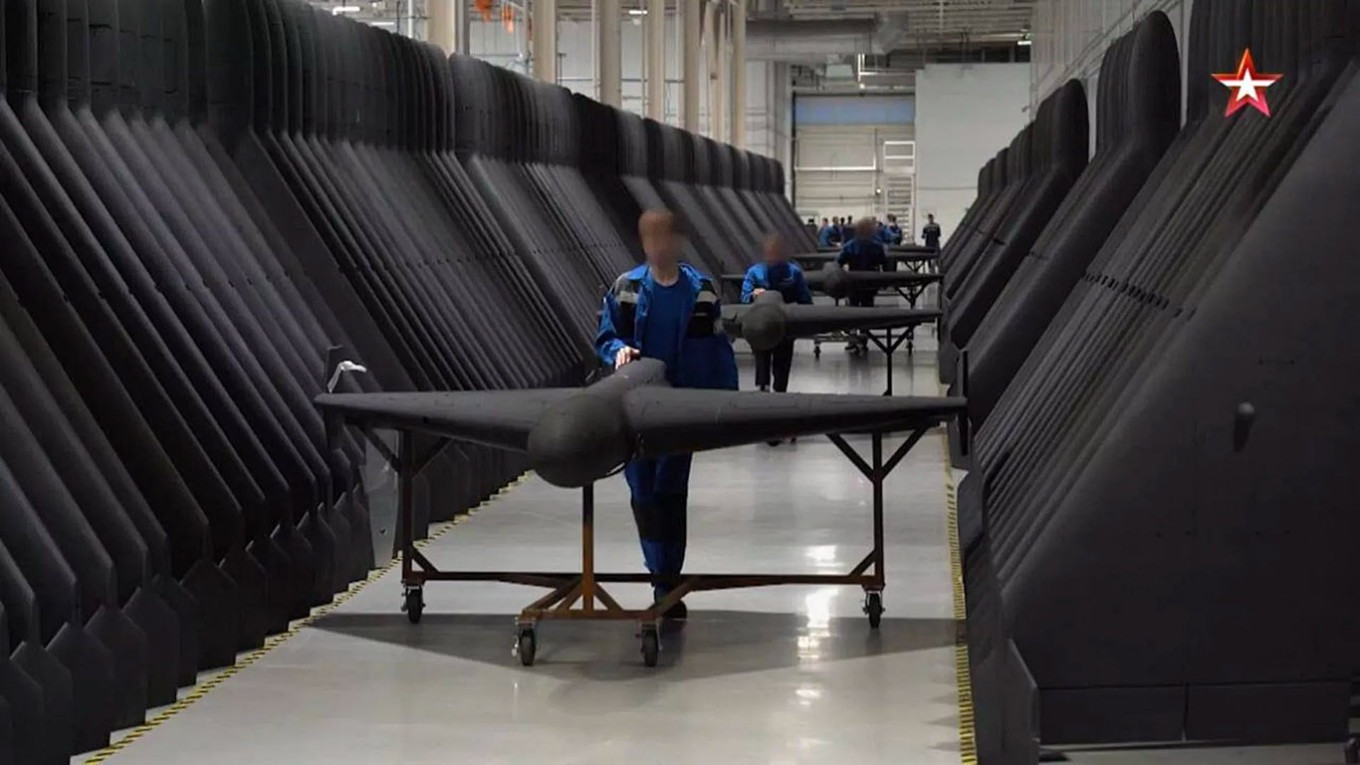
And military demand has created a specific trap similar to oil revenue in the 2000s: creating jobs, raising incomes and creating the impression of a functioning state. Wages in the defense-industrial complex have grown by tens of percent in real terms. The incomes of contract soldiers’ families are three to four times what they were before the war. Meanwhile, defense spending reached 6.3% of GDP under the official budget heading and more than 7% when accompanying military expenditures are taken into account.
The daily cost of the war is around 36-37 billion rubles ($479-492 million) based on open budget data. That figure excludes regional payments, expenditures that fall into other categories and other accounting peculiarities. The sum is equivalent to building dozens of schools or 5-7 large hospitals every single day.
There is a fundamental difference between an economy based on oil and war. In the former, resources came from outside and created consumer and investment demand, forming long-term assets. Now, they are transformed into equipment destroyed on the battlefield and payments for losses. Instead of creating wealth, it drains Russia’s future capital.
The war also made Moscow dependent on Beijing. The “pivot to the East” is essentially the sale of Russian raw materials at discount prices in return for Chinese goods at inflated prices. Critical dependence on Chinese components has developed at a minimum in electronics, automobile manufacturing, and industrial equipment. There are no alternative suppliers in the medium term — and this means that even with a change in political course, reorientation will take years.
Here, it is necessary to say the uncomfortable truth that many people mistakenly assume that all of Russia’s problems can be solved by an end to the war. Reduced military spending will free up budgetary resources. The prohibitive key interest rate, which is suffocating investment in the civilian sector, will begin to decline as inflationary pressure weakens.
These are real and significant advantages. But even a full-fledged peace treaty will not bring back all those who left. It will not restore entrepreneurs’ destroyed trust in the state. It will not eliminate the centrality of patronage to society. It will not remove dependence on China. It will not create functioning institutions where they have degraded. It will not restore the demographic situation. It will not reorient the economy from propping up the military to productive growth.
Moreover, the end of the war might solidify Russia’s status quo if it isn’t accompanied by a change in political direction. The regime will get the chance to declare itself the victor, write off economic difficulties as the “consequences of sanctions pressure,” and continue governing the country in the former logic of estate-like redistribution. From an economic standpoint, this is the worst possible scenario: all the problems will remain, but there will be no impulse to solve them.
That would be worse than just stagnation. The economy doesn’t stand still while the war smolders on: it is being restructured from a market model to a mobilizational one. This process is due to the fact that a free market should function without Kremlin meddling. The situation can be compared to the transition from the New Economic Policy to collectivization and forced industrialization at the end of the 1920s. But while these were peacetime measures implemented publicly, the current transition happened without fanfare as a natural result of pre-2022 conditions.
History shows that a mobilized economy can provide a certain level of social stability for a time. But it comes at a very high cost to society and reduces the chances of a return to normal economic conditions in the future.
Ending the war and enacting structural and political reform are three different processes with three different time horizons. The first may happen relatively quickly. The second takes years, given the right policy. The third is a necessary condition for the second. To confuse them is to mistake the appearance of normalization for its substance and to expect from a ceasefire what it cannot provide.
That is exactly why the conversation about the economic policy of transition inot premature optimism. It is a practical necessity: concrete decisions need to be prepared in advance, before a political window for their implementation appears. When that window opens, there will be no time for reflection, only action.
As severe as the picture we have painted is, there is potential for recovery.
That potential lies firstly in what remains of the market economy, with tens of thousands of entrepreneurs who have accumulated decades of experience of living through crises and know how to work under Russian conditions.
Second, paradoxically, the years of war and sanctions created several forced points of support in the Russian economy — an acute labor shortage, capital trapped inside the country, and a forced turn toward local production chains. A reduction in military spending even to the pre-war level would free a resource comparable in order of magnitude to a major investment program.
But it is important not to overestimate that nothing is guaranteed. Without a change in political priorities, the regime will most likely preserve a high level of militarization to stabilize its own position rather than for structural transformations. Reintegration into the international economy, even a partial one, opens access to technologies without which diversification is impossible. But none of these potentials will realize themselves — each requires concrete legal, institutional, and budgetary decisions, taken in the right sequence and at the right time.
A Message from The Moscow Times:
Dear readers,
We are facing unprecedented challenges. Russia's Prosecutor General's Office has designated The Moscow Times as an "undesirable" organization, criminalizing our work and putting our staff at risk of prosecution. This follows our earlier unjust labeling as a "foreign agent."
These actions are direct attempts to silence independent journalism in Russia. The authorities claim our work "discredits the decisions of the Russian leadership." We see things differently: we strive to provide accurate, unbiased reporting on Russia.
We, the journalists of The Moscow Times, refuse to be silenced. But to continue our work, we need your help.
Your support, no matter how small, makes a world of difference. If you can, please support us monthly starting from just $2. It's quick to set up, and every contribution makes a significant impact.
By supporting The Moscow Times, you're defending open, independent journalism in the face of repression. Thank you for standing with us.

Remind me later.