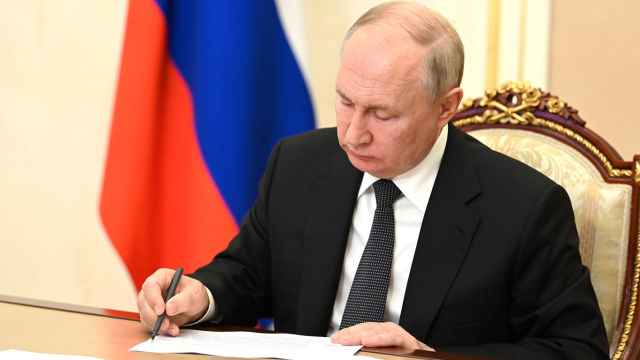

When President Vladimir Putin gathered Russia’s top businessmen in the Kremlin for a wartime whip round on Thursday, there was no ambiguity about what was happening: the only way to have industrial wealth in Russia is to be aligned with the state’s objectives.
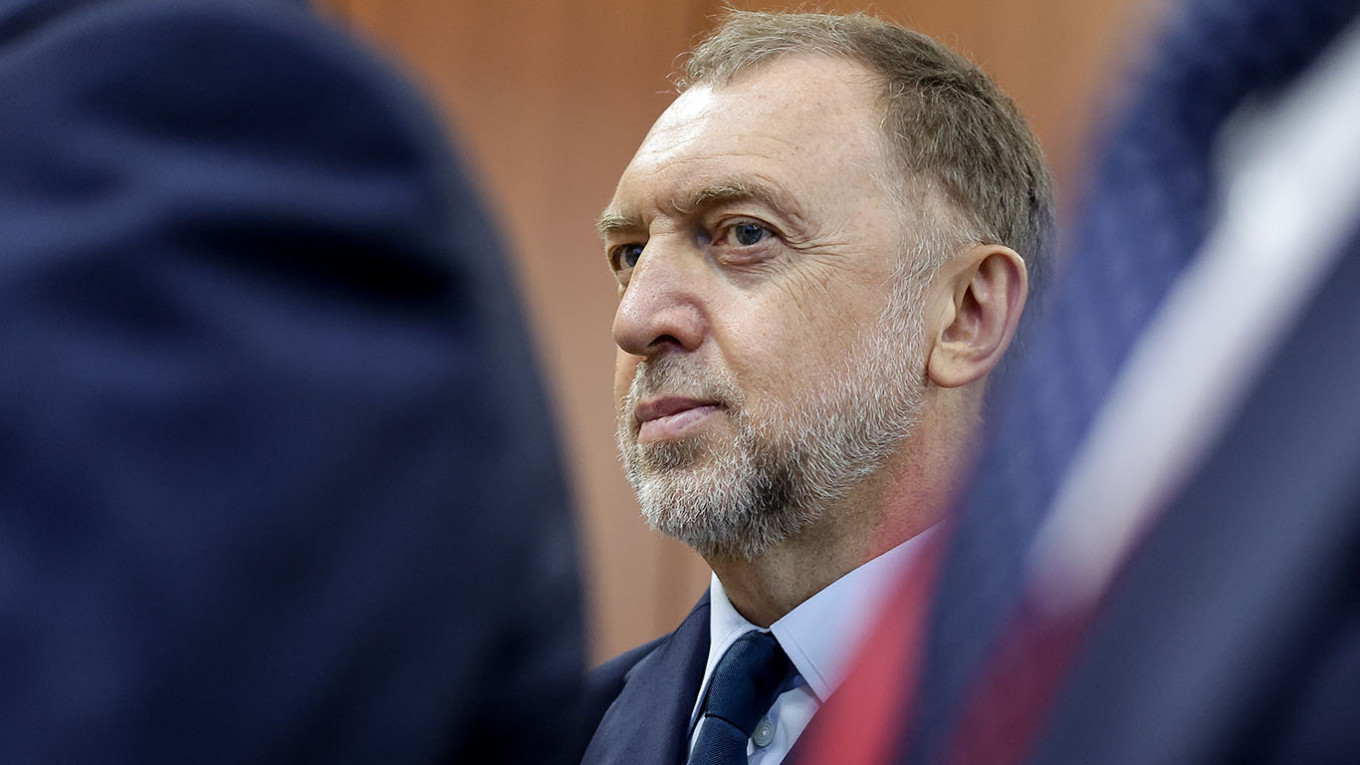
According to The Bell, figures including longtime Putin ally Oleg Deripaska agreed to help bankroll the war in Ukraine.
Despite EU sanctions targeting Deripaska as a key enabler of the Kremlin, Ireland continues to host Aughinish Alumina, a Limerick refinery owned by Rusal, the industrial group in which he owns a quarter of the shares. An investigation last week by The Irish Times and the Organized Crime and Corruption Reporting Project suggests that aluminium oxide, known as “alumina,” produced there feeds into supply chains that may ultimately reach dozens of Russian arms manufacturers.
Exports of alumina from Ireland to Russia have surged since the 2022 invasion, rising from $243 million to $376 million despite the broader sanctions regime.
Legally, none of this breaches EU rules. But that is exactly the problem.
There is a clear moral sleight of hand at work. Deripaska is under sanctions, his name has been blacklisted and assets targeted. Yet the corporate structures tied to his influence continue to operate. That distinction may be legal, but it undermines the law’s purpose, creating moral fudge that lets governments claim compliance while keeping the economic flows that matter intact.
The contrast has not gone unnoticed in Kyiv. Larysa Gerasko, Ukraine’s ambassador to Ireland, has raised her concerns with the Irish government, highlighting that reported links between alumina produced in Ireland and Russian aluminium used by entities connected to the arms sector give rise to “serious and legitimate questions.”
Ireland has opened its doors to over 100,000 Ukrainians fleeing the war, providing shelter, healthcare, and support at a scale few other countries have matched. Yet at the same time, the country allows a Russian-owned refinery on its soil to operate, supplying materials that may ultimately sustain Putin’s war machine.
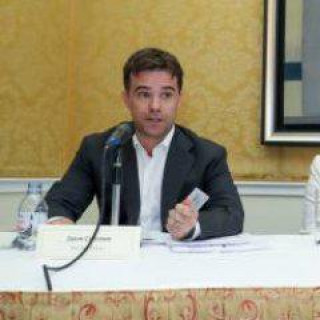
Even the EU’s sanctions enforcer has expressed unease. David O’Sullivan, the EU Commission’s sanctions envoy tasked with overseeing the bloc’s restrictive measures against Russia, warned that reports linking European goods to Russia’s military-industrial complex are “worrying” and stressed that legitimate European businesses should not be supplying materials that could be used to fuel the war in Ukraine. His comments underline the seriousness of the issue and suggest that even those charged with enforcing sanctions see the potential gaps as a threat to the EU’s credibility and effectiveness.
The gap between this humanitarian generosity and economic accommodation is strikingly embarrassing and undermines the moral authority Ireland claims in supporting Ukraine.
By combining visible humanitarian leadership with tacit economic accommodation, Ireland risks sending a muddled message about the seriousness of its stance on Russia and the credibility of the EU sanctions regime. What might be intended as pragmatism instead reads as hesitation, eroding moral authority both domestically and internationally.
Other countries have been more willing to act. Across Europe, Russian-linked assets have been seized or placed under state control to give sanctions real bite. These decisions carry economic risk, but they also demonstrate a seriousness of purpose.
In November 2022, Germany moved to nationalize a subsidiary of the Russian gas monopoly Gazprom, bringing key gas infrastructure under state control to blunt Russian leverage. France has openly discussed using frozen Russian assets to help fund Ukraine, while several member states have revoked passports and residency rights previously granted to businessmen tied to the Kremlin.
Italy has seized high-value yachts and luxury properties owned by sanctioned Russian tycoons and propagandists. These steps show that, where the political will exists, EU nations can turn sanctions into real pressure rather than symbolic gestures.
Ireland’s defense is predictable: jobs, energy security and supply chains. Aughinish is an energy-intensive plant and officials warn that closing or disrupting it could strain local power and industrial stability. These are all valid concerns. But sanctions are meant to force difficult choices. If they only apply where they are painless, they are not a tool of pressure but rather an empty gesture.
Even the Kremlin, in its own way, has shown greater clarity of purpose. It has effectively nationalized the local operations of companies like Danone and Carlsberg, weaponising economic assets in response to Western pressure. Russia understands leverage and uses it without hesitation.
Ireland, by contrast, remains caught between rhetoric and reality. Its state-owned Irish Bank Resolution Corporation once acted decisively, overseeing fire sales of assets that once belonged to former Irish billionaire Sean Quinn, including holdings in Russia and Ukraine, at significant cost to taxpayers. Hard decisions were made then, but today they are deferred.
You cannot claim to confront the Kremlin’s war machine while allowing supply chains on your own soil to potentially sustain it. Ireland is not alone in this selective enforcement. But its self-image as a principled actor makes the inconsistency all the more glaring.
What emerges is not principled pragmatism but hesitation, a half-measure that risks undermining both Ireland’s credibility and the broader effectiveness of the sanctions regime.
A Message from The Moscow Times:
Dear readers,
We are facing unprecedented challenges. Russia's Prosecutor General's Office has designated The Moscow Times as an "undesirable" organization, criminalizing our work and putting our staff at risk of prosecution. This follows our earlier unjust labeling as a "foreign agent."
These actions are direct attempts to silence independent journalism in Russia. The authorities claim our work "discredits the decisions of the Russian leadership." We see things differently: we strive to provide accurate, unbiased reporting on Russia.
We, the journalists of The Moscow Times, refuse to be silenced. But to continue our work, we need your help.
Your support, no matter how small, makes a world of difference. If you can, please support us monthly starting from just $2. It's quick to set up, and every contribution makes a significant impact.
By supporting The Moscow Times, you're defending open, independent journalism in the face of repression. Thank you for standing with us.

Remind me later.