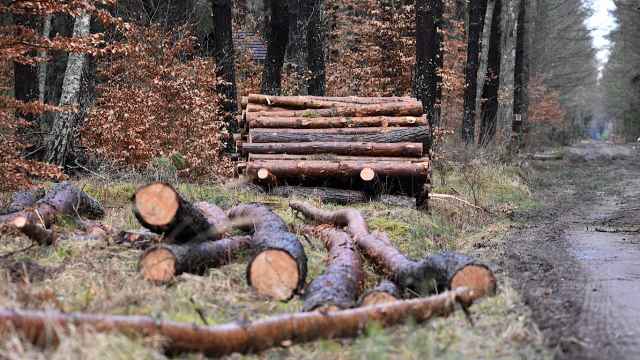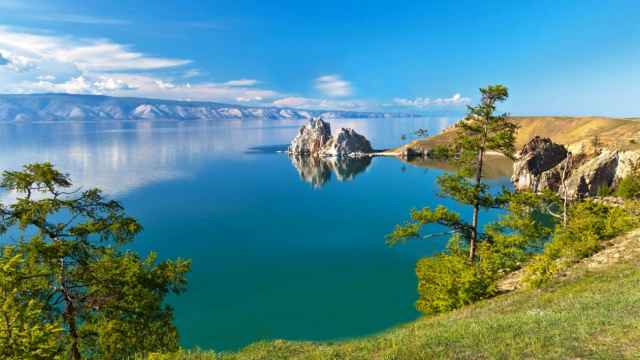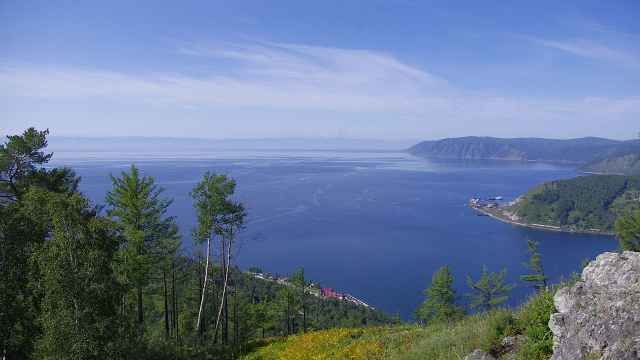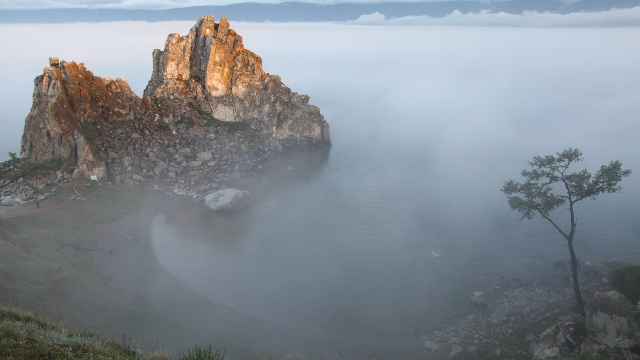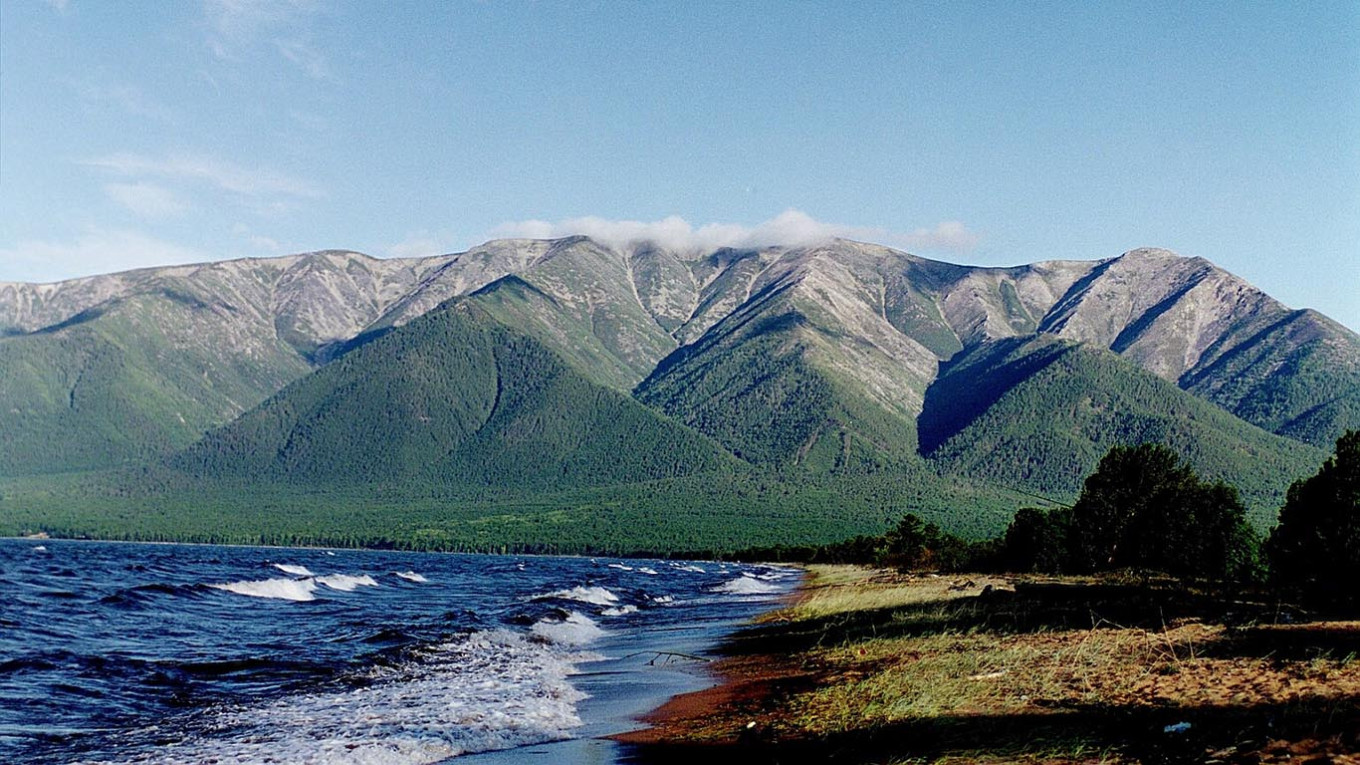
President Vladimir Putin on Monday signed into law a long-contested measure allowing limited logging along the shores of Lake Baikal, finalizing legislation that scientists and some officials have warned could threaten the ecosystem of the UNESCO-protected lake.
The law preserves a formal ban on logging in the Central Ecological Zone of the Baikal Natural Reserve, an area of about 409,000 acres. It permits, however, the clearing of forests deemed to have lost their ecological, water-protection and other protective functions, according to the text published online.
The legislation also allows parts of the Forest Fund within the protected zone to be reclassified, a change that could open the way for new development. The Forest Fund encompasses all forested land under federal control in Russia.
Supporters of the amendments to Russia’s Lake Baikal protection law had argued that the changes were needed to build roads, utilities and basic infrastructure such as public restrooms in remote lakeside communities.
Critics, however, have warned that the provisions could enable broad clear-cutting under the guise of sanitary logging, a practice intended to limit damage from pests, fires and disease.
Opponents have also accused lawmakers of advancing private business interests, including those linked to billionaire Oleg Deripaska, who could benefit from tourism and logging projects in the region.
Earlier, the Natural Resources Ministry had argued that the legislation maintains Baikal’s “highest protective status” and continues to prohibit commercial logging, saying the changes were necessary to improve safety and living conditions for residents.
Environmental experts have remained skeptical, cautioning that heavy machinery, soil runoff and an opaque land reclassification process could cause lasting harm to the lake’s fragile ecosystem and shift the balance toward development over conservation.
The logging bill was introduced in 2023 and faced sustained opposition from scientists, including members of the Russian Academy of Sciences. A petition opposing the bill had gathered more than 116,000 signatures on Change.org.
UNESCO, which designated Lake Baikal a World Heritage site in 1996, raised concerns earlier this year about what it described as the lake’s “uncertain legal protection” should the bill be signed into law.
A Message from The Moscow Times:
Dear readers,
We are facing unprecedented challenges. Russia's Prosecutor General's Office has designated The Moscow Times as an "undesirable" organization, criminalizing our work and putting our staff at risk of prosecution. This follows our earlier unjust labeling as a "foreign agent."
These actions are direct attempts to silence independent journalism in Russia. The authorities claim our work "discredits the decisions of the Russian leadership." We see things differently: we strive to provide accurate, unbiased reporting on Russia.
We, the journalists of The Moscow Times, refuse to be silenced. But to continue our work, we need your help.
Your support, no matter how small, makes a world of difference. If you can, please support us monthly starting from just $2. It's quick to set up, and every contribution makes a significant impact.
By supporting The Moscow Times, you're defending open, independent journalism in the face of repression. Thank you for standing with us.

Remind me later.