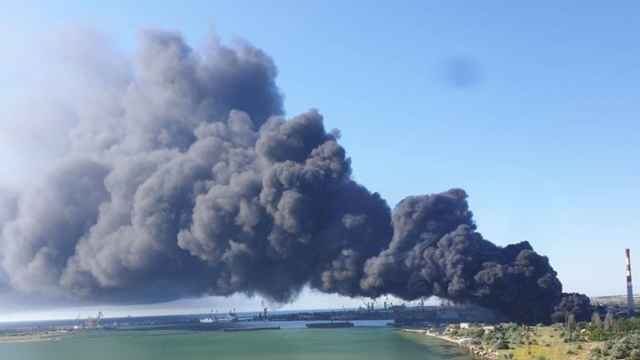

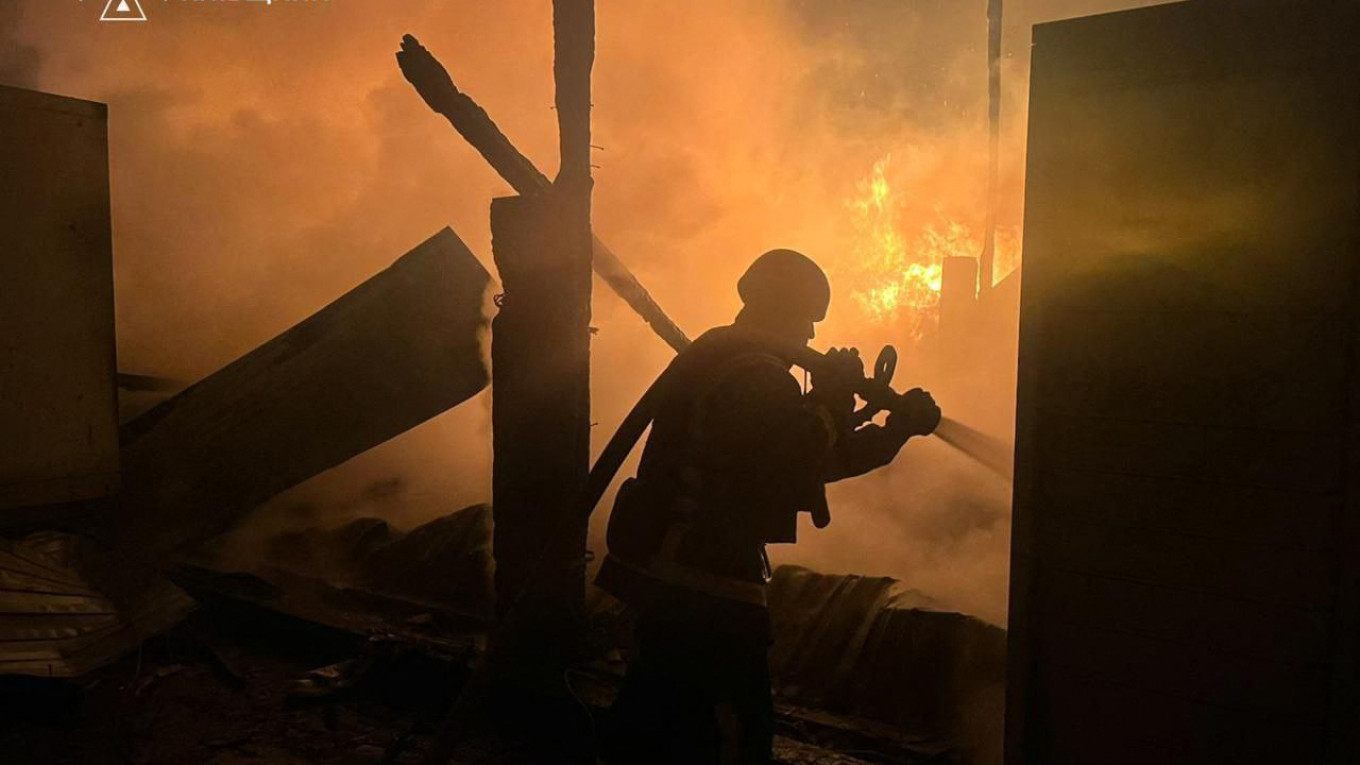
An overnight Russian drone and missile attack that targeted critical infrastructure, including energy sites and railways, triggered heating and water outages for thousands of Ukrainian households, Kyiv said on Saturday.
The latest wave of aerial strikes comes as Ukrainian negotiators are set to meet in Florida with American envoys for a third straight day of talks on a plan to end the almost four-year war.
Overnight, Russia launched 653 drones and 51 missiles at Ukraine, Kyiv's air force said on Saturday.
“The main targets of these strikes, once again, were energy facilities. Russia's aim is to inflict suffering on millions of Ukrainians,” President Volodymyr Zelensky said on social media.
A Russian drone strike hit and “burned down the main railway station building in Fastiv,” a city around 70 kilometres (43 miles) southwest of Kyiv, Zelensky said.
“There were no casualties, but suburban train traffic has been disrupted,” Ukraine's state rail operator Ukrzaliznytsya added.
The drones and missiles also targeted energy facilities in the Chernihiv, Zaporizhzhia, Lviv, and Dnipropetrovsk regions, Kyiv said.
“In the Odesa region, 9,500 households remain without heat supply and 34,000 households remain without water supply due to damage,” Restoration Minister Oleksiy Kuleba said.
An emergency coordination meeting of ministers was convened in the wake of the strikes, Prime Minister Yulia Svyrydenko said on X.
“During the ongoing elimination of the consequences of this attack, additional rolling power outages will be required across the country” to stabilize the system while repairs continued, she added.
Despite the U.S.-led push to end the conflict, Russia has routinely targeted Ukraine's power and heating grid since its February 2022 full-scale invasion began, destroying key civilian infrastructure.
A Message from The Moscow Times:
Dear readers,
We are facing unprecedented challenges. Russia's Prosecutor General's Office has designated The Moscow Times as an "undesirable" organization, criminalizing our work and putting our staff at risk of prosecution. This follows our earlier unjust labeling as a "foreign agent."
These actions are direct attempts to silence independent journalism in Russia. The authorities claim our work "discredits the decisions of the Russian leadership." We see things differently: we strive to provide accurate, unbiased reporting on Russia.
We, the journalists of The Moscow Times, refuse to be silenced. But to continue our work, we need your help.
Your support, no matter how small, makes a world of difference. If you can, please support us monthly starting from just $2. It's quick to set up, and every contribution makes a significant impact.
By supporting The Moscow Times, you're defending open, independent journalism in the face of repression. Thank you for standing with us.

Remind me later.