

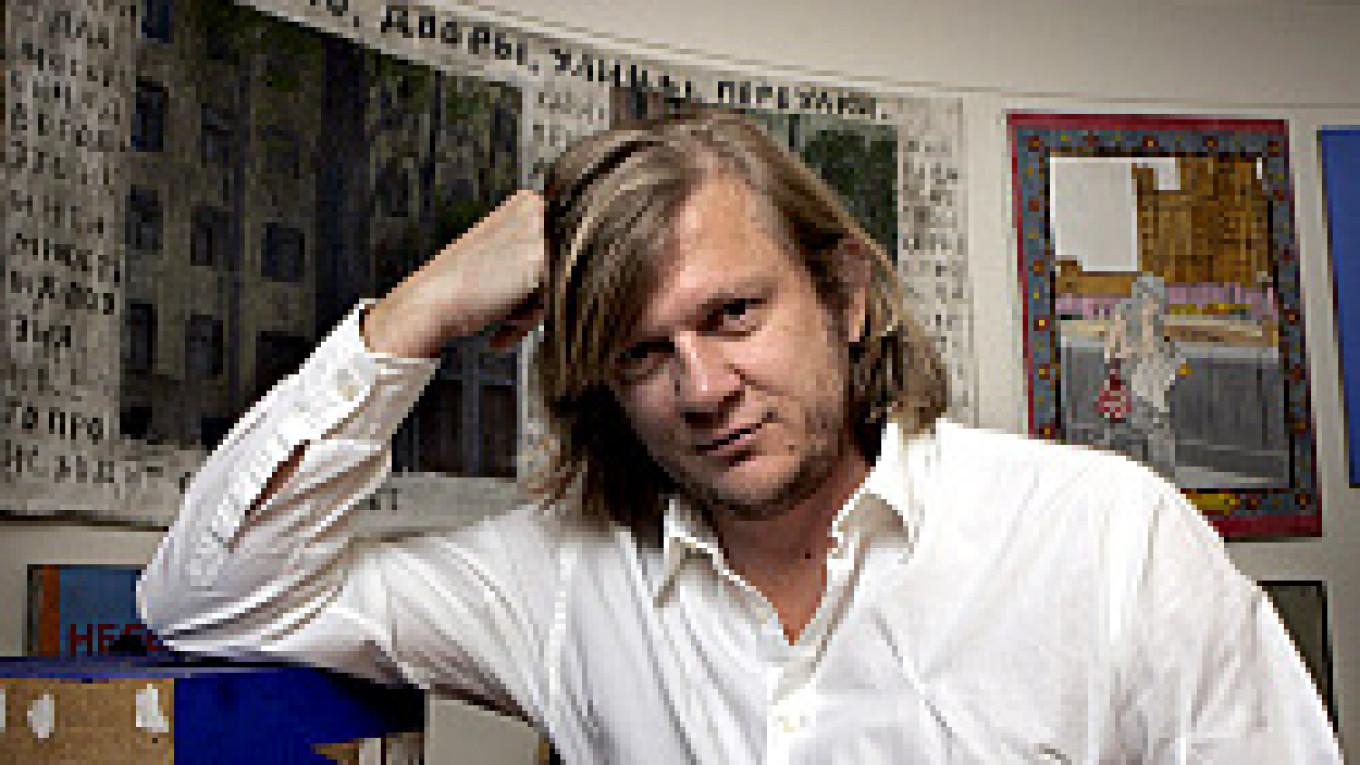
"This is my first acquisition of Western contemporary art," said Markin, owner of Proplex Group. "Matthew Barney is one of the strongest artists in the world, and I am glad to begin with his work."
Markin, who opened his private museum of Russian contemporary art, Art4.Ru, this year in Moscow, is among the newly wealthy Russians who have flocked to London's biggest art fair. They join collectors looking to buy works of artists such as Richard Prince, Tracey Emin and Lisa Yuskavage. Frieze was to open to the public Thursday.
"I've been to many art fairs in the past four to five years and know that the best works sell out immediately," Markin said at the preview Wednesday, after buying the black-and-white photo-based triptych of a shrimp and Asian children dressed in white. He said he spent about $2 million per year on art.
Russian collectors are branching out from Russian art and decorative objects to buy more international works. This month, Gagosian Gallery opens a show of its postwar and contemporary blue-chip stars in a luxury shopping mall outside Moscow.
 Vedomosti Len Blavatnik |  |
| |
By 2 p.m., Baibakova had yet to make a purchase. She said she was considering a "beautiful Anish Kapoor" at Lisson Gallery's booth and was discussing the potential purchase of a piece by Mike Kelley with Berlin-based Jablonka Galerie, where the artist currently has a solo show.
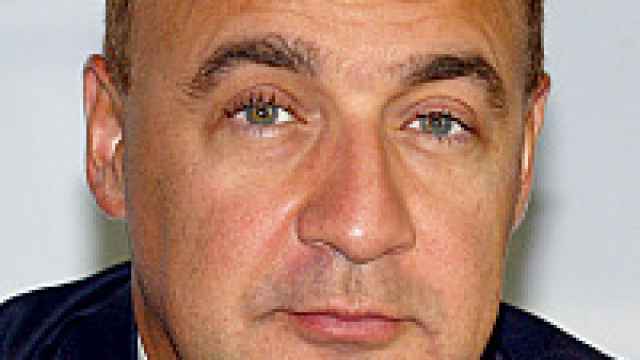
Not all Russian visitors are enthusiastic about contemporary art. Russian-American billionaire Len Blavatnik, president and founder of New York-based Access Industries, said he "tolerates" it and leaves the actual acquisitions to his wife. The Blavatniks eyed Tracey Emin's blue-and-pink neon light installation, spelling "I could have really loved you," at Gagosian Gallery.
What the Russian collectors share is the eagerness to learn about international contemporary art.
"The goal is not to build a collection of garbage," said Markin, who wore jeans and a beige sweater to a posh party at Christie's International on Wednesday. "You need to know the artist, his place in history and his innovations. Collections based on personal taste are often bad."
For New York-based, Russian collector Inga Rubenstein, developing her taste is part of the educational process.
"I am learning what I like," said Rubenstein, who strolled around Frieze in a Chanel dress-suit and Christian Louboutin stiletto boots. "My taste is changing every single day. One year ago, if you told me the name of Francis Bacon, I would never put it in my house. Now, I would totally love it."
Rubenstein and her husband, Keith, began collecting less than two years ago. Their first work -- a white butterfly painting by Damien Hirst -- was Keith's birthday present to Inga. Now their collection includes a blue plank by John McCracken, Piotr Uklanski's "Brooklyn Bridge" diptych, and works by Jenny Holzer and Jeff Koons. In the past six months, they spent around $1.7 million on contemporary art. Inga joined the international director's council of the Guggenheim Museum this past summer.
Did she buy anything at Frieze?
"Unfortunately, I came a little bit late," she said. "Most of the pieces I wanted were sold."
She did put a hold on a painting by Irish artist Padraig Timoney at Andrew Kreps booth. Its asking price: 16,500 euros ($23,000).
"It's so nice to buy art for under $100,000," she said.
A Message from The Moscow Times:
Dear readers,
We are facing unprecedented challenges. Russia's Prosecutor General's Office has designated The Moscow Times as an "undesirable" organization, criminalizing our work and putting our staff at risk of prosecution. This follows our earlier unjust labeling as a "foreign agent."
These actions are direct attempts to silence independent journalism in Russia. The authorities claim our work "discredits the decisions of the Russian leadership." We see things differently: we strive to provide accurate, unbiased reporting on Russia.
We, the journalists of The Moscow Times, refuse to be silenced. But to continue our work, we need your help.
Your support, no matter how small, makes a world of difference. If you can, please support us monthly starting from just $2. It's quick to set up, and every contribution makes a significant impact.
By supporting The Moscow Times, you're defending open, independent journalism in the face of repression. Thank you for standing with us.

Remind me later.