

Shutting down Baikalsk Paper and Pulp Mills would eliminate 2,000 jobs, and a final decision will be taken by shareholders in the "nearest future," Deripaska's Continental Management said on its web site.
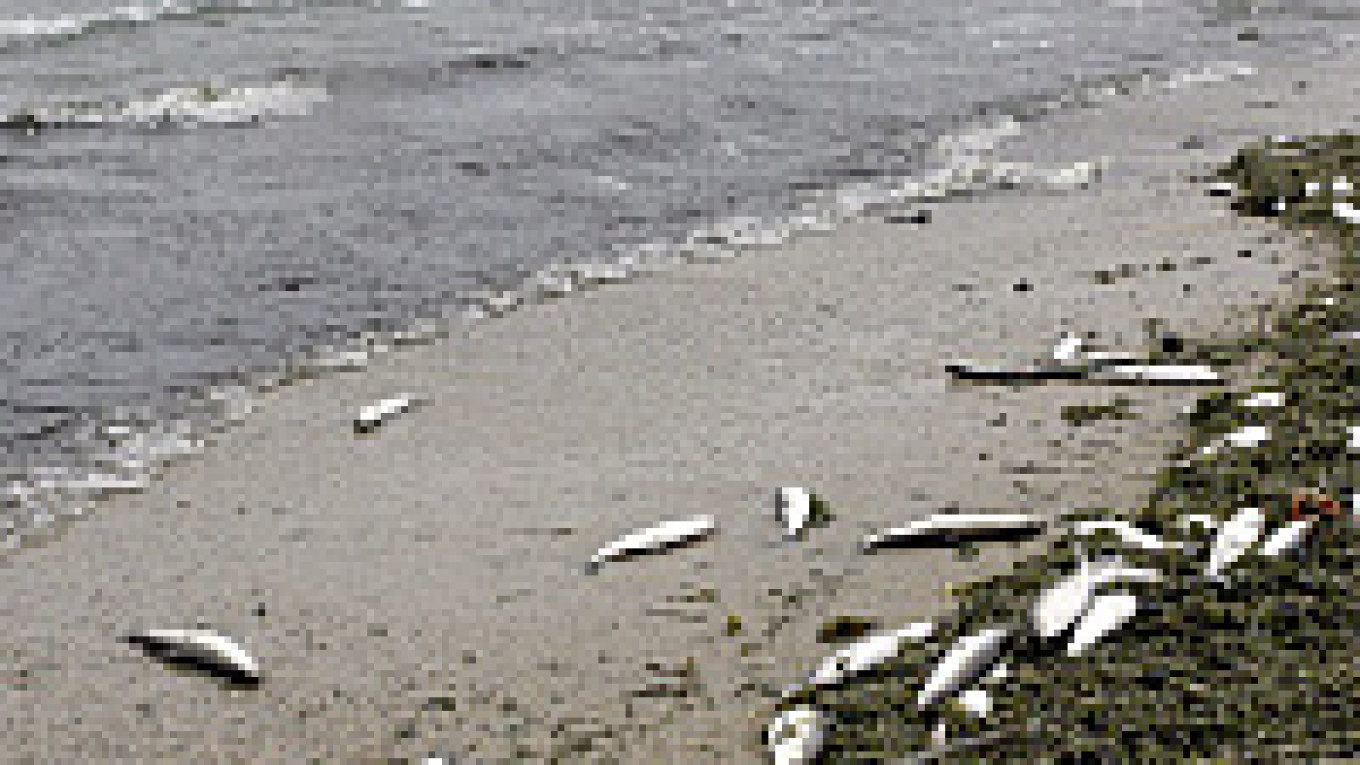
For decades, the plant spewed chemicals and foul effluent into Baikal's pristine waters, making it a lightning rod for the country's environmentalists, many of whom trace the roots of the movement back to the plant's construction 43 years ago.
"It's good news, of course, though it wasn't completely unexpected," said Marina Rikhvanova, a veteran activist who heads environmental group Baikal Wave.
The Natural Resources and Environment Ministry had demanded that the company close the plant and pay a 4.2 billion ruble fine ($121 million) for polluting the lake. The facility suspended cellulose production on Oct. 6, about a month after introducing a closed-drainage system that halted discharges into Baikal, satisfying the ministry.
But the company cannot come up with the 8 billion rubles ($230 million) it needs to preserve the mill, Continental Management said. The factory, based in the Irkutsk region city of Baikalsk, is not commercially viable and will be unable to meet its 1.2 billion ruble debt obligations if the pulp mill shuts down, the company said in a statement.
"Unfortunately, time is already up for the [factory], and the plant will never be able to resume production," the statement said.
Management hasn't succeeded in its attempts to seek aid from the government, which owns 49 percent of the plant. A closure will lead to a glut of available wood products in the region with an expected 90 percent decline in China's demand for unprocessed timber this year.
Nestled in the vast wilderness of Siberia's southern taiga, Lake Baikal is the world's oldest, deepest and largest freshwater lake by volume, holding more water than all five of North America's Great Lakes combined.
Indigenous Siberians, such as the Evenki and the Buryats, have worshipped it for generations, eking subsistence livings from its fish and from the nerpa, the world's only true freshwater seal.
Scientists have dedicated careers to studying the lake's flora and fauna ?€” a mind-boggling 1,500 species found nowhere else in the world ?€” or the lake's depths of up to 1.6 kilometers. Poets have dubbed it the "Sacred Sea," the "Pearl of Siberia" or the "Galapagos of Russia."
That reverence and fascination with the lake helped galvanize opposition to Soviet leader Nikita Khrushchev's orders to build the plant in 1966. Soviet industrial planners looked to the unique quality of the lake's waters and the surrounding forests, believing that they could produce high-quality cellulose for airplane wheels and other uses.
But scientists who studied the lake warned that putting major industry on Baikal's southern shoreline would irrevocably damage its ecology. The outspoken public protest was at the time unprecedented for the Soviet Union.
"The plant, and Baikal ?€” it's the home of the Russian environmental movement," said Roman Vazhenkov, a Baikal expert with Greenpeace Russia.
But scientists' warnings were ignored, and four decades later experts say the plant's discharges have resulted in a more than 30-square-kilometer dead zone in the relatively shallow waters in the south.
In recent years, regional officials had grappled about what to do with the factory but were stymied by the tax revenues it provided, the heat and electricity it generated for the town of Baikalsk and the employment it gave to thousands in an impoverished region.
Ultimately, it was the financial crisis pummeling Russia's economy ?€” and the factory's majority owner Basic Element ?€” that did what environmental groups failed to do.
A Message from The Moscow Times:
Dear readers,
We are facing unprecedented challenges. Russia's Prosecutor General's Office has designated The Moscow Times as an "undesirable" organization, criminalizing our work and putting our staff at risk of prosecution. This follows our earlier unjust labeling as a "foreign agent."
These actions are direct attempts to silence independent journalism in Russia. The authorities claim our work "discredits the decisions of the Russian leadership." We see things differently: we strive to provide accurate, unbiased reporting on Russia.
We, the journalists of The Moscow Times, refuse to be silenced. But to continue our work, we need your help.
Your support, no matter how small, makes a world of difference. If you can, please support us monthly starting from just $2. It's quick to set up, and every contribution makes a significant impact.
By supporting The Moscow Times, you're defending open, independent journalism in the face of repression. Thank you for standing with us.

Remind me later.