

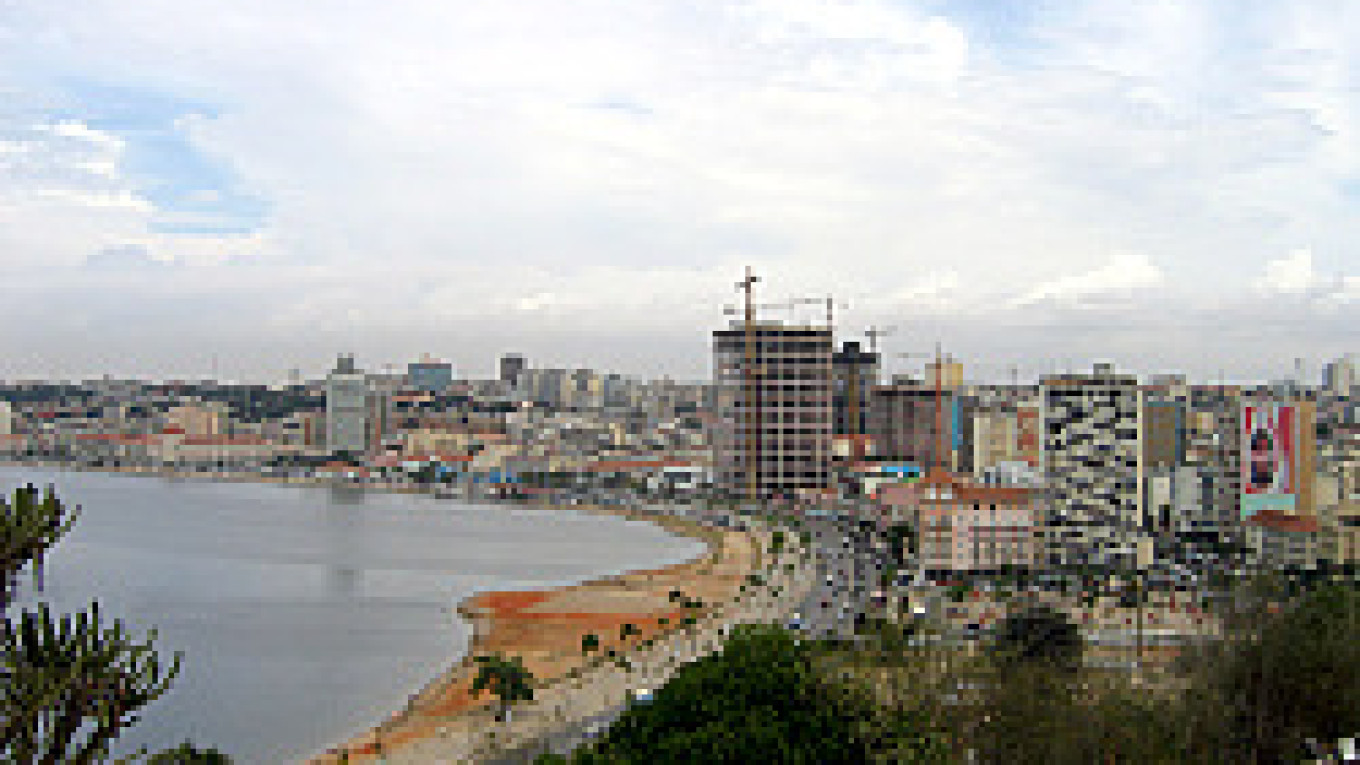
Property values, particularly in the capital, Luanda, have skyrocketed amid an oil-fueled economic boom that came at the end of a 27-year civil war, making the city one of the world's most expensive in which to live.
One-bedroom apartments start at $7,000 a month, and it is not uncommon for expatriates to pay $20,000 a month for something more luxurious. Demand for office space has also been frothy, tripling in the last three years, according to Colliers International, an Australian real estate firm.
A shortage of modern buildings, coupled with growing demand for housing for foreign workers, promises to keep real estate one of the hottest and most profitable sectors of the African nation's economy, after oil.
"Everyone wants to be here. I predict growth in real estate prices during the next three years," said Jose Camargo, head of the Angolan real estate unit of Brazilian construction company Odebrecht.
The country's almost three-decade-long civil war, which began shortly after Angola won its independence from Portugal in 1975, ended in 2002 with the death of rebel leader Jonas Savimbi.
Since then, Angola, which rivals Nigeria as sub-Saharan Africa's biggest oil producer, has embarked on a massive reconstruction program, buoyed by rising oil production, a jump in world oil prices and billions in foreign investment.
Angola's government said last month that steep falls in world oil prices would not derail its plans to spend billions to fight poverty and spur economic growth. Benchmark U.S. crude was trading at about $64 on Monday -- less than half the July peak.
Angola's focus has mostly been on rebuilding ports, railways and other key infrastructure for the oil-centered economy, but the government has also earmarked funds for the construction of office and apartment buildings as well as hotels.
Dozens of construction cranes dot Luanda's skyline.
The Bay of Luanda is currently being revamped with a $2 billion facelift that will spawn new hotels, apartment buildings and other businesses along its historic but neglected shoreline.
The construction craze is likely to dent but not solve the shortage of apartments and office space, and prices are expected to remain at the lofty end of the spectrum.
"There is a huge gap between supply and demand, and that is the main factor pushing prices," said Nelson Rego, the head of Angolan real estate consultancy firm Proprime.
Unlike real estate markets in the United States, Britain and elsewhere, which have slumped due to the credit crunch, Angola's market has been buoyed by heavy inflows of foreign investment and strong economic growth.
The economy grew by about 20 percent last year and is expected to expand by another 15 percent this year.
Investors see the country as a stable emerging market with a government that has embraced pro-business policies, and the ruling MPLA's landslide victory in a parliamentary election last month ensured that the direction would not change radically.
"Angola is one of many places that are moving against the current economic cycle," said Helder Bataglia, the chairman of Portuguese conglomerate Escom, Angola's biggest non-oil investor.
The government, however, is under pressure to do more to spread the benefits of economic growth to Angola's 16.5 million people, many of whom live in run-down shantytowns that lack electricity, running water and sewage facilities.
Residents in Luanda, home to one-third of the population, often have no option other than to squat in derelict buildings in the city center. Renovating these prized areas could ease the housing shortage and perhaps keep a lid on prices.
An opportunity to do so could emerge in coming years as President Jose Eduardo dos Santos' government embarks on a plan to build one million homes for the poor at a cost of $50 billion.
Yet some Luandans say they will resist an offer to move.
"Why should I?" says Ricardo, 17, who lives on the 18th floor of the Lagoa building, one of the most famous of Luanda's run-down housing blocks.
"Where else can I wake up and have this beautiful view of the bay of Luanda? It's all I have."
A Message from The Moscow Times:
Dear readers,
We are facing unprecedented challenges. Russia's Prosecutor General's Office has designated The Moscow Times as an "undesirable" organization, criminalizing our work and putting our staff at risk of prosecution. This follows our earlier unjust labeling as a "foreign agent."
These actions are direct attempts to silence independent journalism in Russia. The authorities claim our work "discredits the decisions of the Russian leadership." We see things differently: we strive to provide accurate, unbiased reporting on Russia.
We, the journalists of The Moscow Times, refuse to be silenced. But to continue our work, we need your help.
Your support, no matter how small, makes a world of difference. If you can, please support us monthly starting from just $2. It's quick to set up, and every contribution makes a significant impact.
By supporting The Moscow Times, you're defending open, independent journalism in the face of repression. Thank you for standing with us.

Remind me later.