Growing discrepancies between Russia's official industrial production statistics and independent estimates are raising questions among economists about the reliability of government data at a time when policymakers are trying to gauge the strength of the wartime economy.
Since the start of the year, assessments of Russia's industrial growth have diverged sharply from figures published by state statistics agency Rosstat.
In April, the government-linked Center for Macroeconomic Analysis and Short-Term Forecasting (CMAKP) estimated that industrial output stood 11% above its average 2021 pre-war level, compared with Rosstat's estimate of 14.5%, a gap of 3.5 percentage points that analysts say is unusually large.
CMAKP said such a large divergence had not been observed previously and argued that Rosstat's figures had become internally inconsistent.
Rosstat reported that industrial production grew 1.9% in April from a year earlier. However, CMAKP noted that multiplying together Rosstat's published monthly production changes over the preceding 12 months produces an annual growth rate of 6.1%, far above the official year-on-year figure.
Analysts at Raiffeisenbank described the resulting growth rate as "clearly inconsistent with reality."
They said the inability to accurately analyze month-to-month industrial output growth had become a key problem for economists.
"Normally, we focus precisely on monthly dynamics because they are free from base effects and provide a clearer picture of current conditions," the bank's analysts wrote.
According to Raiffeisenbank, the discrepancies vary significantly across sectors. In some industries, such as paper and paper products manufacturing, the differences are relatively small. In others, the gap is substantial.
For example, monthly production data for electrical equipment manufacturing imply double-digit annual growth, while Rosstat's published annual statistics indicate a double-digit decline.
Raiffeisenbank attributed much of the confusion to Rosstat's transition to a new base year for calculating industrial production indices. The agency recently switched to 2023 as its benchmark year from 2018, part of a recalculation process conducted every five years.
Such revisions can significantly affect sector-level indices because the structure of industrial production changes over time, the bank said.
The analysts said they expected Rosstat to eventually reconcile the inconsistencies but acknowledged that it remained unclear which figures should currently be used for analysis.
Sergei Aleksashenko, a former deputy chairman of the Central Bank and now research director at the NEST analytical center, said the discrepancies suggest Rosstat may be overstating short-term growth rates.
"The figures indicate that Rosstat is substantially exaggerating short-term growth rates, which appear to attract the greatest attention from the country's leadership, which obviously does not have a strong grasp of the methodology behind statistical calculations," Aleksashenko said.
He argued that both annual and monthly comparisons are necessary to understand economic trends.
Year-on-year comparisons provide a broader picture by reducing the impact of short-term fluctuations caused by one-off factors, he said. However, they can obscure more recent changes in momentum.
As an example, Aleksashenko said an indicator that rises 10% in the first quarter and then declines 1% in each of the following three quarters could still show annual growth of roughly 7%, even though the underlying trend would be weakening.
Month-to-month comparisons, by contrast, are more useful for identifying current shifts in economic activity, he said.
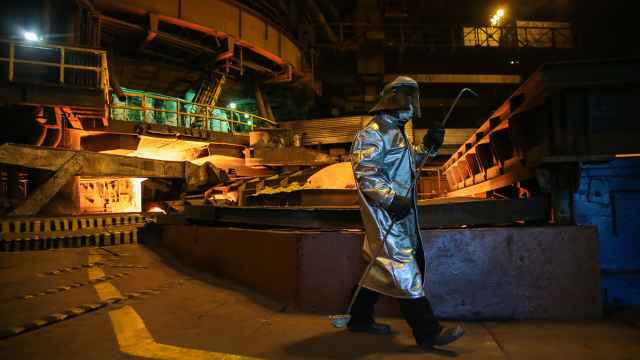
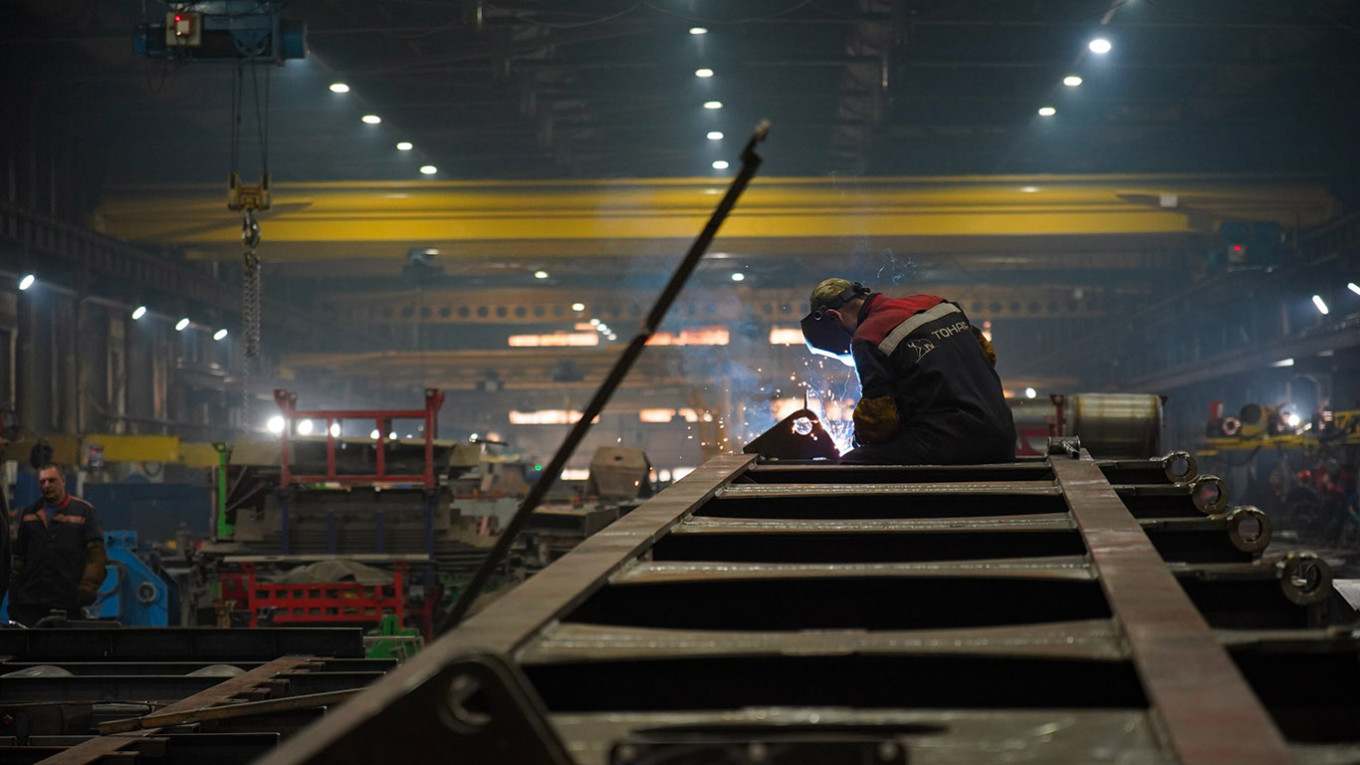
Russia's industrial sector has increasingly split into two distinct parts over the past 18 months, according to economists.
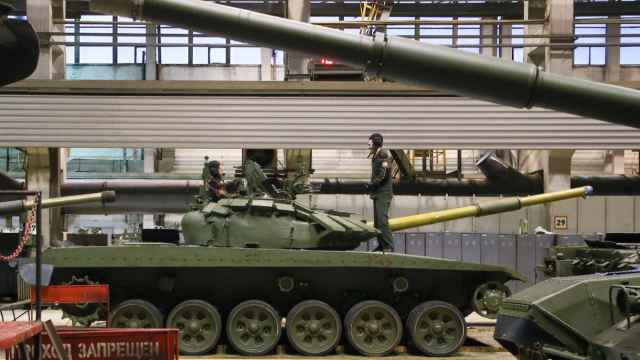
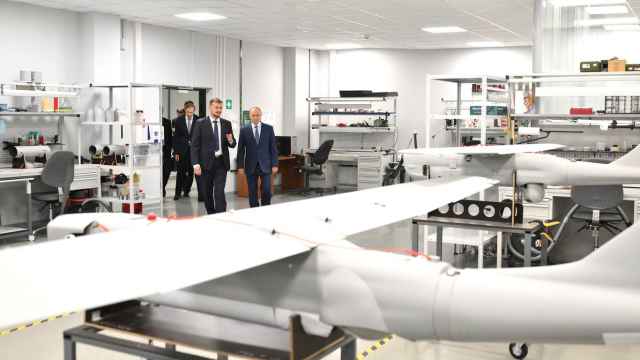
Defense manufacturers and industries tied to government procurement continue to expand, supported by record state spending linked to the war in Ukraine. At the same time, many civilian manufacturing sectors are facing mounting difficulties.
The Institute of Economic Forecasting at the Russian Academy of Sciences said the most negative trends are concentrated in investment-related industries and civilian manufacturing.
The Central Bank has similarly noted that recent growth has been concentrated in export-oriented sectors benefiting from higher commodity prices and industries supported by government orders and elevated budget spending. Investment-focused industries and civilian manufacturing sectors not linked to state procurement continue to face pressure, it said.
Read this article in Russian at The Moscow Times' Russian service.
A Message from The Moscow Times:
Dear readers,
We are facing unprecedented challenges. Russia's Prosecutor General's Office has designated The Moscow Times as an "undesirable" organization, criminalizing our work and putting our staff at risk of prosecution. This follows our earlier unjust labeling as a "foreign agent."
These actions are direct attempts to silence independent journalism in Russia. The authorities claim our work "discredits the decisions of the Russian leadership." We see things differently: we strive to provide accurate, unbiased reporting on Russia.
We, the journalists of The Moscow Times, refuse to be silenced. But to continue our work, we need your help.
Your support, no matter how small, makes a world of difference. If you can, please support us monthly starting from just $2. It's quick to set up, and every contribution makes a significant impact.
By supporting The Moscow Times, you're defending open, independent journalism in the face of repression. Thank you for standing with us.

Remind me later.