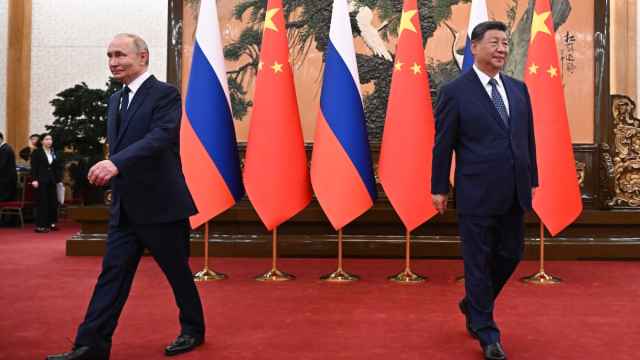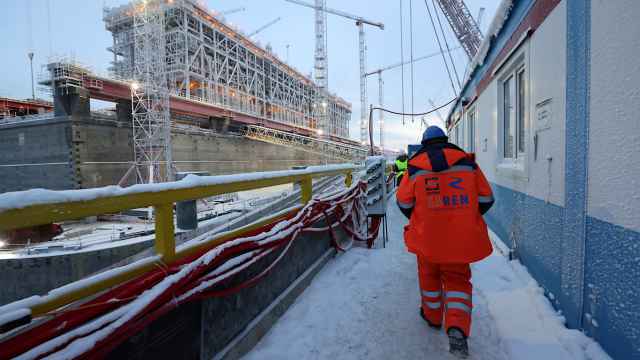
Russia's timber exports to China, its largest overseas market, fell sharply in the first four months of 2026 as Beijing's prolonged property downturn weighed on demand, adding to mounting pressure on an industry already struggling with sanctions, high borrowing costs and weak profitability.
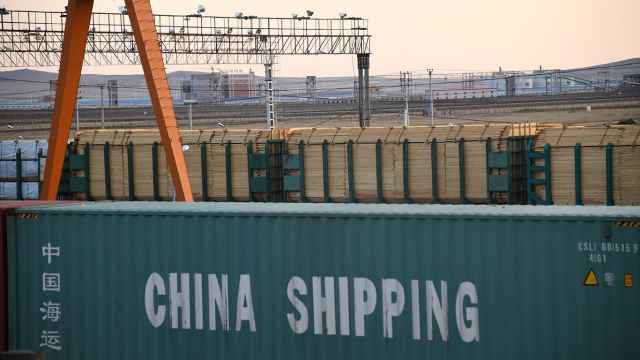
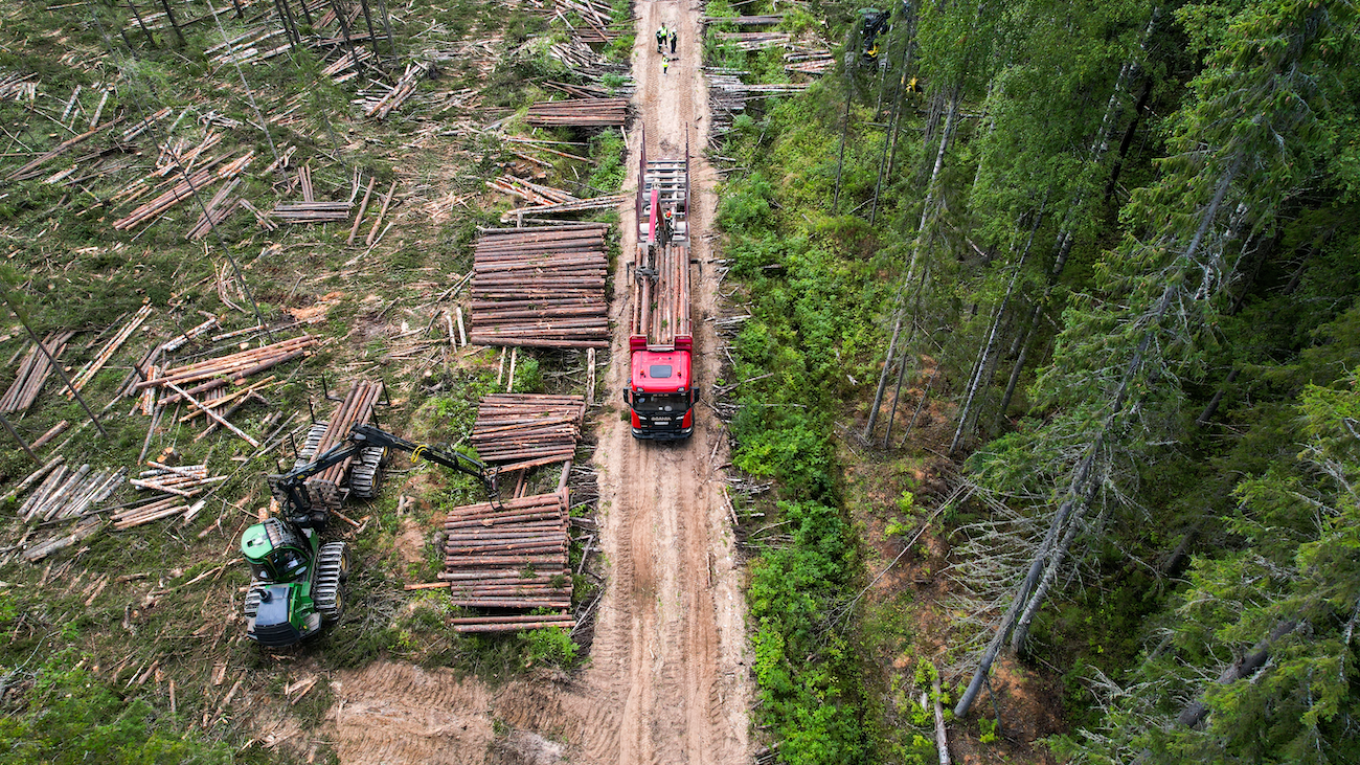
Exports of Russian sawn timber to China dropped 30% year on year to 2.6 million cubic meters in January-April, while export revenue declined 26% to $603.7 million, the Vedomosti business daily reported, citing industry data from Lesprom Network.
The decline underscores the growing challenges facing one of Russia's key export industries. China accounted for roughly half of Russia's sawn timber exports in 2025 after Europe closed its market following Moscow's full-scale invasion of Ukraine. But weakening Chinese construction activity, rising logistics costs and a stronger ruble have eroded demand, leaving Russian producers with fewer alternative markets.
Russia's total sawn timber exports fell 32% year-on-year to around 4 million cubic meters in the January-April period, according to Lesprom Network.
China imported 11.2 million cubic meters of Russian sawn timber in 2025, equivalent to about half of Russia's total exports.
Industry analysts attributed the decline to China's property crisis, a shift by some buyers toward lower-priced timber products, rising transportation costs and the appreciation of the ruble, which has made Russian exports less competitive.
According to China's National Bureau of Statistics, property sales by value fell 9.5% in 2025 to their lowest level since 2009. In the first five months of 2026, the floor area of properties sold declined a further 11%.
The slowdown has spread beyond China. Russian sawn timber exports to Japan fell 19% in January-April, while shipments to South Korea dropped 18%, Lesprom Network said.
Consultancy Strategy Partners forecasts Russia's timber exports will decline by 7%-10% this year.
The industry's problems extend beyond weakening export demand.
Russia's forestry sector is approaching a systemic crisis that could take years to overcome, according to a study by the Institute of Economics of the Siberian Branch of the Russian Academy of Sciences.
The study said companies have suffered falling revenue, rising debt and depleted financial reserves, while high interest rates have effectively cut off access to new financing.
Small producers are particularly vulnerable, the researchers said, warning that "dozens of companies" are likely to go bankrupt and that the breadth of the industry's losses makes consolidation an unlikely solution to the downturn.
The sector's combined net profit of 24.3 billion rubles ($311 million) in 2021 had turned into a net loss of 11.1 billion rubles ($142.1 million) by 2024, while total corporate debt increased 1.6-fold over the same period. About half of all forestry companies were loss-making last year, the study found.
Russia's forestry industry was among the first sectors targeted by Western sanctions after the invasion of Ukraine. The European Union banned imports of Russian timber in April 2022, forcing producers to redirect exports primarily toward Asian markets.
Read this article in Russian at The Moscow Times' Russian service.
A Message from The Moscow Times:
Dear readers,
We are facing unprecedented challenges. Russia's Prosecutor General's Office has designated The Moscow Times as an "undesirable" organization, criminalizing our work and putting our staff at risk of prosecution. This follows our earlier unjust labeling as a "foreign agent."
These actions are direct attempts to silence independent journalism in Russia. The authorities claim our work "discredits the decisions of the Russian leadership." We see things differently: we strive to provide accurate, unbiased reporting on Russia.
We, the journalists of The Moscow Times, refuse to be silenced. But to continue our work, we need your help.
Your support, no matter how small, makes a world of difference. If you can, please support us monthly starting from just $2. It's quick to set up, and every contribution makes a significant impact.
By supporting The Moscow Times, you're defending open, independent journalism in the face of repression. Thank you for standing with us.

Remind me later.