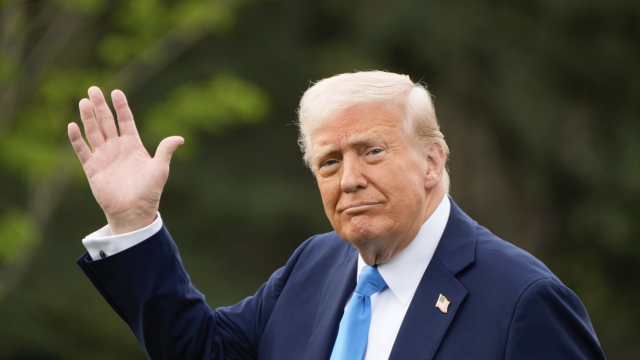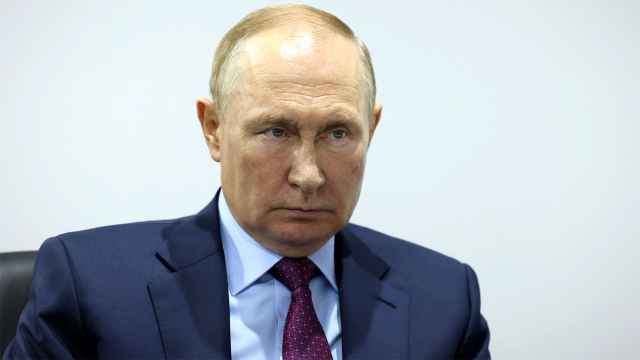

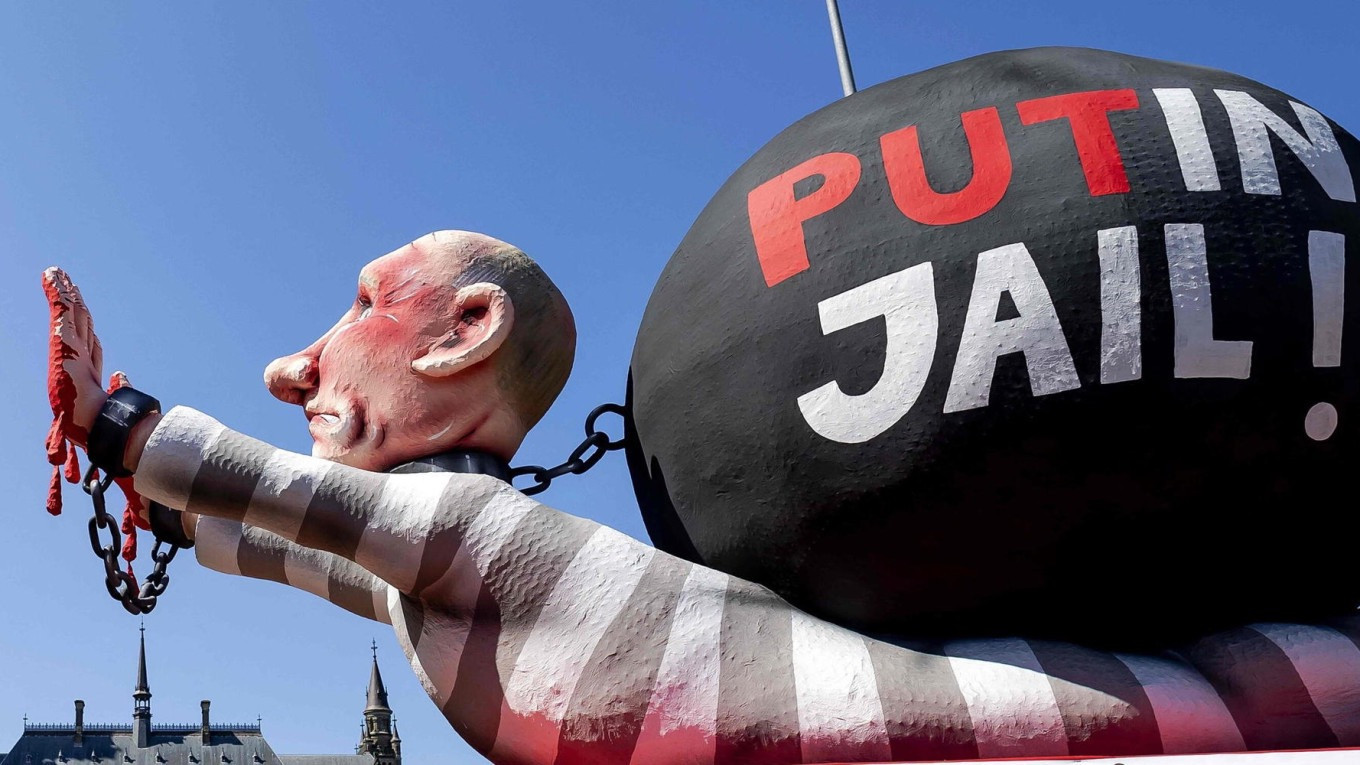
At the G7 summit in Évian, France, the possibility of organizing a trilateral meeting between the presidents of the United States and Ukraine, Donald Trump and Volodymyr Zelensky, and Russian President Vladimir Putin was discussed seriously.
Such a meeting would only be possible due to a June 8 announcement by the International Criminal Court (ICC) that openly for the possibility that a head of state wanted by the Court for war crimes could take part in a peace conference under UN auspices without facing an immediate risk of arrest.
The decision itself is unusual: entire sections are classified, including the name of the state that approached the Court. But the public part makes clear that the proceedings were prompted by the prospect of possible peace talks involving Putin on the territory of a state party to the Rome Statute. The Statute expressly provides for this possibility of consultations between states and the Court.
It is not known which state approached the ICC judges. But I can assume with a high degree of confidence that it was Switzerland. In August 2025, the country emerged as a potential host for peace talks, Swiss Federal Council Vice President Ignazio Cassis caused a minor stir when he said that Bern was prepared to grant Putin “immunity” if he came for peace talks and that a legal mechanism existed for them to do so.
As one of the 125 states signed up to the Rome Statute, Switzerland would be obliged to arrest wanted persons on their territory and transfer them to The Hague. Serving officials and heads of state get no special treatment, even if their countries are not signed up to the statute.
Not every signatory abided by this obligation. The ICC argued that Mongolia and Tajikistan had a duty to arrest Putin during his visits to the country and argued the same during Israeli Prime Minister Benjamin Netanyahu’s trip to Hungary. All these states were found by the Court to have violated their obligations, yet none was even symbolically condemned by the court’s oversight board.
In practice, however, states parties are not united behind this position. Some have even considered this case law grounds for withdrawing from the Statute. The African Union at one point planned to seek an advisory opinion from the International Court of Justice on the matter, though that idea was never carried out either.
The example of the Special Tribunal for the Crime of Aggression against Ukraine is also revealing. During its creation, many states effectively insisted on the inviolability of the principle that serving state leaders have immunity.immunities of serving state leaders. The statute of the tribunal, created under the Council of Europe, provides for de facto immunity for the “troika” — the head of state, head of government and foreign minister — while they remain in office.
In its June 9 decision, the ICC judges again reaffirmed the principle that immunity does not apply in proceedings before the International Criminal Court. The prohibitions on aggression, genocide, crimes against humanity and war crimes are among the fundamental norms recognized by the international community as a whole. Therefore, in the Court’s view, immunity should not block the execution of an arrest warrant. But the Chamber then made an important qualification.
According to the decision, a wanted person who takes part in a peace conference formally convened by the United Nations pursuant to the UN Charter in their “official capacity as head of state or government” might avoid detention, at least in the short term.
The legal basis for this approach is understandable. The Statute does not exist in a vacuum, but within the broader system of international law. It provides for possible intervention by the UN Security Council to defer an investigation or prosecution for one year on a renewable basis if necessary for maintaining peace and security. Furthermore, the UN Charter — which establishes the task of maintaining international peace and security — says that upholding prevail over states’ other treaty obligations, including those under the Rome Statute.
Moreover, the ICC system itself addresses the relationship between criminal prosecution and the peace process, with the latter potentially being prioritized in some circumstances.
International law is not as utopian or stubborn as it is sometimes assumed to be. It permits difficult compromises. But those compromises must not destroy the principle of accountability itself. That is why it matters that decisions should be decided by a court — an institution bound by legal procedure — and not politicians.
Arrest warrants for sitting presidents and prime ministers always make diplomats uncomfortable. After Russia’s full-scale invasion of Ukraine, Western states welcomed the ICC prosecutor Karim Khan’s rapid decision to open an investigation. Yet not everyone was thrilled by the arrest warrant issued for the Russian dictator. Not out of sympathy for Putin, but because of the possible political consequences, including military escalation.
This logic was even more visible in the case of Israel. In June 2024, shortly after the ICC prosecutor requested an arrest warrant for Netanyahu, Emmanuel Macron said that he would continue to “meet with and work with” Israel’s prime minister for as long as he was in office, because it was necessary. Friedrich Merz made a similar statement before being elected German chancellor. Nevertheless, Netanyahu’s only visit to the territory of a Rome Statute state was his trip to Viktor Orbán’s Hungary.
The dilemma between peace and justice is not always a false one. And if emotions are set aside, it appears that the ICC judges have offered not only a legally correct, but also an elegant way out of the situation.
Not every concession to pragmatism is a betrayal of principle or a sign that Kremlin blackmail works. In my view, this decision is not only legally correct and elegant, but also helps preserve the value of the very idea of the International Criminal Court.
The Chamber’s decision could potentially allow peace negotiations involving a person reasonably suspected of committing grave international crimes. History has known cases in which participants in peace negotiations later became defendants. One need only recall the Dayton Accords, signed by former Serbian President Slobodan Milošević, who later appeared before the International Criminal Tribunal for the former Yugoslavia. His Croatian and Bosnian counterparts Franjo Tuđman and Alija Izetbegović might also have ended up in the dock in The Hague had they not departed this sinful world first.
The problem, however, is that in the case of the Russian regime, it remains difficult to suggest there is a real prospect of either a peace settlement or justice. The arrest warrant for Putin exists, but its execution depends on the political will of states and on circumstances that may not arise anytime soon. Therefore, any concession relating to his travel will be seen by many not as a technical compromise, but as a step toward normalizing impunity.
Peace without justice is illusory and fragile. But we can also see the reverse problem: justice exists only on paper and there is little political will to pursue it. In this situation, the Court has attempted to find a narrow passage between political expediency and legal utopianism.
This ICC’s decision is open to dispute. It creates a risk of eroding the legal foundation on which restrictions on the movement of Putin, Netanyahu and other sitting leaders facing potential international criminal prosecution rest. Those restrictions are, in essence, the only real consequences they are facing as a consequence of the warrants issued against them. But it does not abolish the principle itself, stating directly that immunity is not a guarantee of impunity.
Perhaps that is the main point of the decision. International law cannot be based solely on the principle of “let justice be done though the world perish.” But if compromise is necessary, it must be narrow, controlled and legally sound. Otherwise, what is presented as a compromise will indeed become capitulation.

A Message from The Moscow Times:
Dear readers,
We are facing unprecedented challenges. Russia's Prosecutor General's Office has designated The Moscow Times as an "undesirable" organization, criminalizing our work and putting our staff at risk of prosecution. This follows our earlier unjust labeling as a "foreign agent."
These actions are direct attempts to silence independent journalism in Russia. The authorities claim our work "discredits the decisions of the Russian leadership." We see things differently: we strive to provide accurate, unbiased reporting on Russia.
We, the journalists of The Moscow Times, refuse to be silenced. But to continue our work, we need your help.
Your support, no matter how small, makes a world of difference. If you can, please support us monthly starting from just $2. It's quick to set up, and every contribution makes a significant impact.
By supporting The Moscow Times, you're defending open, independent journalism in the face of repression. Thank you for standing with us.

Remind me later.