
Reports showing fuel shortages in Crimea and rationing measures implemented in some regions are reminiscent of excitable reporting from last year that Russia was suffering a critical fuel shortage. The actual picture is less catastrophic, but requires the Kremlin to consider acting to prevent a bigger problem.
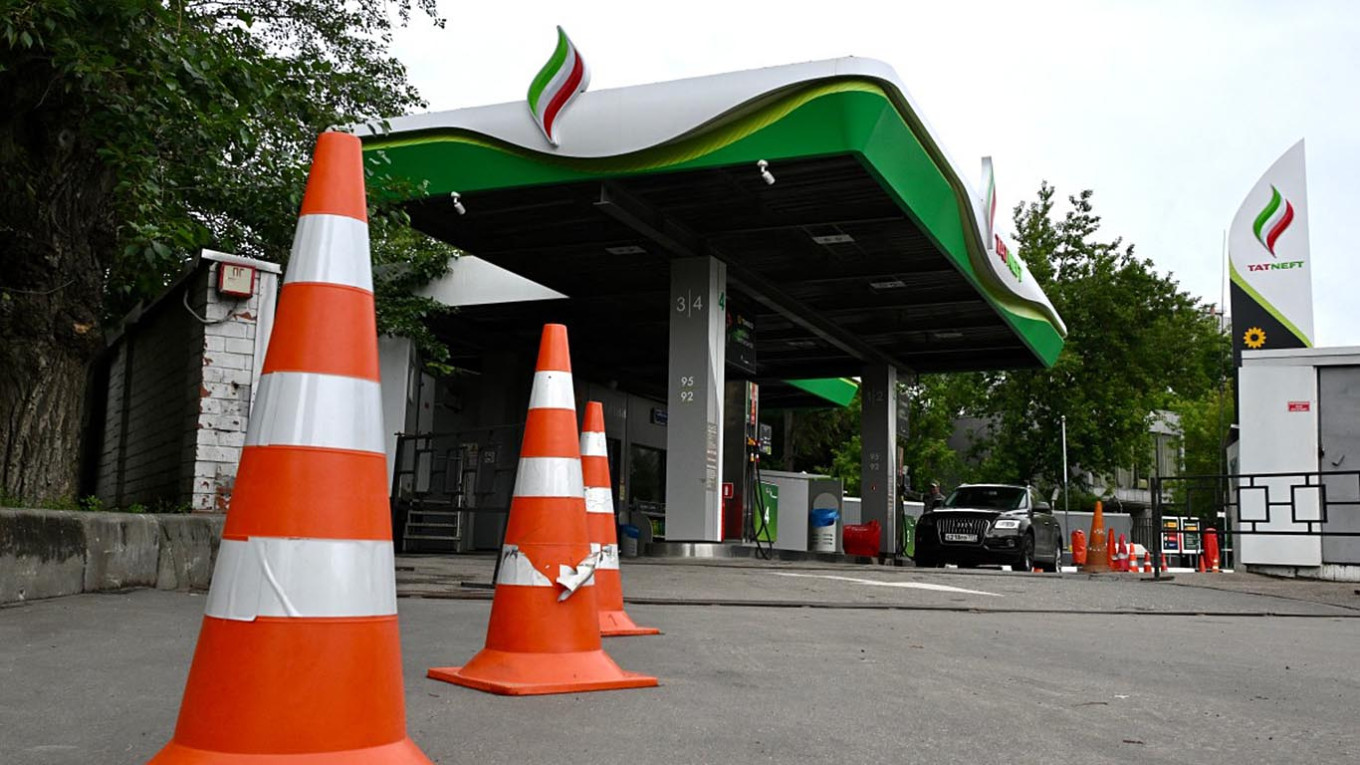
The issue originates in disruption of logistics in territories located within roughly 250 kilometers of the front line, primarily Crimea and other Russian-occupied regions of Ukraine. The acute fuel shortages in this zone are primarily due to drone strikes on fuel trucks, storage facilities and transportation infrastructure — and only to a limited extent to the decline in fuel production nationwide.
In recent weeks, Ukrainian attacks in this area have intensified significantly and it remains unclear whether Russian air defenses will be able to respond effectively. This kind of arms race always evolves with mixed success, but in this war the advantage has more often remained on the side of strike capabilities. This situation has already contributed to a sharp decline in tourist flows to Crimea, threatening to disrupt economic activity on the peninsula.
From an economic perspective, Russian authorities have two possible responses. First, they could resume rail shipments of fuel across the Crimean Bridge over the Kerch Strait, which were largely curtailed due to concerns that a strike on a freight train could seriously damage the bridge itself.
Second, they could liberalize fuel prices in affected regions, since the risks and costs of transporting fuel to Crimea and other vulnerable regions have increased dramatically, making deliveries considerably less attractive from a commercial standpoint. A twofold or threefold increase in fuel prices would simultaneously reduce demand and create stronger incentives for suppliers to deliver fuel despite elevated risks. Such a policy, however, would require a political decision by the Kremlin.
But on the national level, the situation is considerably less dramatic and varies significantly by product category. Prior to the war, Russian refineries produced roughly twice as much diesel fuel as was consumed domestically. The decline in this output began in 2022-23 as a consequence of the loss of export markets in the European Union. As a result, drone strikes on refineries are unlikely to cause a diesel shortage that disrupts normal functioning of the Russian economy.
The situation with gasoline is fundamentally different. Even before the war, gasoline production barely covered domestic demand. Even before the war, local gasoline crises occurred in Russia in 2011, 2018 and 2021. Their mechanics were remarkably similar: shortages of specific grades of gasoline in individual regions during the summer vacation season, particularly between July and September.
In this respect, strikes on refineries merely intensified pre-existing difficulties in meeting peak seasonal demand. It is difficult to estimate precisely how much of the gasoline shortages observed in the summers of 2024 and 2025 can be attributed specifically to attacks on refineries. What is clear, however, is that media coverage substantially exaggerated the scale of the actual problem.
For three consecutive months in mid-2025, Russian media were filled with reports of fuel shortages, videos of queues at gas stations and images of burning refineries.
Once the situation stabilized, CASE conducted a nationwide telephone survey of a representative sample of 1,600 respondents that found that 24% of respondents had encountered the unavailability of their preferred gasoline grade at least once during the three-month period, although only 6% experienced this more than five times. 18% reported unusually long queues at gas stations, but only 10% had to wait longer than 20 minutes.
Among those who encountered a gasoline shortage at a particular station, only 10% were unable to find fuel elsewhere on the same day. This represents just 2.4% of the entire sample. 60% of those unable to buy fuel at one station found it immediately at the next one.
Only 6% of respondents encountered fuel rationing, while fewer than 1% experienced it more than five times. Roughly half of these cases occurred in occupied Crimea.
These findings suggest that no more than one quarter of Russians experienced any disruption in 2025. Those who did were concentrated in the regions most directly affected. For the country as a whole, fuel shortages did not constitute a major disruption.
Nevertheless, attacks on refineries continue and their intensity is increasing. Although Rosstat no longer publishes detailed refining statistics, gasoline production in 2026 can be estimated to be roughly 10% lower than in 2025. There is every reason to expect that fuel shortages will become more severe during the summer of 2026 and even more pronounced by the summer of 2027. But I still have no doubt that the media portrayal of these shortages will be more severe than what’s experienced by ordinary Russians.
How can the Kremlin respond? It could continue lowering fuel quality standards and refining-depth requirements. Second, there remains some capacity to increase imports of petroleum products from Belarus. However, the gains from these measures are unlikely to fully offset the continuing decline in refining capacity if the war continues for a few more years.
A more significant and politically painful option would be reforming fuel price subsidies. Fuel prices in Russia are subsidized by the government through policies including the damper mechanism, keeping domestic fuel prices relatively low by international standards and smoothing fluctuations in retail prices.
Under normal market conditions, falling gasoline production and local shortages would trigger sharp price increases. Yet since the beginning of the war, cumulative inflation according to Rosstat has reached approximately 42%, while average gasoline prices have increased by only 36-37%. Likewise, since the outbreak of the Iran conflict in 2026, gasoline prices in Russia have risen by less than 5%, compared with roughly 35-40% in the United States and 10-20% in the European Union.
Moscow’s subsidy policy is extremely expensive. In 2025 alone, it cost the Russian government approximately 2.6 trillion rubles ($35.43 billion), equivalent to roughly half of the federal budget deficit.
Reducing subsidies while allowing oil companies to set market prices would address several issues simultaneously. It would reduce fuel consumption as higher prices discourage demand, create additional motivation for suppliers to address shortages in specific regions, stimulate additional imports from Belarus and the Russian Far East and reduce budget expenditures by more than last year’s tax increases generated.
The political costs are equally obvious: an increase in fuel prices by double-digit percentages, higher general inflation, and public dissatisfaction. Nonetheless, it is likely that some form of adjustment will be made in the foreseeable future, albeit gradually rather than through a single abrupt policy change.
As for the prospect of a nationwide fuel crisis, current trends suggest that shortages will become somewhat more severe each summer and last somewhat longer. However, conditions are still likely to stabilize each autumn when fuel consumption typically falls. At least over the next two years, the growing problems in the fuel sector are unlikely to seriously disrupt economic activity outside frontline regions.
Strikes on oil refineries remain an important instrument of economic pressure on Russia. Unlike many other forms of pressure, they directly affect the infrastructure that underpins Russia’s economy and war effort and require resources to be diverted toward repairs, protection and logistical adaptation. Over the long term, an intensifying strike campaign may eventually generate systemic effects. However, the speed at which those effects are accumulating should not be overstated.

A Message from The Moscow Times:
Dear readers,
We are facing unprecedented challenges. Russia's Prosecutor General's Office has designated The Moscow Times as an "undesirable" organization, criminalizing our work and putting our staff at risk of prosecution. This follows our earlier unjust labeling as a "foreign agent."
These actions are direct attempts to silence independent journalism in Russia. The authorities claim our work "discredits the decisions of the Russian leadership." We see things differently: we strive to provide accurate, unbiased reporting on Russia.
We, the journalists of The Moscow Times, refuse to be silenced. But to continue our work, we need your help.
Your support, no matter how small, makes a world of difference. If you can, please support us monthly starting from just $2. It's quick to set up, and every contribution makes a significant impact.
By supporting The Moscow Times, you're defending open, independent journalism in the face of repression. Thank you for standing with us.

Remind me later.