
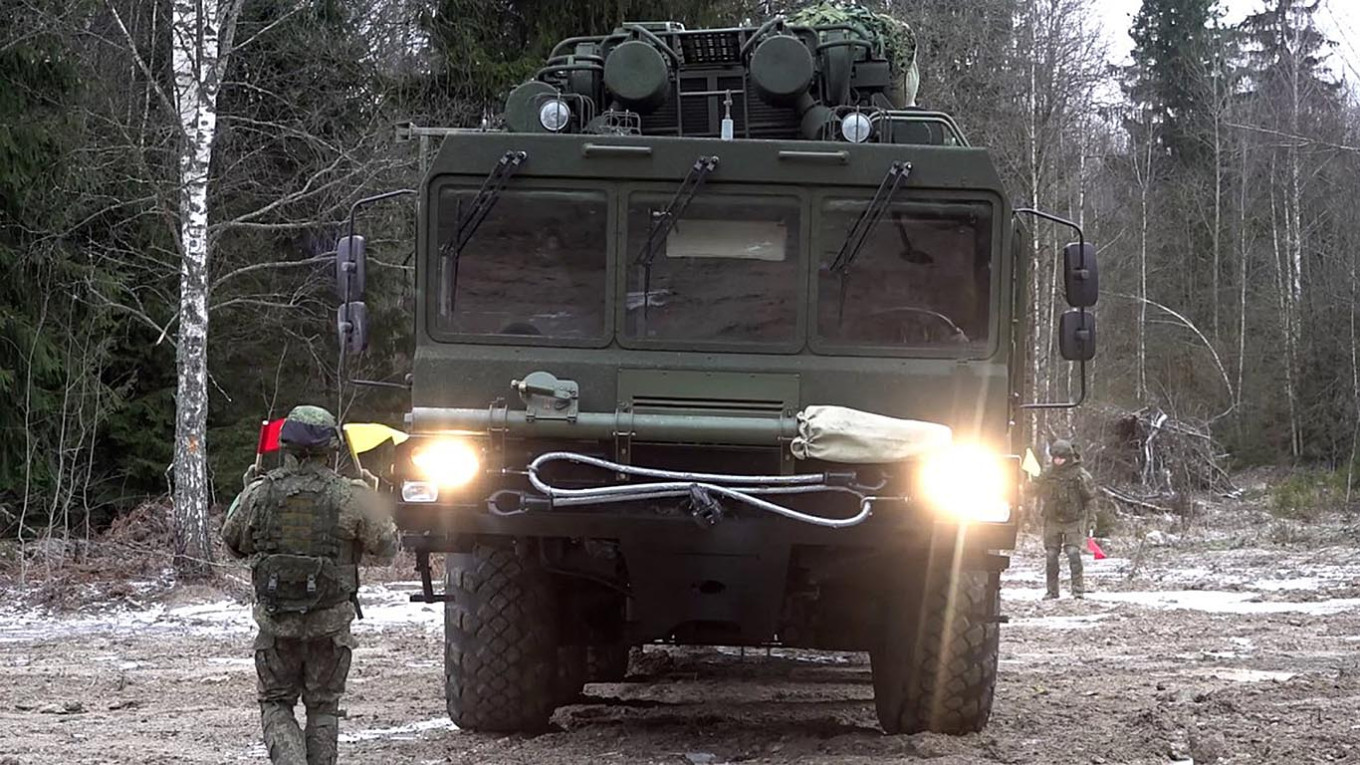
Shortly after the unveiling of the Oreshnik hypersonic ballistic missile in 2024, President Vladimir Putin boasted that the medium-range weapon was a state-of-the-art Russian creation, not an upgrade of a Soviet-era system.
In reality, the Oreshnik is reliant on a component based on designs from the 1970s so outdated that the equipment needed to test it are obsolete and cannot be replaced, according to a new report.
Leaked correspondence revealed by researchers at Dallas Analytics shows that the component responsible for directing the missile is based on Soviet-era blueprints that were abandoned after the Cold War. Moreover, because the components were once considered obsolete, it is impossible to test them to detect malfunctions.
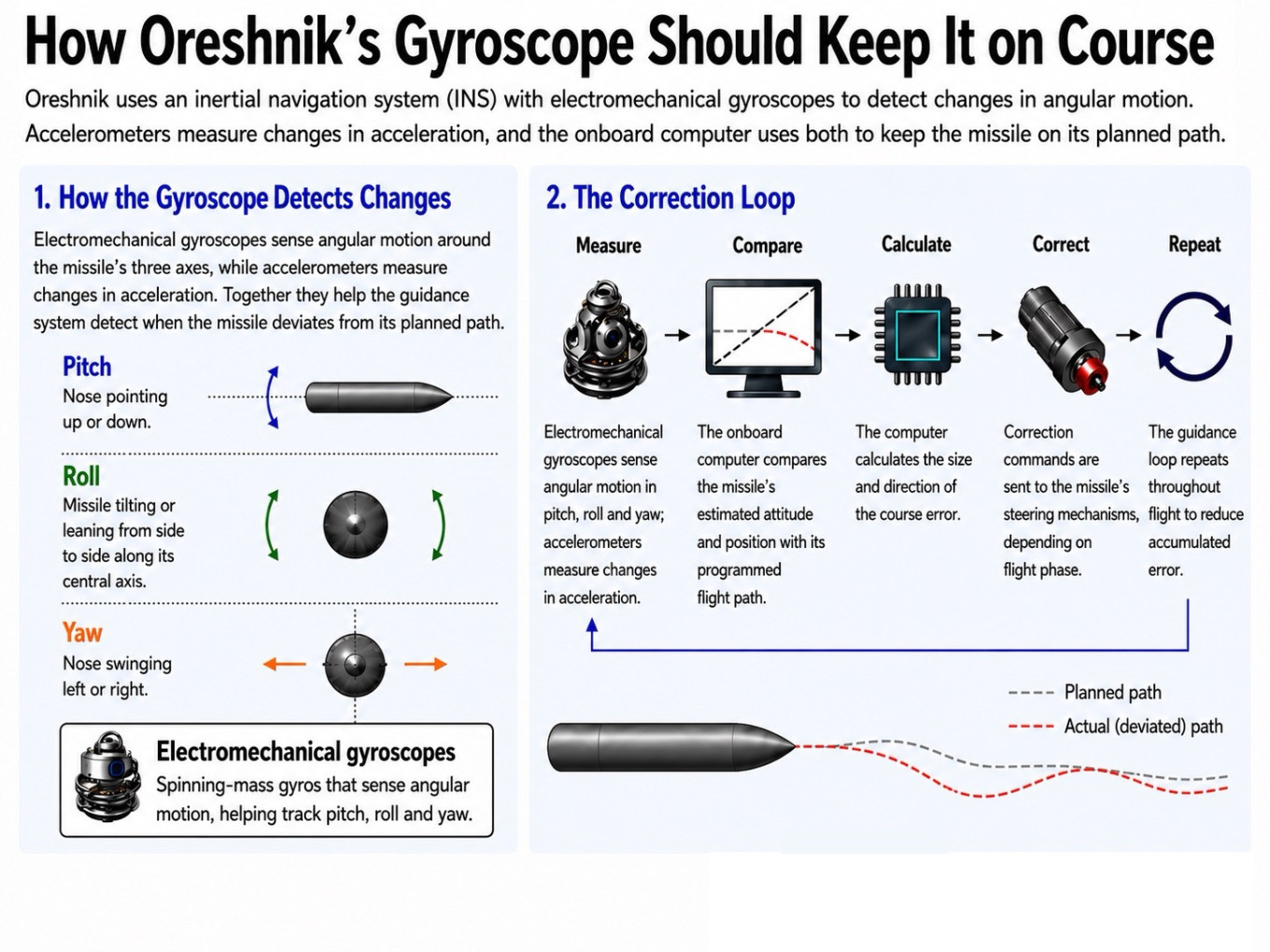
The Oreshnik’s in-flight trajectory is controlled by a GU-503 gyroscope, a Soviet-era instrument that tracks how the missile tilts in flight so it can stay on course. At hypersonic speeds, the investigators say that a deviation of just 0.5 degrees from the planned trajectory can cause the missile to miss its target by dozens of kilometers.
A letter from the Progress weapons plant in the Tambov region town of Michurinsk published by Dallas Analytics shows that these units are no longer mass-produced and restarting manufacturing at scale would be “prohibitively high,” something that would present an obstacle to Putin’s plans to mass produce Oreshnik missiles.
Importantly, the letter shows that the manufacturer is also unable to test the gyroscope and identify defects. The equipment used for these tests was developed in the 1970s and could not be replaced when it failed.
Simply swapping out the GU-503 for a more modern gyroscope is not an option, the researchers say. Because other parts of the Oreshnik’s navigation system are designed to work with the GU-503, substituting in a different system would require a more extensive overhaul.
The document suggests that manufacturers considered developing a new system. But debris from impact sites showing gyroscopes stamped as made in 2025 suggests these changes have not been implemented.
Since the first deployment of the Oreshnik, analysts told The Moscow Times the main benefit of the weapon for Russia was symbolic rather than tactical. As Kyiv’s Western allies became more inured to Moscow’s repeated nuclear sabre-rattling, the Kremlin needed a new way to inspire fear to coerce them out of providing more support to Ukraine.
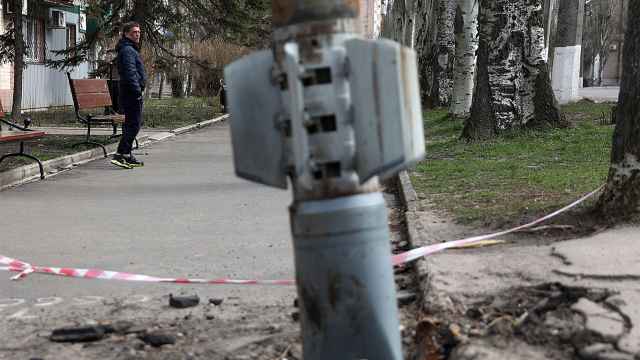
Russia has used the missile three times since the start of the war. The first in November 2024 hit a weapons manufacturer in Dnipro; the second in January 2026 hit an aviation repair plant in Lviv in Western Ukraine. The most recent launch on May 24 hit private garages in Bila Tserkva, near Kyiv.
A Message from The Moscow Times:
Dear readers,
We are facing unprecedented challenges. Russia's Prosecutor General's Office has designated The Moscow Times as an "undesirable" organization, criminalizing our work and putting our staff at risk of prosecution. This follows our earlier unjust labeling as a "foreign agent."
These actions are direct attempts to silence independent journalism in Russia. The authorities claim our work "discredits the decisions of the Russian leadership." We see things differently: we strive to provide accurate, unbiased reporting on Russia.
We, the journalists of The Moscow Times, refuse to be silenced. But to continue our work, we need your help.
Your support, no matter how small, makes a world of difference. If you can, please support us monthly starting from just $2. It's quick to set up, and every contribution makes a significant impact.
By supporting The Moscow Times, you're defending open, independent journalism in the face of repression. Thank you for standing with us.

Remind me later.