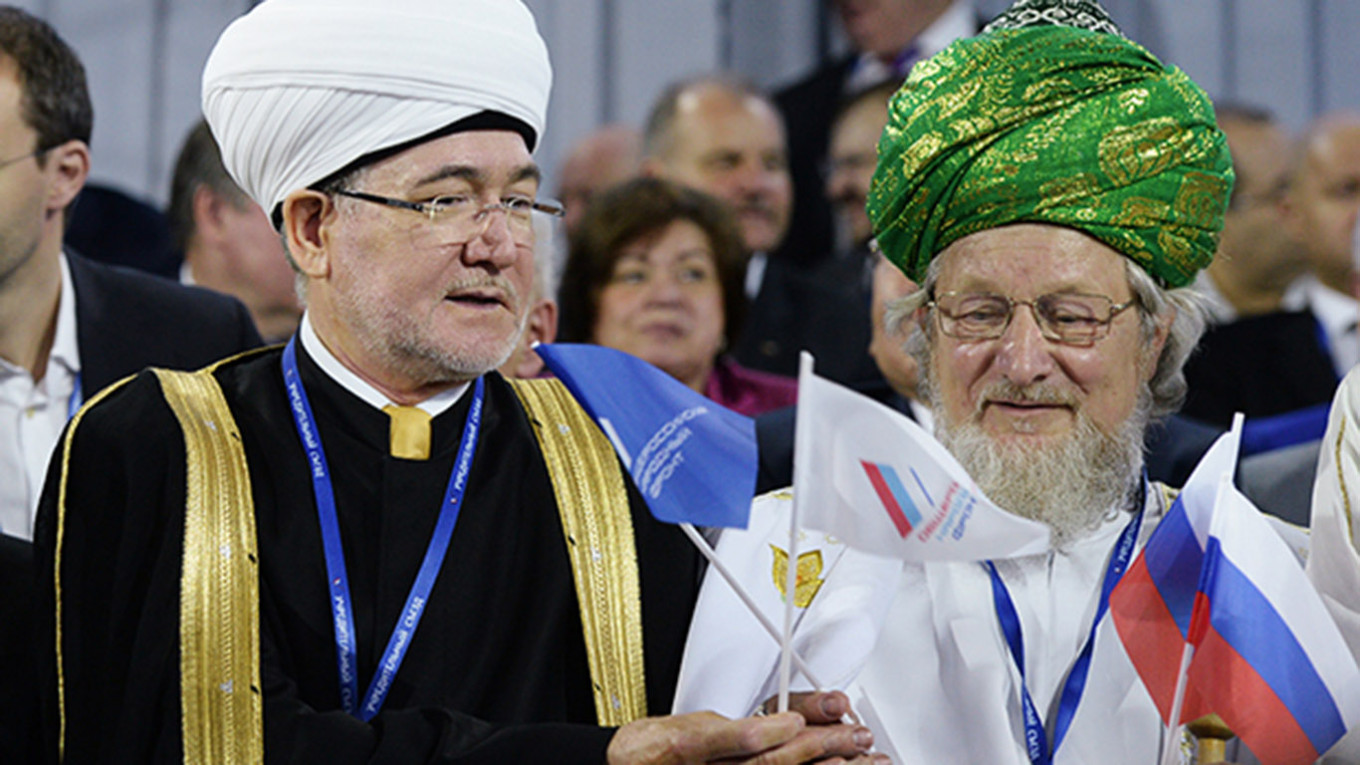
For most outside observers, Russian Islam looks like a single official structure that speaks in a loyal voice when the Kremlin needs it to. In reality, Russia’s Muslim institutions have never been so simple. They are fragmented, competitive and deeply shaped by the state.
The old rivalry between Talgat Tadzhuddin and Ravil Gainutdin that defined the politics of Russian Islam began long before the full-scale invasion of Ukraine. It was a bureaucratic turf war, noisy and unresolved, but the state found it useful.
The split goes back to the early 1990s. Tadzhuddin, who had led the Central Spiritual Administration of Muslims (TsDUM) since 1980, quietly ended the tradition of periodic leadership elections after barely surviving his second term. He declared himself Supreme Mufti for life, with the blessing of the party and government.
When the U.S.S.R. collapsed, those who disagreed finally had room to push back. In 1994, Gainutdin broke away and established what would eventually become the Spiritual Administration of Muslims of the Russian Federation (DUM RF), the organizational spine of the Council of Muftis of Russia.
These two institutions represent fundamentally different visions. TsDUM, based in Ufa, positions itself as a direct heir of the Orenburg Mohammedan Spiritual Assembly created under Catherine II in 1788, an institution designed from the start as a state instrument of control. Islamologist Islam Tokhlu describes Tadzhuddin as “the fruit of Catherine the Great’s dreams,” a man who embodies a complete merger of Islam and Orthodox state culture. Tadzhuddin has kissed the hands of two patriarchs of the Russian Orthodox Church, sprinkled “holy water” in a television studio, kissed an Orthodox icon during a church ceremony, and in 2003 proposed renaming his organization the “Islamic Central Spiritual Administration of Muslims of Holy Rus.” In 2015, speaking at the World Russian People’s Council, he declared: “When we are together, this is the caliphate. We call our caliphate Holy Rus.”
DUM RF operated differently. It built publishing houses, ran international conferences and tried to maintain ties with global Islamic scholarship. Gainutdin’s structure presents itself as a more modern, educated and federal Islamic center, one that works not only with Tatars and Bashkirs, but with Muslims from the Caucasus, Central Asia and migrant communities.
While fully loyal to the Kremlin, Gainutdin occasionally raised his voice on practical matters, publicly criticizing police raids on mosques, the chronic shortage of prayer spaces in major cities, and restrictions on migrant communities. It is telling that Tadzhuddin repeatedly responded with criticism, stating that there is no suppression of Muslims in Russia.
But this was not dissidence on Gainutdin's part. It was a managed form of advocacy, a way of maintaining legitimacy with actual believers while staying inside the system. This makes it more useful for many Muslims, but more irritating for authorities and those in the nationalist Orthodox milieu who want Islam to be ritual, quiet and fully subordinate.
That balancing act became much harder to sustain after the invasion of Ukraine. Tadzhuddin moved immediately: on Feb. 25, 2022, the day after the invasion began, he became the first Muslim cleric in Russia to endorse the “special military operation,” speaking in the name of “millions of Russian Muslims.” By July, he was reporting from Ufa that the first battalion of “volunteers” from Bashkortostan had been sent to Ukraine.
Gainutdin, by contrast, called for prayer and peace, expressing pain “with soul and heart” over what was happening. It was a careful, deliberately ambiguous position — and the Kremlin noticed.
A few years earlier, a third actor entered the field. In 2016, the Spiritual Assembly of Muslims of Russia (DSMR) was created, with Albir Krganov as its leader. Political analysts describe it as a Kremlin project built precisely to counterbalance Gainutdin. Krganov, who is known for a posture of loyalty that goes beyond what Moscow even asks for, rushed to build links with occupied Ukrainian territories within weeks of the invasion. His organization signed cooperation agreements with the mufti of the self-proclaimed Luhansk People’s Republic and arranged visits to military training grounds.
Roman Silantyev, an Orthodox-affiliated commentator who functions as an unofficial ideological gatekeeper of Russian state Islam, has consistently praised Krganov’s model: a Soviet-style Islam stripped of theological ambition, oriented toward the elderly, ceremonial, and fully subordinate to state authority.
The pressure on Gainutdin escalated in stages. In late 2024, Silantyev and commentators linked to the channel Tsargrad, owned by sanctioned billionaire Konstantin Malofeyev, began publicly calling for the liquidation of DUM RF, accusing it of “Russophobia” and terrorism. Silantyev addressed his demands specifically to Alexander Bastrykin, head of the Investigative Committee, who had by then established himself as the political patron of mosque raids and the crackdown on Muslim prayer spaces in residential buildings.
In December 2024, DUM RF issued a fatwa permitting polygamy, framing it as a way to protect widows and children of soldiers killed in Ukraine. The General Prosecutor’s office issued a formal rebuke. Gainutdin withdrew the fatwa. In February 2025, a scandal erupted over a painting in the office of Gainutdin’s deputy, Damir Mukhetdinov, depicting the Mongol feast after the Battle of Kalka, where Russian princes were crushed beneath the conquerors’ hordes. Despite the cultural and historical purposes of the painting, in early June 2026 Mukhetdinov was fined for "desecrating religious objects." In August 2025, a book edited by Mukhetdinov was declared extremist material, based on an “expert opinion” by Silantyev.
Then came May 2026.
Between May 12-22, security forces arrested the mufti of Mordovia Rail Asainov, the former mufti of Karelia Wisam Ali Bardwil (arrested at Sheremetyevo Airport as he was departing for Hajj), the mufti of the Northwest Mukhammed Khenni, a Saratov religious educator named Nidal Awadallah Ahmed and the influential Ingush theologian Akhmed Tangiyev. All are affiliated with DUM RF.
Silantyev announced publicly that the detained clerics would be charged with terrorism, with their past studies at European and Saudi Arabian institutions retroactively framed as links to organizations Russia considers extremist.
What makes this moment distinct from earlier pressure campaigns is the nature of the charges being constructed. Previous waves of repression against Russian Muslims targeted figures accused of radical Islamism, foreign funding or separatism.
The men detained last month were, by all accounts, loyalists. The mufti of Mordovia had been publicly praised by regional authorities for his support of military families and had traveled to the conflict zone. According to Novaya Gazeta, the accusations being assembled against the Arab-born clerics rest on educational ties to European institutions from 30 years ago.
This does not mean that Tadzhuddin or Krganov personally ordered a campaign against Gainutdin. The more likely picture is that the wartime state has become less tolerant of any semi-autonomous Muslim institution, even if it is loyal. In the old model, rivalry between muftiates helped the authorities manage the Muslim field. In the new model, rivalry is still useful, but strict control matters more.
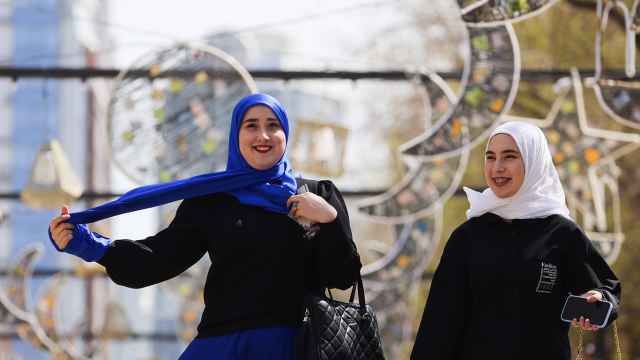
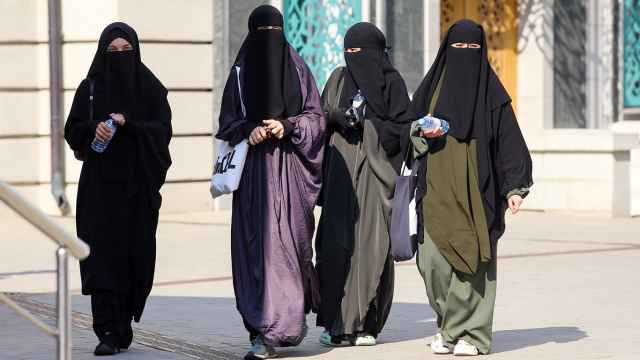
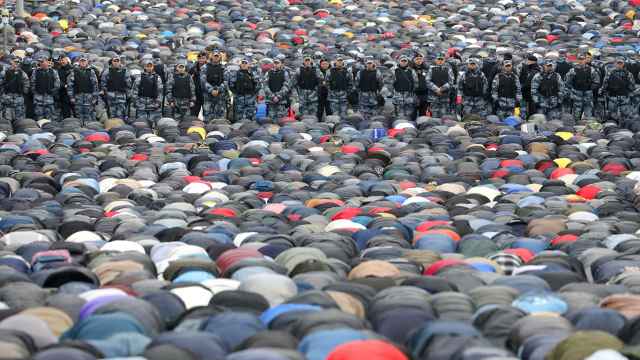
What is being demanded of DUM RF now goes beyond loyalty to foreign policy. Commentators aligned with the crackdown have attacked the organization for defending the right to wear hijabs and niqabs, for promoting halal food standards, for Islamic banking, for allowing collective prayer in apartments when mosques are full, and for basic theological statements about religious obligations.
These are by no means marginal views — in fact, they represent the standard perspective that any Islamic organization would express. The implicit demand is that DUM RF stop functioning as a religious institution and become a cultural decoration.
What appears to be emerging is a model closer to the sinicization of Islam practiced in China, where imams’ sermons are vetted by party officials, where religious texts are filtered through state-approved values and the goal is not a state that manages religion but a religion that serves the state. TsDUM has always been closer to that model, but Tadzhuddin’s eccentricity and his organization’s shrinking parish base have made it a secondary instrument. DSMR under Krganov fits the template better.
For Gainutdin, the space that once existed for quiet negotiation, where his organization’s genuine roots in Muslim communities gave him something to offer the Kremlin in exchange for limited autonomy, has nearly closed.
Now the logic is harsher. Loyalty is no longer enough if a religious institution still behaves like an institution. In wartime Russia, even official Islam is being pushed toward a late Soviet model, where religion may exist in public, but only as long as it does not really speak for itself.
A Message from The Moscow Times:
Dear readers,
We are facing unprecedented challenges. Russia's Prosecutor General's Office has designated The Moscow Times as an "undesirable" organization, criminalizing our work and putting our staff at risk of prosecution. This follows our earlier unjust labeling as a "foreign agent."
These actions are direct attempts to silence independent journalism in Russia. The authorities claim our work "discredits the decisions of the Russian leadership." We see things differently: we strive to provide accurate, unbiased reporting on Russia.
We, the journalists of The Moscow Times, refuse to be silenced. But to continue our work, we need your help.
Your support, no matter how small, makes a world of difference. If you can, please support us monthly starting from just $2. It's quick to set up, and every contribution makes a significant impact.
By supporting The Moscow Times, you're defending open, independent journalism in the face of repression. Thank you for standing with us.

Remind me later.