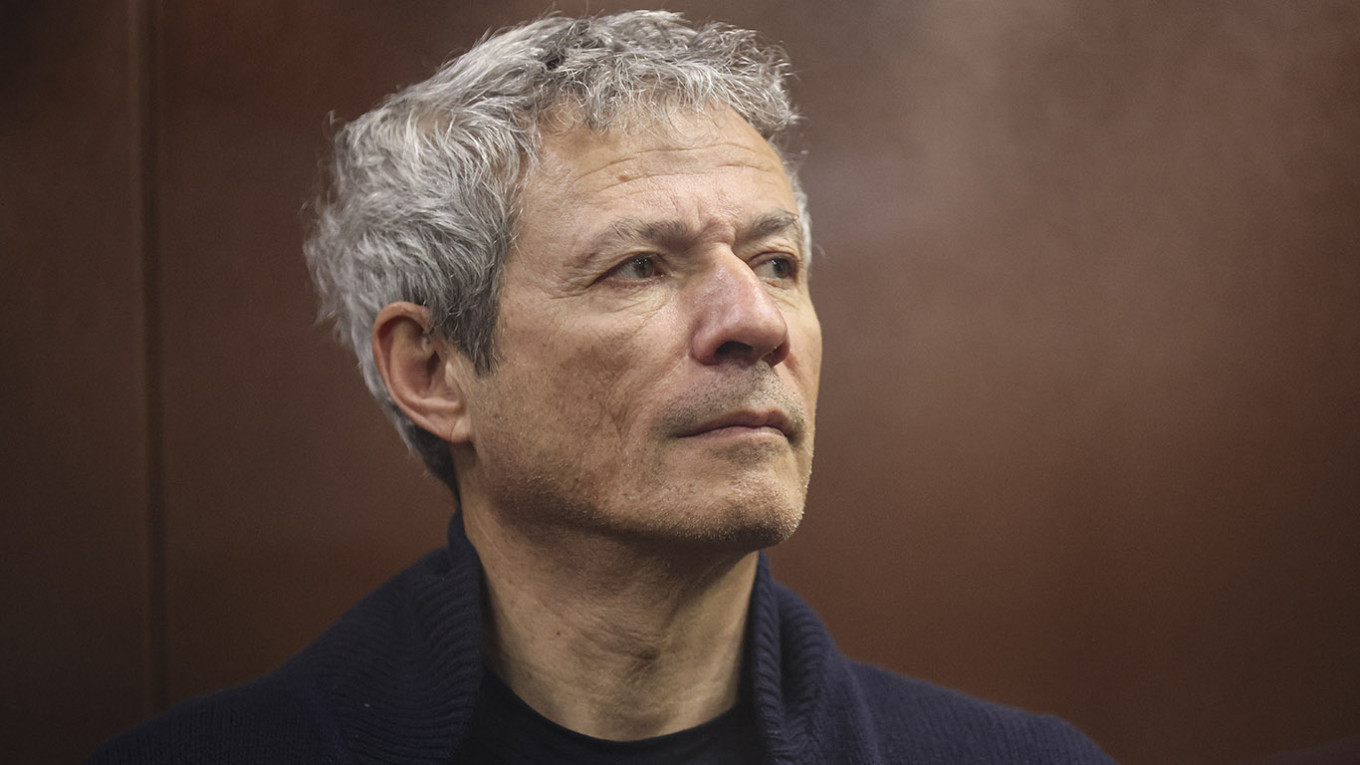
Russian authorities have confiscated assets worth 550 billion rubles ($7.59 billion) linked to jailed billionaire Vadim Moshkovich and transferred them to state ownership, the Interior Ministry said Thursday, in what appears to be the largest asset seizure of Russia's recent wave of nationalizations.
Moshkovich, 58, founder of major agricultural producer Rusagro and ranked 51st on Forbes Russia's list of the country's wealthiest businessmen, has been held in pre-trial detention since March last year. Former Rusagro Chief Executive Maxim Basov was also arrested in connection with the case.
The seizure underscores the scale of the Kremlin's campaign to bring private assets under state control since the full-scale invasion of Ukraine, a drive that has already transferred businesses worth an estimated 6.5 trillion rubles ($89.7 billion) to government ownership.
The Interior Ministry said its investigation into Moshkovich had been completed and that all property seized in the case had been "transferred to state revenue."
In May, Moscow's Khamovniki District Court ordered the nationalization of Rusagro, one of Russia's largest agricultural companies. Rusagro is the country's second-largest pork producer, third-largest sugar producer and controls more than 800,000 hectares of agricultural land.
According to the Kommersant business daily, Moshkovich faces charges of large-scale fraud, which carries a maximum sentence of 10 years in prison; intentional bankruptcy and money laundering, each punishable by up to seven years; and bribery, which carries a maximum sentence of 15 years.
The value of the assets seized from Moshkovich exceeds that of several other high-profile nationalization cases that have reshaped Russia's business landscape in recent years.
Those include the confiscation of seafood magnate Oleg Kan's "crab empire," valued at about $4.3 billion; Moscow's Domodedovo Airport, valued at 320 billion rubles ($4.42 billion); gold producer Yuzhuralzoloto, controlled by billionaire Konstantin Strukov and estimated to be worth around $2 billion; assets belonging to former Yugra Bank owner Alexei Khotin worth more than 200 billion rubles ($2.76 billion); pasta producer Makfa, valued at roughly 100 billion rubles ($1.38 billion); PVC manufacturer Sayanskkhimplast, valued at 92 billion rubles ($1.27 billion); and car dealer Rolf, valued at about 60 billion rubles ($828 million).
Bloomberg previously reported that some of Moshkovich's associates had appealed to President Vladimir Putin to intervene in the case, but that the Russian leader declined to do so.
According to Bloomberg, concerns among some of Russia's wealthiest businessmen about potential prosecution or asset seizures have prompted efforts to demonstrate loyalty to the Kremlin.
The agency reported that billionaire Suleiman Kerimov, whose fortune is estimated at $11.6 billion by the Bloomberg Billionaires Index, offered during a closed-door meeting with Putin in March to contribute 100 billion rubles ($1.38 billion) to the state budget.
Bloomberg reported that the federal budget subsequently received 220 billion rubles ($3.04 billion) in what officials described as gratuitous contributions following Putin's annual meeting with leading business executives.
Read this article in Russian at The Moscow Times' Russian service.
A Message from The Moscow Times:
Dear readers,
We are facing unprecedented challenges. Russia's Prosecutor General's Office has designated The Moscow Times as an "undesirable" organization, criminalizing our work and putting our staff at risk of prosecution. This follows our earlier unjust labeling as a "foreign agent."
These actions are direct attempts to silence independent journalism in Russia. The authorities claim our work "discredits the decisions of the Russian leadership." We see things differently: we strive to provide accurate, unbiased reporting on Russia.
We, the journalists of The Moscow Times, refuse to be silenced. But to continue our work, we need your help.
Your support, no matter how small, makes a world of difference. If you can, please support us monthly starting from just $2. It's quick to set up, and every contribution makes a significant impact.
By supporting The Moscow Times, you're defending open, independent journalism in the face of repression. Thank you for standing with us.

Remind me later.