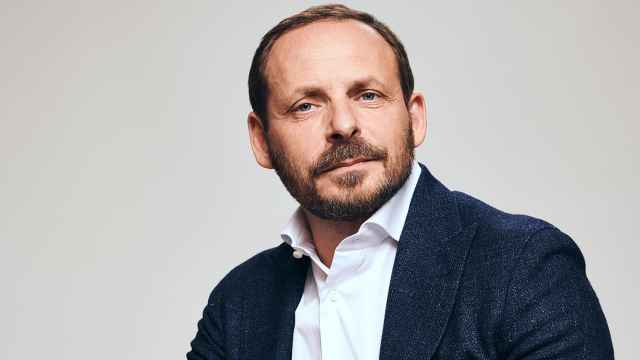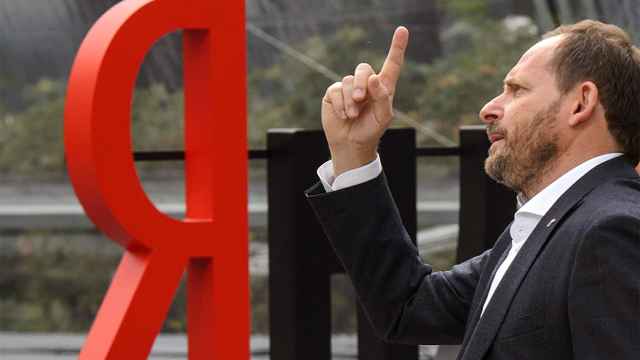

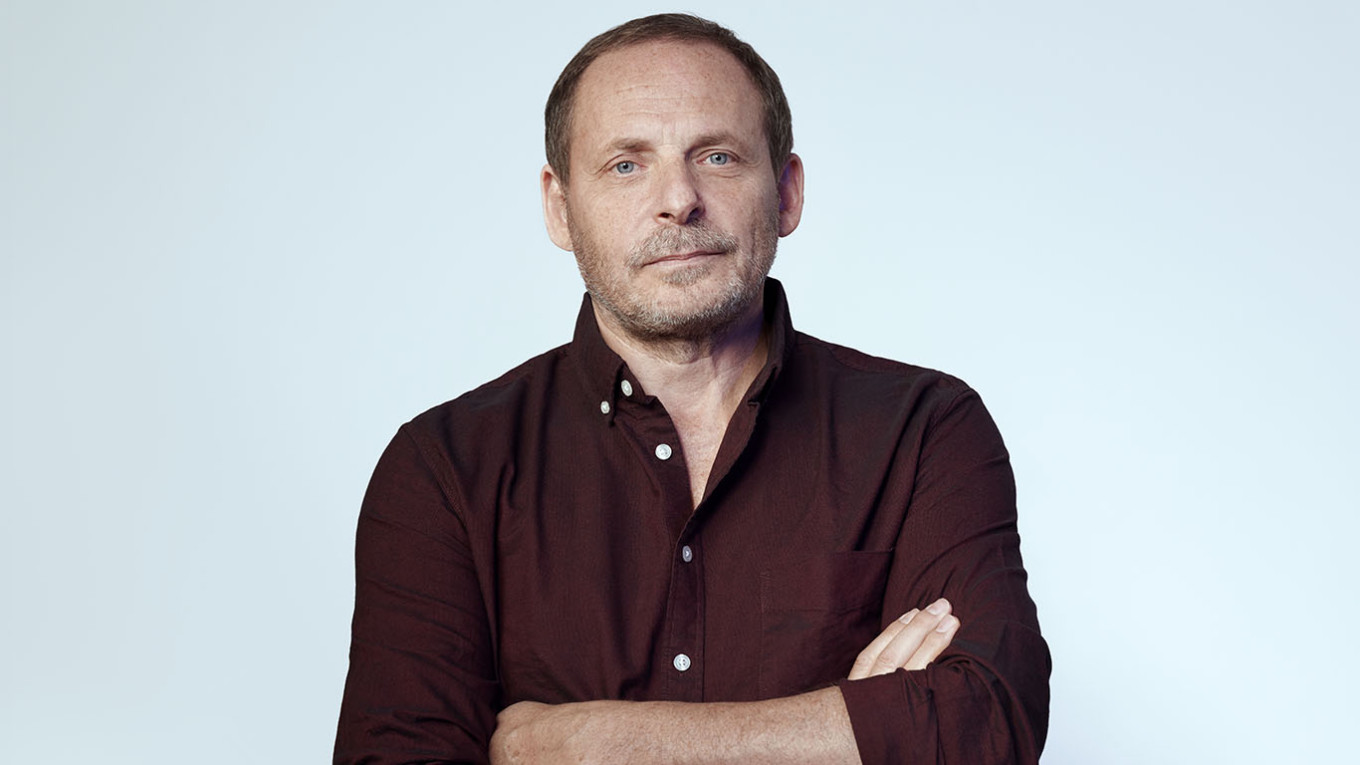
It looked like Arkady Volozh’s days at the top of the Russian tech world were over.
It was the summer of 2022, and the CEO of Russia’s largest tech company, Yandex, had found himself sanctioned by Europe. Officials in Brussels were leveling a serious allegation: that Volozh was providing support for Russia’s full-scale invasion of Ukraine. He immediately resigned.
Those who know the billionaire predicted that this would only be a temporary setback. Over three years later, it appears they were right.
Today, Volozh, 61, heads Nebius, a large Dutch tech firm awakened from a deal to split the remnants of Yandex’s international assets.
He has done what many business elites could not: successfully leave the Russian market, parlaying his old venture into a new one. Nebius made headlines in September for signing a nearly $20-billion AI deal with Microsoft. Last month, it added a similar $3-billion deal with Meta to its portfolio.
“I’ve never been so excited about the future,” Volozh said in an interview last year.
But just who is the person behind this remarkable turnaround, and how did he pull it off?
Volozh and Nebius did not respond to interview requests. So The Moscow Times tracked down nearly a dozen old associates, Yandex and Nebius employees and people who have spent years observing his rise and fall in Russia’s tech sector.
Their testimonies paint a picture of Russia’s once-top tech entrepreneur as a meticulous, soft-spoken delegator whose greatest strength is knowing how to get the most out of the people around him.
“He was a great productologist,” said Greg Abovsky, a former COO and CFO of Yandex. “Sometimes he would rip people to shreds for designing a button a certain way… and other times he would be so proud of what people were able to accomplish.”
“He really got under people’s skin,” Abovsky added, “both in a positive and a negative way.”
Small beginnings
Volozh was born in 1964 in Atyrau, a town on Soviet Kazakhstan’s Caspian Sea coast. In the early 1980s, he moved to Moscow to attend the Gubkin Russian State University of Oil and Gas, a reputable school for the hard sciences where, according to his LinkedIn profile, Volozh studied applied math.
For a young, entrepreneurial Russian, there was hardly a better time to set out to make one’s fortune. With the fall of the Soviet Union came the opening of the free market, and Volozh started trying to make his mark.
It was also around this time that he reconnected with an old schoolmate from Kazakhstan: Ilya Segalovich. Together, the two launched a program to search the Russian internet.
Yandex — a portmanteau of “yet another indexer” — was born.
Speaking on his motivations in 2005, Volozh told The Moscow Times that he wanted to create products for future generations.
“We used to create services as we wanted to use them,” the billionaire said. “Now, we think of services that our children and parents would use.”
Associates from the early days of his career remember Volozh’s charisma in trying to accomplish that goal, even as the crowded tech field made it difficult to stand out.
“He was very energetic, he was very proactive,” said Alexander Laryanovskiy, a Soviet Turkmenistan-born tech entrepreneur who met Volozh in the late 1990s. Laryanovskiy was later hired to help with Yandex’s international expansion.
Yandex, which eventually evolved beyond being just a search engine, was confident it could become the major player in the Russian market. In 2003, the company rejected a $130 million acquisition offer from Google. When Yandex launched an initial public offering in 2011, it smashed expectations — and that offer — raking in $1.3 billion and earning the distinction of being a household name on its own.
“Yandex really is the ‘Google’ of Russia,” remarked Anthony Moro, then-director of emerging markets at BNY Mellon.
Volozh set himself apart from his cofounder, Segalovich, most visibly in how he related to the rapid deterioration of Russian democracy in the 2010s. While the latter was out protesting for clean elections, the former chose to keep his politics more private.
“Volozh, at least publicly… kept distance from these things,” said Andrei Soldatov, an investigative journalist and author of “The Red Web,” a book on Russia’s digital surveillance and efforts to control the internet.
Segalovich died from stomach cancer in 2013, by which point Yandex was the most lucrative media property in Russia. That made it a natural target for the Kremlin, and Volozh suddenly had the unenviable task of managing the relationship between the two.
“I don’t have friction with the state… just like I don’t have friction with the weather,” Volozh said in a 2017 interview with Wired magazine.
But critics have claimed he led a company that too often ceded ground to the Kremlin.
Lev Gershenzon, the former head of Yandex News, recalled a poignant example in an interview with The Moscow Times.
One day in 2010, Gershenzon got a call from the office of Russia’s newly appointed chief tax official. A decade later, he would become more well known for replacing Dmitry Medvedev as prime minister, but at the time 44-year-old Mikhail Mishustin was still working his way up the political ladder and needed good PR to succeed, so Gershenzon was told.
An official in the tax office was displeased with some negative search results about Mishustin that appeared on Yandex News. He wondered: Would Gershenzon remove them?
“There were some very concrete, very specific demands,” Gershenzon recalled.
The request moved up the chain of command. In the end, Yandex’s senior leadership decided to alter the search results around Mishustin’s name, Gershenzon said.
While Volozh was not directly involved in those discussions, Gershenzon added, the episode exemplified the kind of concessions to the Kremlin that Yandex often made under his leadership.
“His compromise was that in order to proceed with evolving and working in Russia, we have to make very influential officials maybe not happy, but at least okay with what we’re doing,” Gershenzon said of the event, which contributed to his desire to leave Yandex.
Such was the balancing act that Yandex deftly navigated — until it no longer could.
‘Migsuided’
The full-scale invasion of Ukraine in February 2022 threw Yandex, like many large Russian companies, into chaos.
Within the first months, two executives had resigned alongside just as many board members, Yandex News had been sold to Kremlin-friendly tech giant VK and the company’s shares on U.S. stock exchanges had been frozen.
Users who visited Yandex News would have had a warped view of the conflict prompting this behind-the-scenes implosion.
In the early days of the war, the aggregator predominantly featured coverage from pro-Kremlin outlets. A large-scale censorship effort was underway, critics claimed.
One former Yandex manager, who requested anonymity to speak freely, described these months as full of uncertainty for lower-level employees. Roughly a third of his team’s leadership resigned, some believing that Yandex was responsible for spreading pro-war propaganda, he said.
“The majority of our employees were remote workers, so they lost access to their banks, they started to emigrate and so on,” the former employee told The Moscow Times. “It was stressful for all of us.”
Volozh’s abrupt exit that June was a sign of just how irreparable these wartime changes would be for Yandex.
In naming Volozh in a package of sanctions, the EU accused him of heading an organization “responsible for promoting State media and narratives,” contributing tax money to the Kremlin’s coffers and supporting “actions or policies” which undermine Ukrainian sovereignty.
“Migsuided” was how Volozh characterized these accusations. Those who expected a more soulful meditation on his exit from Yandex — and perhaps a condemnation of the war — had to wait.
Volozh finally shared his feelings in a heartfelt farewell message published ahead of that year’s New Year celebrations.
“Yandex is my life’s work,” he wrote, adding that thousands of past employees also had a claim to the company’s success. “Thank you to everyone who has built and continues to build the best tech company in the country. I love you all and send you hugs. I miss you very much.”
Still, there was no denunciation of the war, and critics heard the silence as acquiescence.
A group of squatters had taken up residence in his Amsterdam mansion that fall, hanging banners that read “Against War and Capitalism” from the windows. The following summer, journalists found that he was now identifying as a “Kazakhstan-born Israeli tech entrepreneur” on his personal website.
Whether it was due to the negative publicity, his own conscience or some other factor, Volozh finally decided to speak out.
“Russia’s invasion of Ukraine is barbaric, and I am categorically against it,” he said in a statement provided to independent Russian business outlet The Bell in August 2023.
“There were reasons to stay silent during this long process,” he added. “While there will anyway be questions about the timing of my statement today, there should be no questions about its essence. I am against the war.”
His time had been taken up, he claimed, with helping Russian engineers who decided to emigrate. Now those people were in positions to launch new enterprises abroad, “continuing to drive technological innovation.”
The same applied to Volozh, who was also planning something new.
Nebius
Yandex’s parent company was registered in the Netherlands in 2007. According to Esther Dyson, a former board member of Yandex, one benefit of this arrangement was that the company had to answer to a foreign regulator, allowing it to stave off some of the Kremlin scrutiny and political quid-pro-quo that often went hand in hand with doing business in Russia.
“We were in Russia, so we were subject to the Russian government, but we were also outside Russia, so there were certain things that we as a company could not do,” Dyson told The Moscow Times.
Nebius owes its existence to this decision.
Forming the backdrop to Volozh’s days of controversy was a lengthy legal battle over the future of Yandex. A deal was finally reached that saw its Dutch parent company sell extensive assets to a Russian consortium for 475 billion rubles ($5.2 billion) in cash and shares.
“The whole split-off was extremely complicated,” said Dyson, who also briefly served on the board of Nebius. “And unlike most companies, we ended up, I think, doing pretty well.”
“You know, a lot of companies left with almost nothing,” she added.
The deal meant that whatever venture Volozh planned to launch with those foreign assets would have a base in the Netherlands. They were substantial, including a massive data center in Finland.
In July of last year, he announced Yandex’s successor as Nebius, a company that would provide infrastructure for AI. Such technology is akin to “railways in the industrial revolution,” he said, and Nebius would be at the forefront of their development.

Nebius now has more than 1,000 engineers working on those projects. Most of them came from Yandex, Volozh said in an interview.
One employee who spoke on condition of anonymity said that working for a company undergoing such rapid growth is “certainly an interesting experience.”
“I have a really good relationship with my company,” the Nebius employee said. “I’m thankful to it for moving me [out of Russia] and everything else, and I’m rather comfortable working here.”
‘A brilliant, charismatic leader’
Drive about an hour north from Helsinki, Finland, and you will arrive at the town of Mäntsälä.
It is a small place. A list of its key sights might include the exquisite 20th-century church and a selection of traditional Finnish mansions.
And, of course, the large, white buildings just off the highway.
Curved like the crest of a wave, they contain the kind of powerful servers and cooling systems that companies depend on for the immense demands of AI computing. An expansion at this facility will soon add even more capacity. Over the entrance where Yandex’s red and black letters used to sit is a new logo: “Nebius.”
The company is betting its future on such facilities, the Mäntsälä center being one of the main assets that Nebius kept in the split from Yandex. Its international expansion has seen everything from GPU clusters to data centers being established in locations ranging from London to New Jersey.
As demand for AI balloons, Nebius believes that companies will be attracted to its industry expertise.
“This isn’t some random organization,” Matt Weigand, a partner at venture capital firm Accel which invested in Nebius, told Bloomberg.
The bet has so far paid off. This fall, Nebius landed one of its largest clients yet. As part of a deal worth up to $20 billion, the company will supply cloud computing power to Microsoft.
People who have followed his career told The Moscow Times that if Volozh’s successful pivot can be attributed to one thing, it is his ability to find and manage the right people for a job.
“He is really good at gathering really, really smart people,” said Soldatov, the Russian journalist. “He’s always been like that.”
“He had a saying that the way you overcook a hamburger is if you don't flip it often enough,” said Abovsky, the former COO and CFO. At Yandex, this meant moving “people around from time to time to take on different responsibilities and learn other parts of the business.”
Abovsky added that Volozh “wouldn’t be a boss as much as a peer, like a player-coach almost.”
For all the change that Nebius represents, some aspects of its CEO’s life have returned to normalcy in the past year.
The European Union removed him from its sanctions list in March 2024, and his wealth has stabilized to roughly where it was before the war, according to Forbes.
Even Volozh’s detractors say they cannot help but admire how he has rebounded.
Gershenzon is one of them. For all of his criticism of how Volozh navigated relations with the Kremlin, he admits that the former Yandex head is a skilled entrepreneur, one whose talents are best utilized outside of Russia.
“It’s great that Arkady Volozh — such a brilliant, charismatic leader — is not working on the Russian war right now,” he said. “But this fact proves that there were no obstacles before the war to make something like this and not to make these compromises.”
A Message from The Moscow Times:
Dear readers,
We are facing unprecedented challenges. Russia's Prosecutor General's Office has designated The Moscow Times as an "undesirable" organization, criminalizing our work and putting our staff at risk of prosecution. This follows our earlier unjust labeling as a "foreign agent."
These actions are direct attempts to silence independent journalism in Russia. The authorities claim our work "discredits the decisions of the Russian leadership." We see things differently: we strive to provide accurate, unbiased reporting on Russia.
We, the journalists of The Moscow Times, refuse to be silenced. But to continue our work, we need your help.
Your support, no matter how small, makes a world of difference. If you can, please support us monthly starting from just $2. It's quick to set up, and every contribution makes a significant impact.
By supporting The Moscow Times, you're defending open, independent journalism in the face of repression. Thank you for standing with us.

Remind me later.