Hello and welcome to Regions Calling, your guide to developments beyond the Russian capital from The Moscow Times.
This week, we invited Zarema Gasanova, an Indigenous Avar activist from the republic of Dagestan, to write a guest column about the push to develop tourism in her home republic. She argues that this tourism boom is yet another expression of Moscow’s colonialist mindset — and one that brings few material benefits for Dagestanis themselves.
But first, here’s what else you missed from the regions:
The Headlines
A delegation from the Taliban arrived in Kazan, the capital of the republic of Tatarstan, on Wednesday for the Russia – Islamic World: KazanForum to discuss trade and agricultural partnerships with Russia. Delegations from 27 countries are expected to take part in the forum.
Several republics in Russia’s North Caucasus have announced multimillion-ruble government contracts aimed at promoting what the Kremlin calls “traditional values,” including religious lectures in schools and conferences on patriotism and morality.
A man known as “Sasha Kon” who was attempting to walk from Russia’s Ryazan region to Brazil while pulling a homemade 300-kilogram (660-pound) cart was reportedly killed in a drone attack in the Bryansk region near the Ukrainian border.
A man from Siberia’s Tyumen region who went viral after ending up inside a coal freight car after a night out was fined about $27 for violating railway safety rules, local media reported.
Dmitry Klimov, 22, had posted a video saying he had been drinking at a bar in his hometown of Ishim before somehow “ending up in a coal wagon” that brought him to the regional capital Tyumen some 250 kilometers away.
Krasnoyarsk region authorities introduced emergency livestock controls and highway checkpoints in two districts over reports of a disease outbreak in neighboring Kemerovo region, even as local officials denied any epidemic and disputed reports of mass cattle culling.
The move follows earlier controversial livestock seizures in the Novosibirsk region, where residents and farmers accused authorities of withholding information about possible outbreaks of pasteurellosis or foot-and-mouth disease.
The Spotlight
‘Send Him 2-3 Years to Dagestan and Forget’
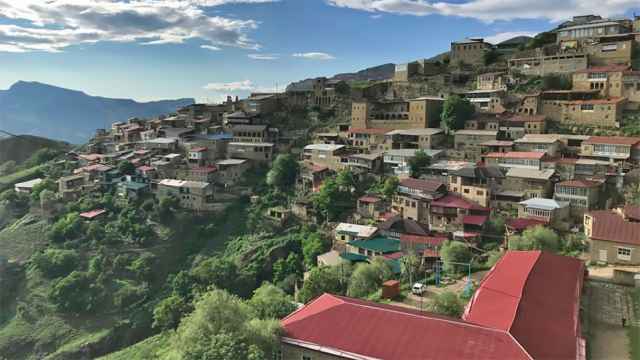
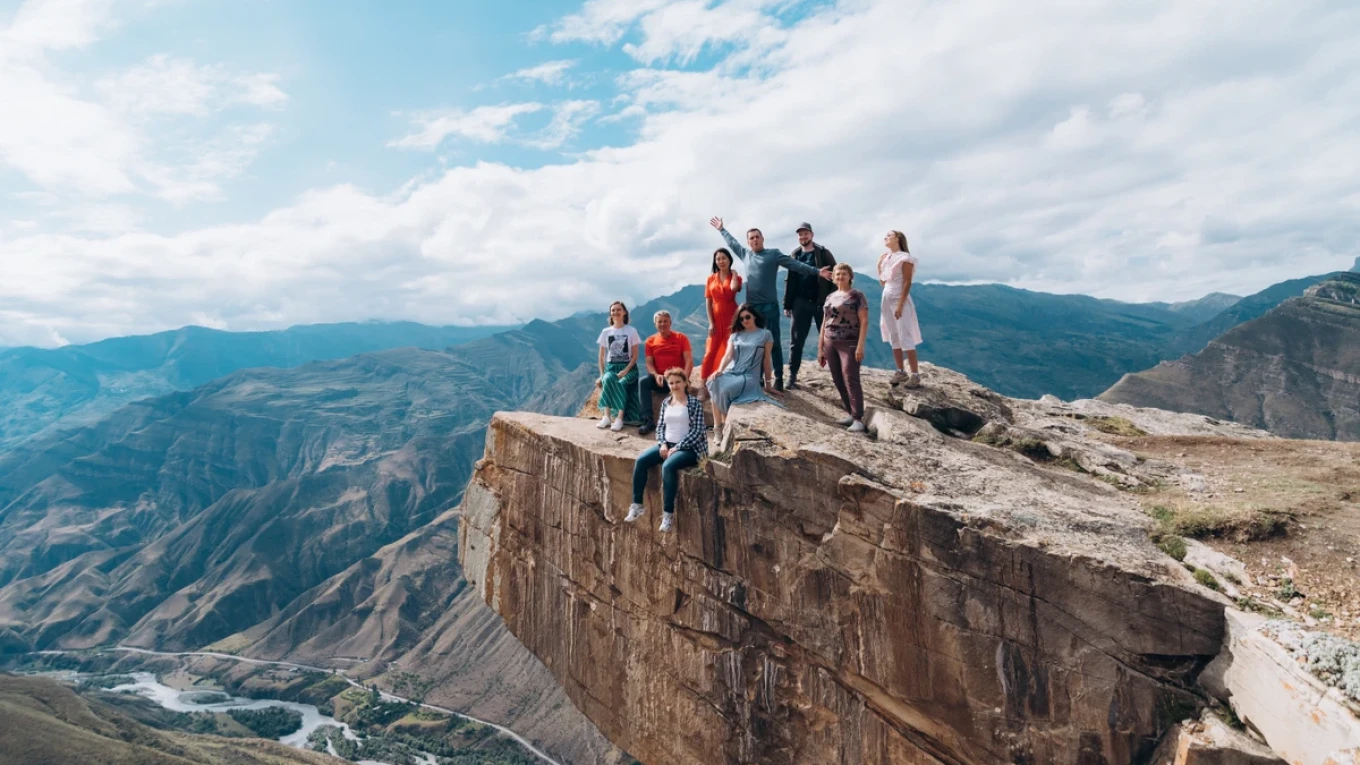
Over the past five years, the republic of Dagestan has become one of the fastest-growing destinations for domestic tourism in Russia. The Covid-19 pandemic, followed soon after by the invasion of Ukraine, airspace closures and growing economic instability, pushed Russians who once enjoyed vacations abroad to search for cheaper and more accessible alternatives at home.
Dagestan, a republic in the North Caucasus, emerged as one answer.
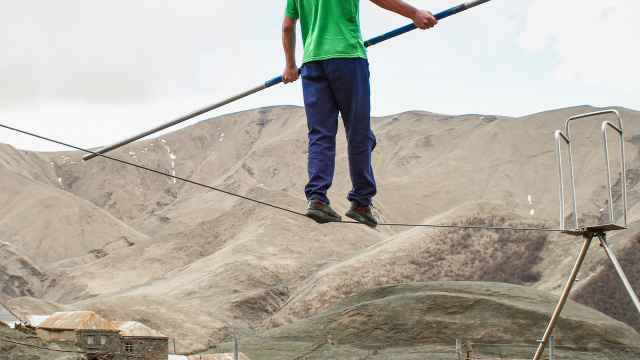
Russia’s tourism industry markets Dagestan as a place of dramatic natural landscapes, distinctive local traditions and an “undiscovered” culture waiting to be experienced.
It’s a strategy that has proven effective. The republic is now one of the most sought-after destinations inside Russia, with nearly 2 million visitors in 2025. Not bad for a region with a population of 3.2 million people.
But the seductive picture painted by tourism agencies and authorities conceals deeper realities.
Dagestan remains one of Russia’s most economically dependent and chronically underinvested regions. Corruption is pervasive, unemployment remains high and sustainable opportunities for long-term development are scarce.
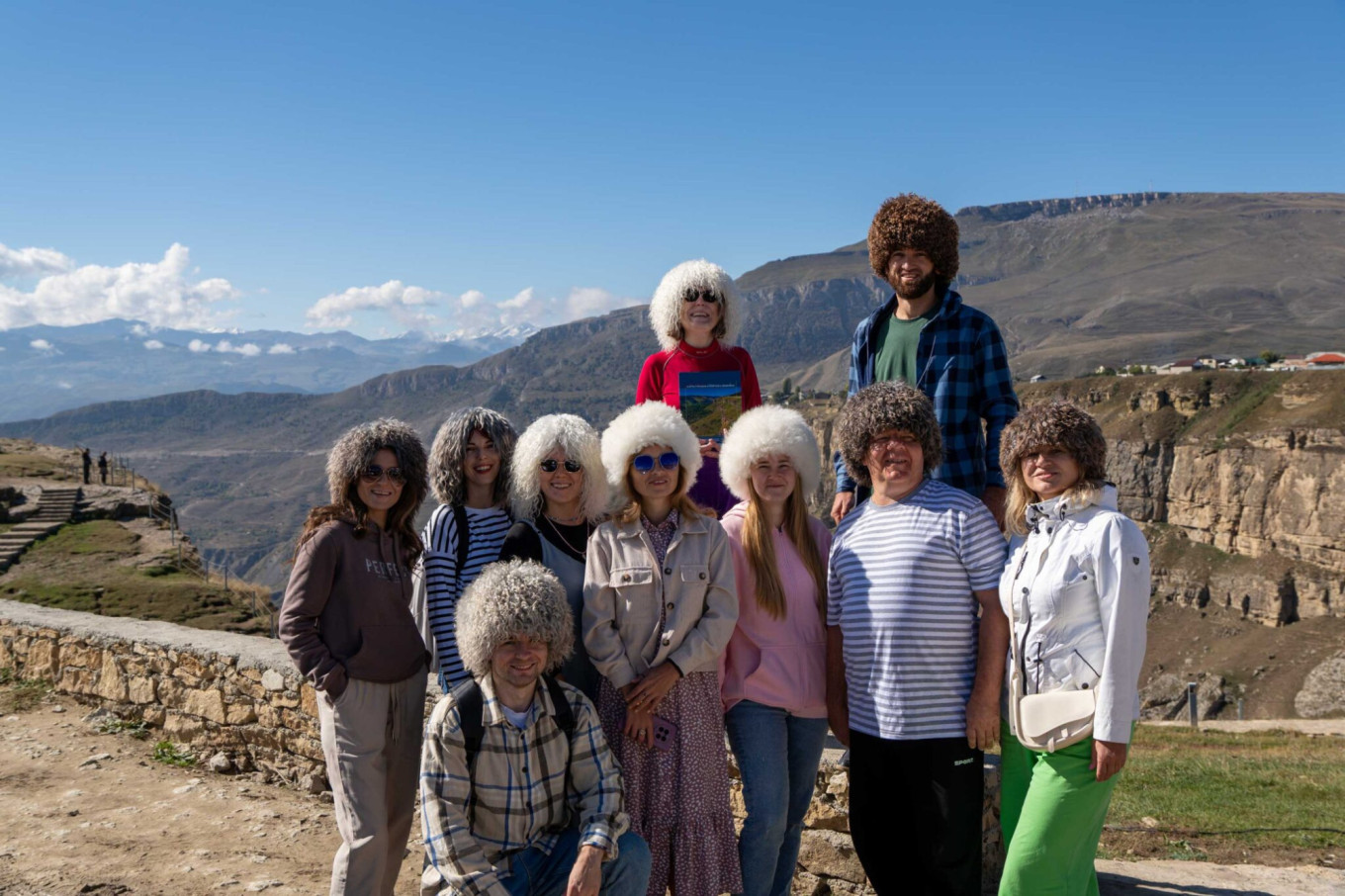
Faced with few other options for earning a living, many Indigenous locals have found themselves pulled into the expanding tourism economy through renting out their apartments, hosting guided tours and selling carefully packaged cultural experiences. Local cultural practices and traditions became a tourist attraction.
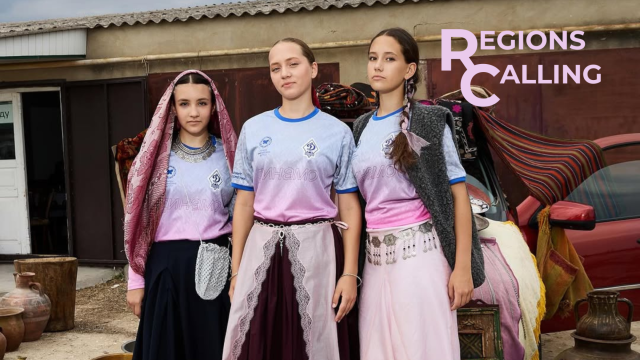
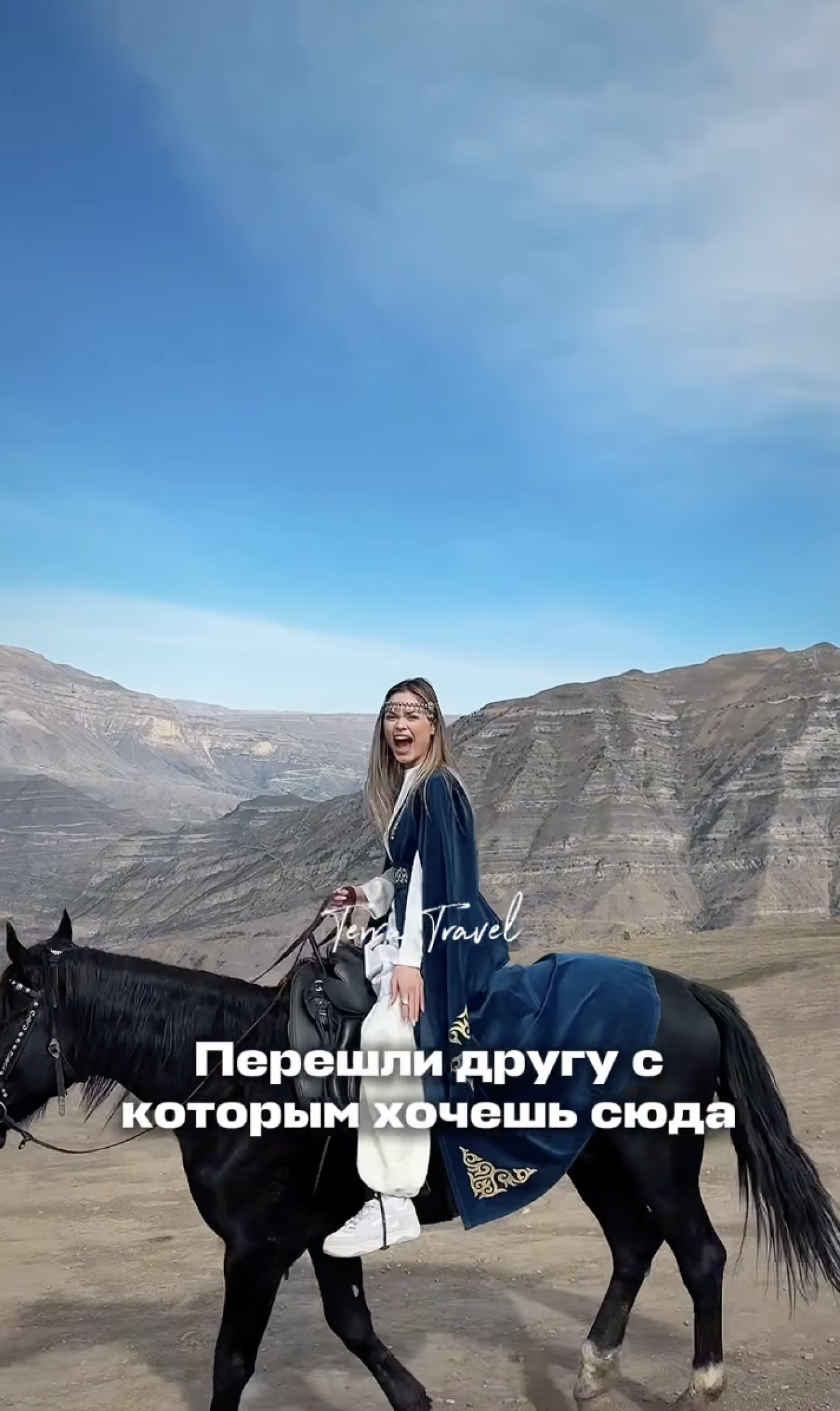
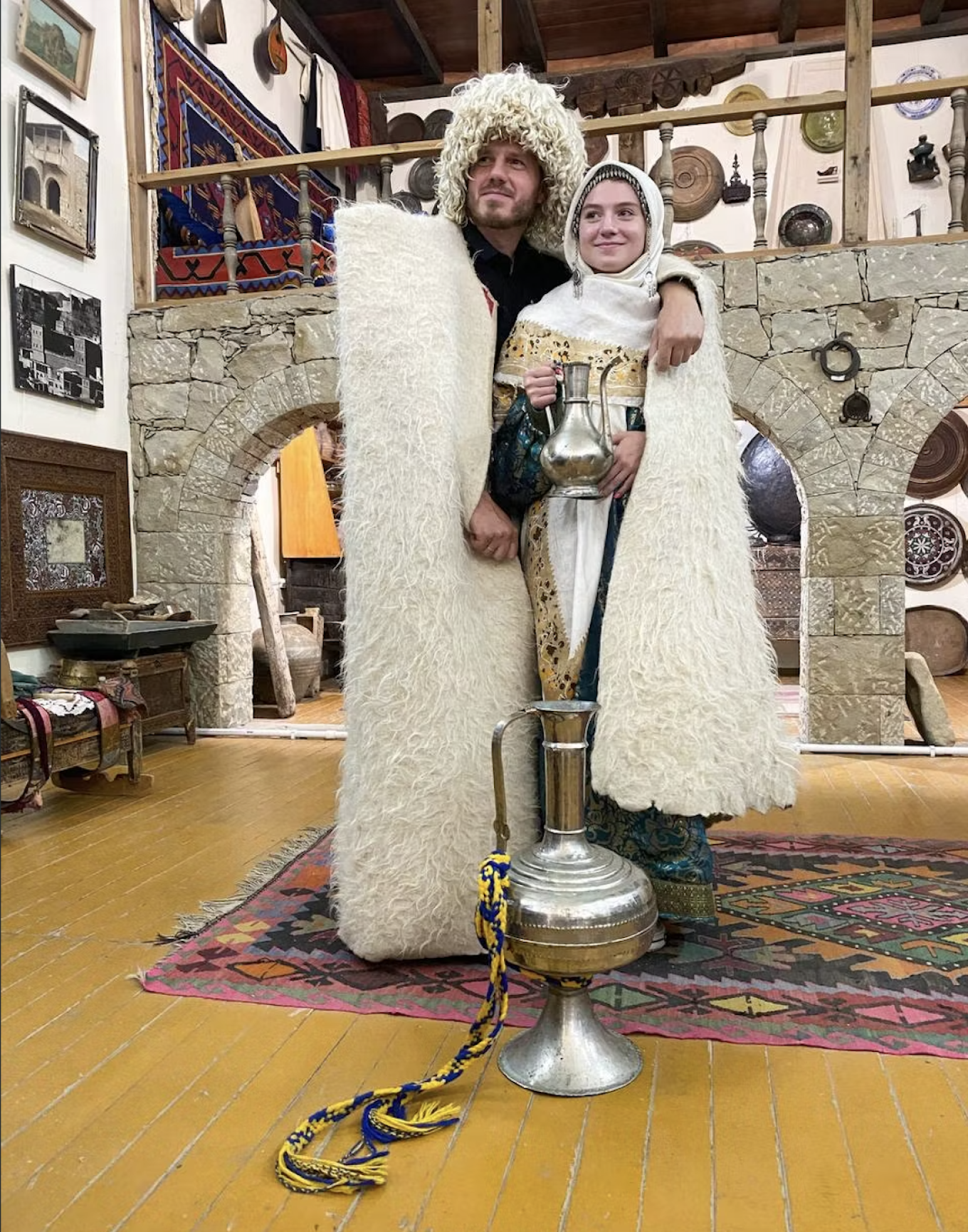
In 2025, Dagestan began offering tourists the opportunity to participate in traditional wedding ceremonies. Ethnic Russian couples have traveled there to stage weddings of their own, using Dagestani landscapes, clothing and rituals as an exotic backdrop. Traditions that once belonged to the lived experience of local communities increasingly function as scenery in someone else’s narrative — a commodity to be consumed by outsiders.
Dagestan is often celebrated as a tourism success story and a model of regional growth. However, what is happening increasingly resembles a familiar colonial arrangement: Russia’s metropolitan center consumes Dagestan as accessible domestic exotica while the republic itself is encouraged to monetize its cultural diversity and distinctiveness in order to survive.
In this context, culture becomes exoticized while people are turned into objects of observation, creating a relationship in which respect is replaced by curiosity and consumption.
A similar pattern has emerged around the rise of Dagestan’s global image as a center of combat sports. The international success of Dagestani MMA fighters has furthered stereotypes of the North Caucasus as a place associated with toughness, discipline and masculine endurance.
A phrase once uttered by Dagestani MMA fighter Islam Makhachev — “Send him 2-3 years to Dagestan and forget” — is now a viral meme among foreigners, and traveling there is often framed as a pilgrimage for masculine self-improvement.

Foreign visitors arrive seeking harsh, masculine mythology, sparring sessions and training camps, their social media posts documenting the trip as a story of personal physical and psychological transformation. Dagestani culture is an afterthought.
Russian bloggers participate in a similar process. Their content revolves around the “unusualness” of Dagestani people’s accents, customs and appearance as well as of the local atmosphere. Social media presents the republic, with all its fascinating layers, complexity and cultural diversity, as a flattened image of internal exoticism.
As a result, the growth of tourism in Dagestan can be seen as a form of symbolic appropriation in addition to its economic impact.
Ethnic Russian bloggers and transplants to the region often position themselves as informal interpreters of Dagestan, guiding visitors on its perceived otherness through a familiar colonial gaze.
Nor is the economic picture much better.
The republic’s authorities increasingly point to tourism as a development strategy and have begun investing accordingly. Last year, regional officials said that roughly 350 million rubles (about $4.7 million) was allocated through Russia’s national Tourism and Hospitality program to support the sector. Part of that funding went toward five projects creating small hotels and guest accommodations.
Dagestan also received a federal subsidy of 274 million rubles ($3.7 million) spread over three years, adding to a broader push to expand tourism infrastructure.
The flagship long-term project is the planned Caspian coastal cluster, which is envisioned as a major tourism hub. According to Dagestan’s Tourism Minister Emin Merdanov, authorities have already signed 16 agreements covering 18 investment projects within the area’s special economic zone, with a combined value exceeding 63 billion rubles ($850 million).
The scale of these figures suggests momentum, but the direction of that investment matters as much as its size.
Long-term investment remains weak, corruption persists and development continues to stall. Residents have limited opportunities to pursue careers in science, technology, culture or independent entrepreneurship. Service work absorbs growing numbers of people because alternatives remain scarce.
The growing number of small businesses like cafés, restaurants, guesthouses and tourism agencies to accommodate the rising tourist numbers creates visible economic activity on a surface level — but much of that activity remains enclosed within a servicing economy.
Independent industrial sectors are not taking shape, technological development remains limited and scientific and intellectual institutions capable of generating durable growth have yet to emerge.
Instead, what is being built is an infrastructure for receiving visitors — feeding them, accommodating them and managing their experience.
Many Indigenous residents increasingly occupy roles as guides, drivers, performers in national costumes, hotel cleaners and organizers of other people’s leisure.
Economic shifts of this kind carry cultural consequences. Professional horizons narrow and communities adapt themselves to the demands of visitors. Over time, an entire population risks being reduced to service personnel.
The structure resembles a classic colonial mechanism: dependency is preserved and then monetized in the interests of the federal power. Dagestan is not guided toward self-sufficiency; rather, its dependent position becomes a useful source of profit and convenience for outside demand.
Communities deprived of opportunities in art, science, literature, language and industry eventually encounter hard limits on their future. Local institutions remain weak. Independent avenues for advancement remain scarce.
Even in Russia’s largest cities like Moscow and St. Petersburg, people from the North Caucasus often face racialized stereotypes, social stigmatization and limited access to meaningful career advancement. Within Dagestan itself, factories, technological hubs and intellectual centers capable of producing independent development remain largely absent.
The limited pathways that do exist — positions in state institutions, public contracts and major local structures — frequently operate through systems of patronage, corruption and clan-based ties. Ordinary Dagestanis are left with few realistic routes for upward mobility outside low-level service work.
The result is a closed colonial cycle in which Dagestanis are denied meaningful opportunities in Russia’s metropolitan centers while lacking the institutional foundations for independent development at home.
Economic survival pushes communities toward whatever sources of income remain available.
The federal center’s relationship with the republic becomes visible in this arrangement. Dagestan is kept in a state of managed dependency wherein it receives federal subsidies, but never reaches the level of investment needed to develop its own independent institutions, autonomous economic structures or sustained national development.
Such a system serves centralized authority and loyal local elites alike.
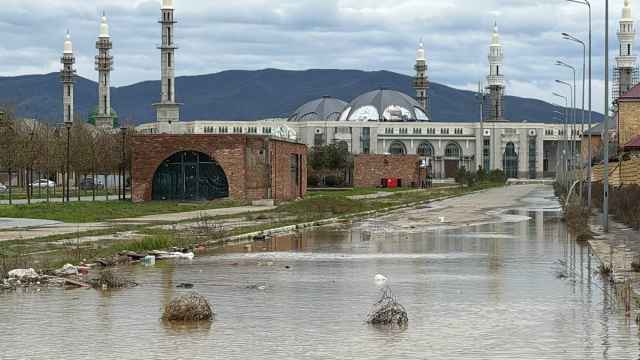
Behind the appealing narrative of the tourism boom lies a growing list of unresolved tensions that will likely deepen in the coming years. Coastal development projects, hotel construction and the commercialization of natural areas continue to expand, the republic’s landscape increasingly adapting itself to external demand.
Dagestan is thus developing according to the needs of those who visit it — their comfort, their expectations, their desire for experience — instead of the needs of its population.
Instead of loosening Dagestan’s dependency on Moscow, tourism is transforming economic underdevelopment into a profitable resource. And this doesn’t look set to change anytime soon.
Photo of the Week
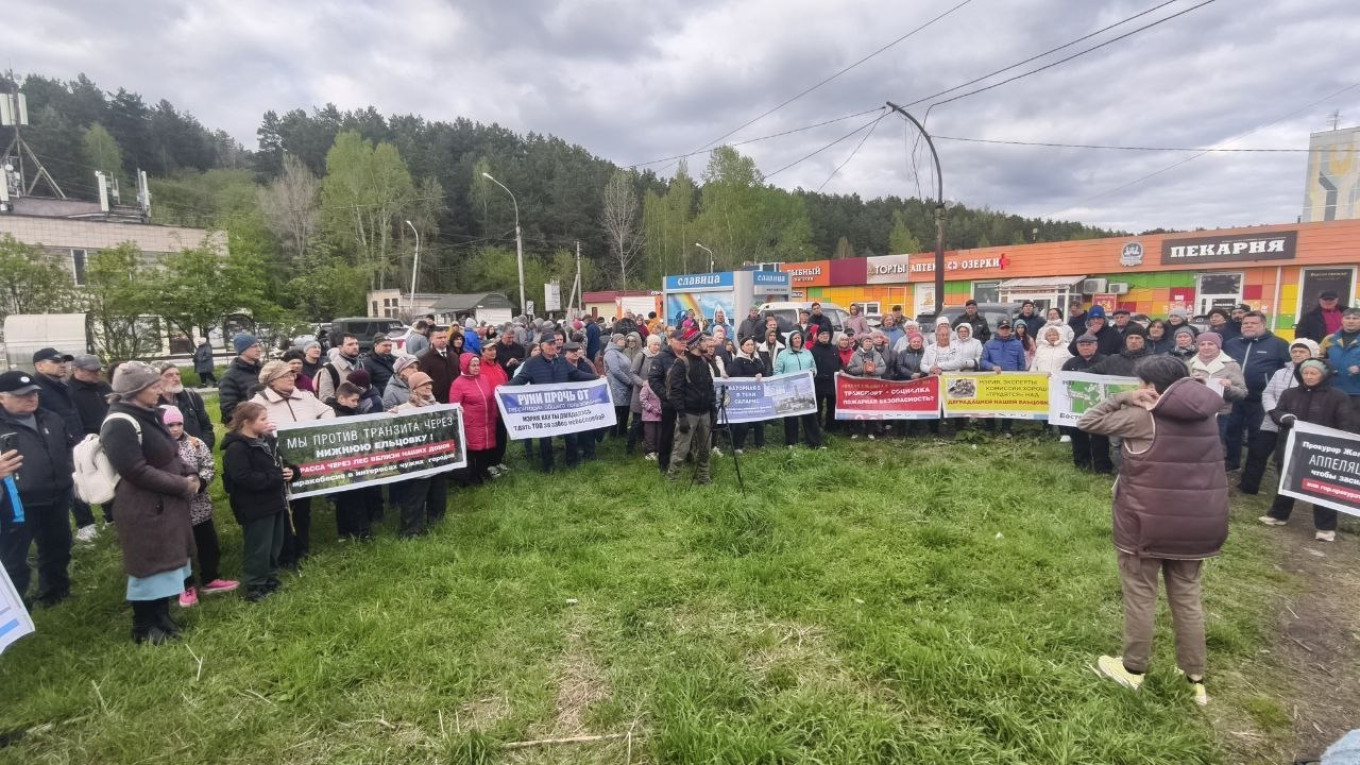
Around 200 people gathered in the Siberian city of Novosibirsk to protest plans for residential development and transport infrastructure in their district.
Residents say these plans would transform their district into a transit hub and route heavy freight traffic through the area as part of the planned Eastern Bypass highway project around Novosibirsk.
-
‘My Homeland Is a Country Within a Country’: Avar Activist Zarema Gasanova by Leyla Latypova
-
“Dagestan Was Already Facing an Infrastructure Crisis. Then Came the Floods.” by Leyla Latypova
-
“Regions Calling: Life With No Internet Is the New Normal” by Leyla Latypova
-
“In Russia’s Dagestan, Iran-Israel Conflict Hits Close to Home” by Leyla Latypova
A Message from The Moscow Times:
Dear readers,
We are facing unprecedented challenges. Russia's Prosecutor General's Office has designated The Moscow Times as an "undesirable" organization, criminalizing our work and putting our staff at risk of prosecution. This follows our earlier unjust labeling as a "foreign agent."
These actions are direct attempts to silence independent journalism in Russia. The authorities claim our work "discredits the decisions of the Russian leadership." We see things differently: we strive to provide accurate, unbiased reporting on Russia.
We, the journalists of The Moscow Times, refuse to be silenced. But to continue our work, we need your help.
Your support, no matter how small, makes a world of difference. If you can, please support us monthly starting from just $2. It's quick to set up, and every contribution makes a significant impact.
By supporting The Moscow Times, you're defending open, independent journalism in the face of repression. Thank you for standing with us.

Remind me later.