Updated to add the Russian Defense Ministry's statement.
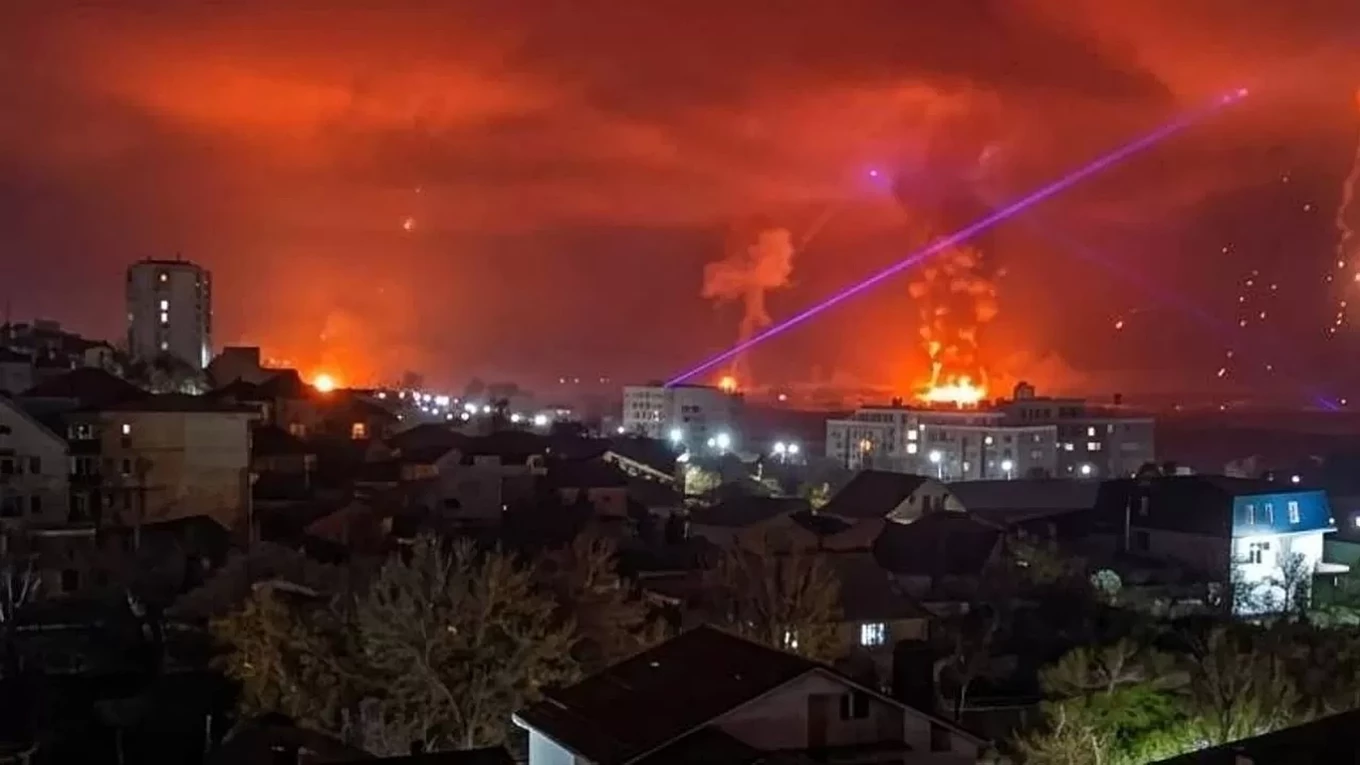
Ukrainian drones attacked the Caspian Pipeline Consortium's marine terminal in southern Russia early Monday, damaging part of a mooring point and setting four oil tanks ablaze, Russia's Defense Ministry said.
The Ukrainian army said it had attacked a different terminal in the port of Novorossiysk, without mentioning the Caspian Pipeline Consortium (CPC).
The CPC pipeline — which had not commented — handles around 1% of the world's oil supplies, as well as around 80% of Kazakhstan's exports.
During the night, Ukraine "attacked facilities at the marine transshipment complex in Novorossiysk using fixed-wing attack drones," the Russian Defense Ministry said in a statement on Telegram.
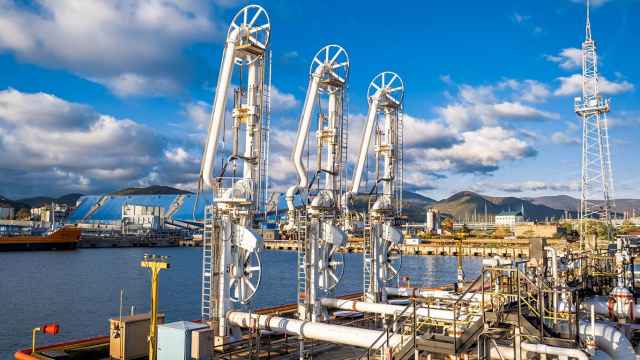
"As a result of the Ukrainian drone strikes, the pipeline of a single mooring point, as well as a loading and unloading terminal, were damaged, and four oil product storage tanks caught fire," the ministry added.
It accused Ukraine of attempting to "destabilize the global hydrocarbon market and cut off oil supplies to European consumers."
The Russian Defense Ministry did not provide any immediate visual evidence of the strikes.
Among the CPC's shareholders are U.S. oil majors Chevron and ExxonMobil.
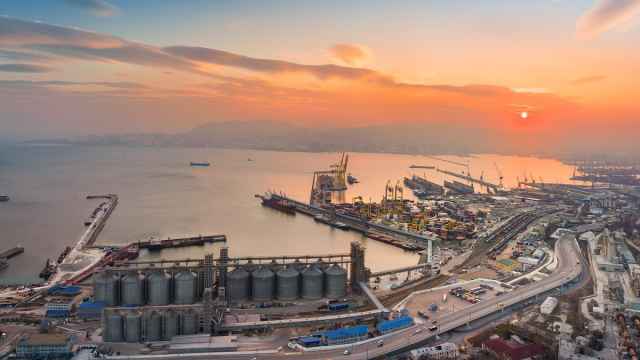
The Ukrainian army said it had struck the Sheskharis oil terminal, a key Russian oil hub in the port of Novorossiysk — where the CPC is also located — but did not mention the CPC itself.
"Direct hits on the target and a large-scale fire on the territory of the terminal were recorded," it said on Telegram.
Krasnodar region Governor Veniamin Kondratyev said Ukrainian drones had attacked Novorossiysk, damaging several residential buildings, but did not confirm a hit on the Sheskharis terminal.
Videos circulating on social media appeared to show a fire at the Sheskharis facility. This footage could not be independently verified.
Operated by state pipeline monopoly Transneft, the terminal is the southern endpoint of Russia’s oil pipeline system and handles between 3.5 million and 4.5 million tons of crude per month — roughly 1 million barrels per day, or up to 20% of Russia’s seaborne oil exports. It also loads fuel oil and diesel.
Ukraine has targeted the CPC multiple times throughout the four-year war, including a naval drone strike last November that led to a temporary halt in the terminal's operations.
The U.S. State Department told Ukraine to stop targeting its interests at the port following those attacks last year, according to U.S. media reports.
The attacks have also drawn frustration from Kazakhstan, which transports the bulk of its oil exports through the CPC.
The Ukrainian military says the strikes help drain the energy revenues Moscow uses to fund the war and are a justified response to Moscow's missile and drone attacks.
Ukraine has in recent weeks stepped up drone strikes on Russian ports and energy infrastructure, particularly in the Baltic Sea.
Attacks on the ports of Ust-Luga and Primorsk forced temporary suspensions of oil and fuel shipments.
As a result, Russia’s total oil exports fell by 43% in the week of March 22-29 to 2.318 million barrels per day, down from 4.072 million bpd a week earlier, according to Bloomberg calculations. Only 22 tankers were dispatched during the period, 15 fewer than the previous week.
Exports from Primorsk, Russia’s main Baltic oil port with capacity of around 1 million bpd, dropped to four tankers from 10 the week before, while shipments from Ust-Luga fell to just two.
The disruption cost Russia an estimated $1 billion in lost oil and fuel revenues for the week, Bloomberg reported.
Ust-Luga accounts for about 8% of global naphtha exports, and shipments of the petrochemical feedstock from the port fell by roughly 70% in the final week of March following the attacks, the Financial Times reported.
AFP contributed reporting.
A Message from The Moscow Times:
Dear readers,
We are facing unprecedented challenges. Russia's Prosecutor General's Office has designated The Moscow Times as an "undesirable" organization, criminalizing our work and putting our staff at risk of prosecution. This follows our earlier unjust labeling as a "foreign agent."
These actions are direct attempts to silence independent journalism in Russia. The authorities claim our work "discredits the decisions of the Russian leadership." We see things differently: we strive to provide accurate, unbiased reporting on Russia.
We, the journalists of The Moscow Times, refuse to be silenced. But to continue our work, we need your help.
Your support, no matter how small, makes a world of difference. If you can, please support us monthly starting from just $2. It's quick to set up, and every contribution makes a significant impact.
By supporting The Moscow Times, you're defending open, independent journalism in the face of repression. Thank you for standing with us.

Remind me later.