
Over the past four years, civilian nuclear energy facilities have increasingly become targets of direct or indirect attacks in armed conflicts. The Zaporizhzhia Nuclear Power Plant (NPP) in occupied Ukraine is the most high-profile example. But other plants in the country and neighboring regions of Russia are also exposed to risks of attacks (intentional or otherwise) and dangers from construction delays and personnel evacuations.
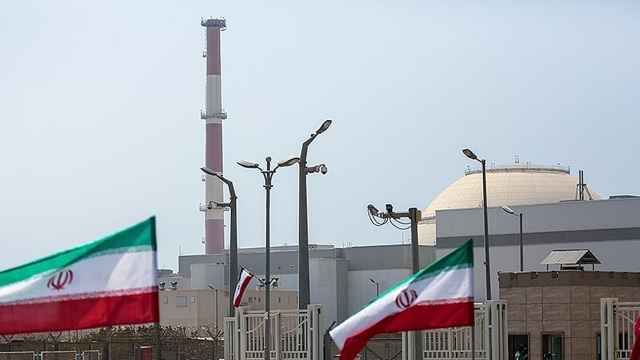
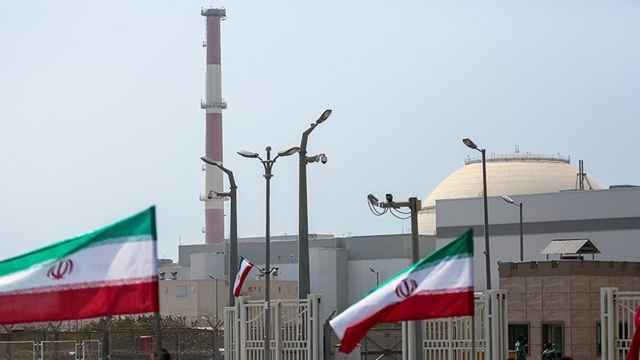
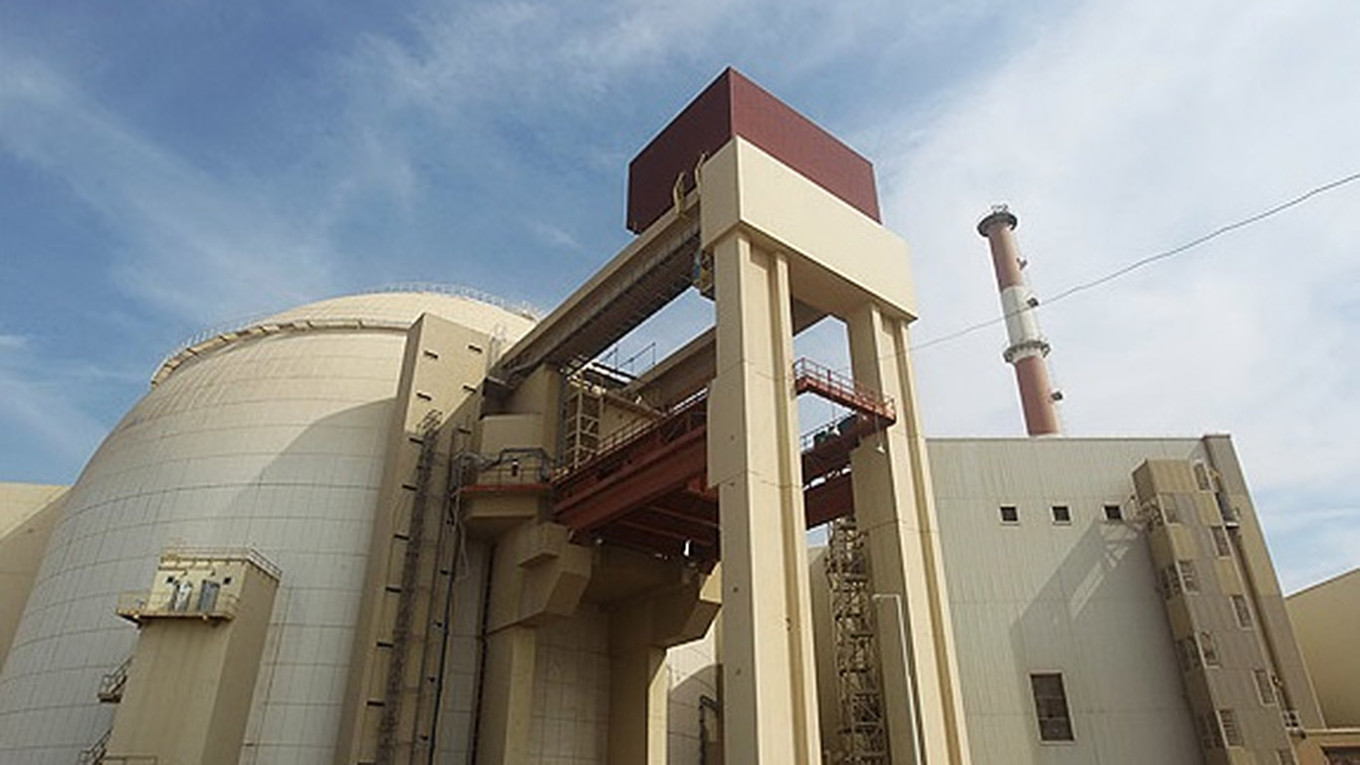
Now, alarm bells have started ringing about the Bushehr NPP in Iran.
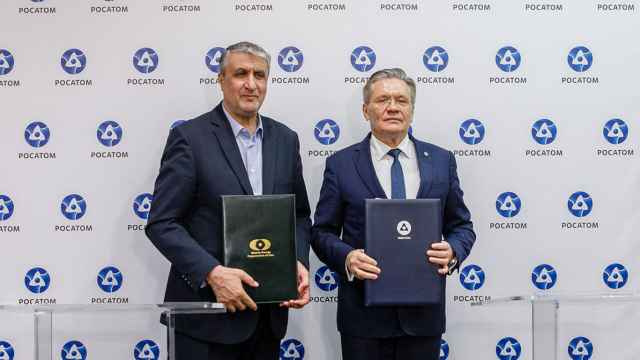
All these facilities were built based on Russian designs and are, to varying degrees, linked to a single state nuclear corporation — Rosatom.
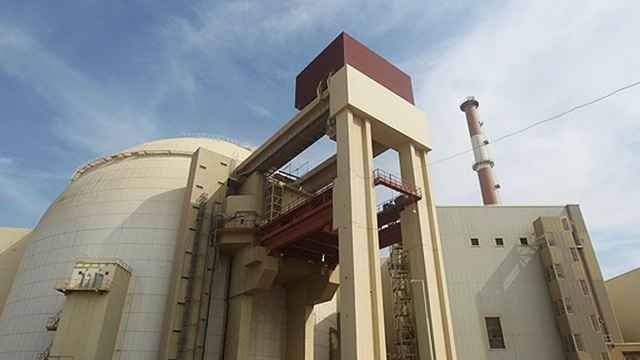
Russia has long been actively involved in Iran’s nuclear program. The largest project within this cooperation is the Bushehr NPP. Construction of the first unit at the site began as early as 1975 by the West German company Kraftwerk Union, but was halted in 1979 following the Islamic Revolution.
Then, in 1995, Russia signed contracts to complete the unit using a VVER-1000 reactor and to supply nuclear fuel for the first ten years of its operation. Russia is also committed to taking back spent nuclear fuel for reprocessing.
The unit was connected to the grid in 2011 and entered commercial operation in 2013. A year later, a contract was signed for the construction of the second phase of the plant, consisting of two additional VVER-1000 units with a total cost of around $10 billion. Notably, the project has been fully financed by Iran without the use of Russian loans.
At present, Rosatom is involved in the construction of the second unit at Bushehr, although the bulk of the work is being carried out by local contractors. Construction of the third unit has not yet officially begun.
In September 2025, an agreement was signed to build a second Russian-designed nuclear power plant in Iran, in the Sirik area of the Hormozgan region. The project includes four reactor units with a total capacity of 5,020 MW. Its estimated cost is around $25 billion and, unlike Bushehr, it is expected to involve Russian financing.
However, in the context of the ongoing full-scale war in Iran, the prospects for any large-scale nuclear construction in the near future appear highly uncertain.
The Bushehr Nuclear Power Plant is not directly linked to Iran's potential military nuclear program. The plant has operated under International Atomic Energy Agency safeguards since the very beginning, giving inspectors access to the facility and operational data so they can monitor it to ensure that nuclear materials used there are not diverted for military purposes.
Even when, after the U.S. and Israel attacks in June 2025, Iran significantly reduced its cooperation with the IAEA, it partially maintained the agency's access to the Bushehr NPP. Apparently, for the simple reason that Iran truly has nothing to hide at this station.
Most of the debate in recent years surrounding Iran’s increasingly advanced nuclear program has focused on facilities other than Bushehr. These include, above all, uranium enrichment sites in Natanz and Fordow (which rely on indigenous enrichment technologies, rather than Russian imports), the nuclear complex in Isfahan and the heavy water reactor in Arak, which has been suspected of being used for plutonium production.
All these facilities were targeted in attacks both in June 2025 and February-March 2026. Fortunately, according to the IAEA, these strikes did not result in significant environmental consequences or radioactive releases, partly because many of them are located underground.
Particular concern also surrounds a stockpile of slightly over 400 kg of uranium enriched to 60%, which could be further enriched relatively quickly to higher levels suitable for producing nuclear weapons.
Its exact location remains unknown. But the attacks on the aforementioned facilities in Natanz, Isfahan and Fordow appear to be aimed both at destroying this material (or, more precisely, burying it under the debris of underground storage sites) and at disabling the centrifuges used for its enrichment. Reports in March suggested there are plans for a U.S. special forces operation aimed at seizing this uranium.
The Bushehr Nuclear Power Plant also hosts a significant amount of nuclear material — approximately 210 tonnes of spent nuclear fuel and around 70 tons of fuel in the reactor core, according to Rosatom’s CEO. However, these materials are subject to safeguards and accounting by the International Atomic Energy Agency, and their use for nuclear weapons purposes (for example, through the extraction of plutonium from spent fuel) is highly unlikely due to the relatively low suitability of reactor-grade plutonium for weapons use and the need for complex reprocessing infrastructure.
According to the author’s estimates, this volume of spent fuel broadly corresponds to what would be expected from a VVER-1000 reactor operating since 2011. At the same time, it suggests that, despite the intergovernmental agreement to return spent nuclear fuel from Bushehr to Russia, the material has, in practice, continued to accumulate in Iran over the years.
Such a volume of nuclear material on site — and, more importantly, the presence of the country’s most powerful operating nuclear reactor — makes the Bushehr Nuclear Power Plant the most dangerous facility in Iran in terms of potential environmental consequences in the event of an attack.
In the worst-case scenario, a direct hit by a missile or bomb on a reactor unit could damage the operating reactor and lead to the release of radioactive materials, with potential consequences extending to neighboring countries.
Being a civilian facility under IAEA safeguards has not fully shielded Bushehr from attacks, whether intentional or incidental. Concerns about such risks already emerged during the first Israeli and U.S. Twelve-Day War against Iran in June 2025. At the time, Russian President Vladimir Putin reportedly had to engage directly with Israeli leadership to secure the safety of “more than 200” Russian specialists working at the plant.
However, no strikes on or near the facility were recorded at that stage, nor did Rosatom report any suspension of construction activities or evacuation of personnel.
However, in March 2026, Iran claimed there were already three incidents in which projectiles struck the vicinity of the Bushehr Nuclear Power Plant on March 17, 24 and 27. An attack was also reported near the city of Bushehr, just a few hundred meters from the plant on February 28. In all cases, no casualties or damage to the facility itself was reported.
Unlike in 2025, Rosatom began evacuating personnel on the very first day of the crisis. The 94 people evacuated were primarily employees’ children and non-essential staff, leaving 639 Russian nationals at the site.
By March 12, an additional 150 people had been evacuated, followed by another 163 on March 25.
With many of the staff due to ve evacuated in the coming days, Rosatom ultimately plans to retain only a minimal team of several dozen personnel who will “maintain the operability of the plant, ensure the preservation of equipment, and support the functioning of the residential settlement where the workers live.”
According to Rosatom CEO Alexey Likhachev, the first unit of the Bushehr NPP continues to operate, with no plans from the Iranian side to shut it down. This increases the risk of a nuclear incident in the event of damage not only to the reactor itself but also to surrounding infrastructure.
Experience from the frontline Zaporizhzhia Nuclear Power Plant and other nuclear facilities in Ukraine shows that attacks on a country’s broader energy infrastructure can also pose a serious threat to nuclear sites. Such attacks may disconnect a reactor from the grid, causing a station blackout and the emergency shutdown of an operating unit. Such a scenario could potentially result in a large-scale radiological accident.
Against this backdrop, particular concern is raised by repeatedly stated intentions by U.S. President Donald Trump to target Iran’s power infrastructure, including threatening “a very strong hit on each of their power plants, and likely simultaneously,” as well as calling to “strike and destroy” Iranian power plants, starting with the largest.”
Although the Bushehr Nuclear Power Plant is not even among the five most powerful power stations in Iran — being smaller than several gas- and oil-fired plants — the risks of disrupting the plant’s power supply and triggering a reactor shutdown remain significant.
Against the backdrop of long-standing threats from the Iranian regime and well-founded concerns about its nuclear program, it is understandable that discussions about how to locate and neutralize 400 kg of enriched uranium are making global headlines.
However, it is important to remember that Bushehr is just the latest nuclear power plant to be threatened in a conflict this decade.
It is difficult to predict how this will ultimately unfold. What is already clear, however, is that neither national authorities, nor international coalitions, nor even UN bodies such as the IAEA are capable of guaranteeing the effective protection of civilian nuclear facilities during a conflict. One can only hope that in the coming years we will not witness a man-made nuclear accident caused by military activity. The international nuclear community must draw lessons from this turbulent period and develop more effective mechanisms to minimize such risks in the future.

A Message from The Moscow Times:
Dear readers,
We are facing unprecedented challenges. Russia's Prosecutor General's Office has designated The Moscow Times as an "undesirable" organization, criminalizing our work and putting our staff at risk of prosecution. This follows our earlier unjust labeling as a "foreign agent."
These actions are direct attempts to silence independent journalism in Russia. The authorities claim our work "discredits the decisions of the Russian leadership." We see things differently: we strive to provide accurate, unbiased reporting on Russia.
We, the journalists of The Moscow Times, refuse to be silenced. But to continue our work, we need your help.
Your support, no matter how small, makes a world of difference. If you can, please support us monthly starting from just $2. It's quick to set up, and every contribution makes a significant impact.
By supporting The Moscow Times, you're defending open, independent journalism in the face of repression. Thank you for standing with us.

Remind me later.